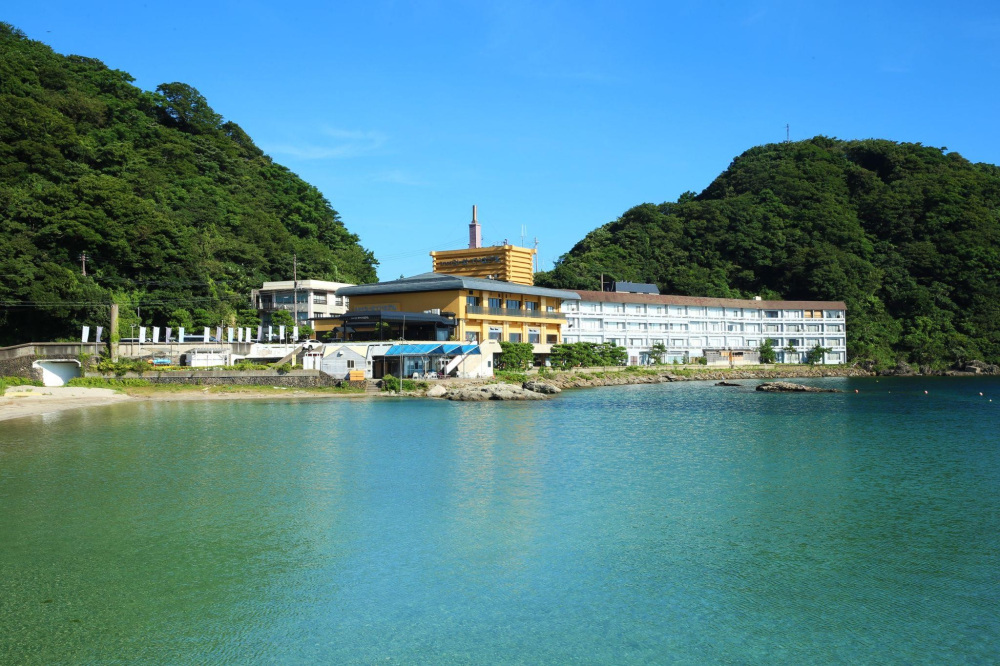
From Cosmopolitan Kobe to the Open Sea: A Luxury Cruise Aboard ASUKA III
Kobe, one of Japan’s leading international trading ports, has also become a popular departure point for luxury cruises in recent years. The city’s cruise terminals are conveniently located near downtown Kobe, with easy access to both Kobe Airport and Kansai International Airport. More and more travelers are choosing to fly into Kobe, explore the city, and then set sail. Since its port opened to international trade in 1868, Kobe has developed a distinctive character shaped by the blending of different cultures. Discover the charms of this cosmopolitan port city before embarking on a luxury cruise to experience a side of Japan that can only be seen from the sea.
- Date posted
- 2026.11.18
- Date last updated
- 2026.11.23
An editorial team that loves travel and food. Driven by curiosity, we head out on reporting trips anywhere—both domestically and abroad. In search of a region’s charm, delicious food, and the stories of the people who live there, we pop up unexpectedly in articles for lifestyle magazines and tourism publications.
- Nationality
- Japan
- Hobbies
- Travel and Food
INDEX
Show More
- Experience Kobe’s International Heritage at the Weathercock House
- A “Scale”-Covered House with Panoramic Views of Kobe
- Explore the Bustling Streets of Kobe’s Chinatown
- Freshly Steamed Pork Buns Worth the Wait
- Cantonese Cuisine That Brings Out the Best in Every Ingredient
- Picture-Perfect Views at Meriken Park
- Kobe’s Evolving Waterfront: A New Marina Set to Open in 2027
- Experience Extraordinary Hospitality Aboard a Luxury Cruise Ship
Experience Kobe’s International Heritage at the Weathercock House
Sannomiya Station, in the heart of Kobe, is approximately 65 minutes by limousine bus from Kansai International Airport or 20 minutes by Port Liner from Kobe Airport.
About a 15-minute walk uphill from Sannomiya Station lies Kitano Ijinkan-Gai, a historic neighborhood that was once home to foreign residents. Its streets are lined with Western-style houses built during the Meiji (1868–1912) and Taisho (1912–1926) periods, lending the area a distinctly international atmosphere.
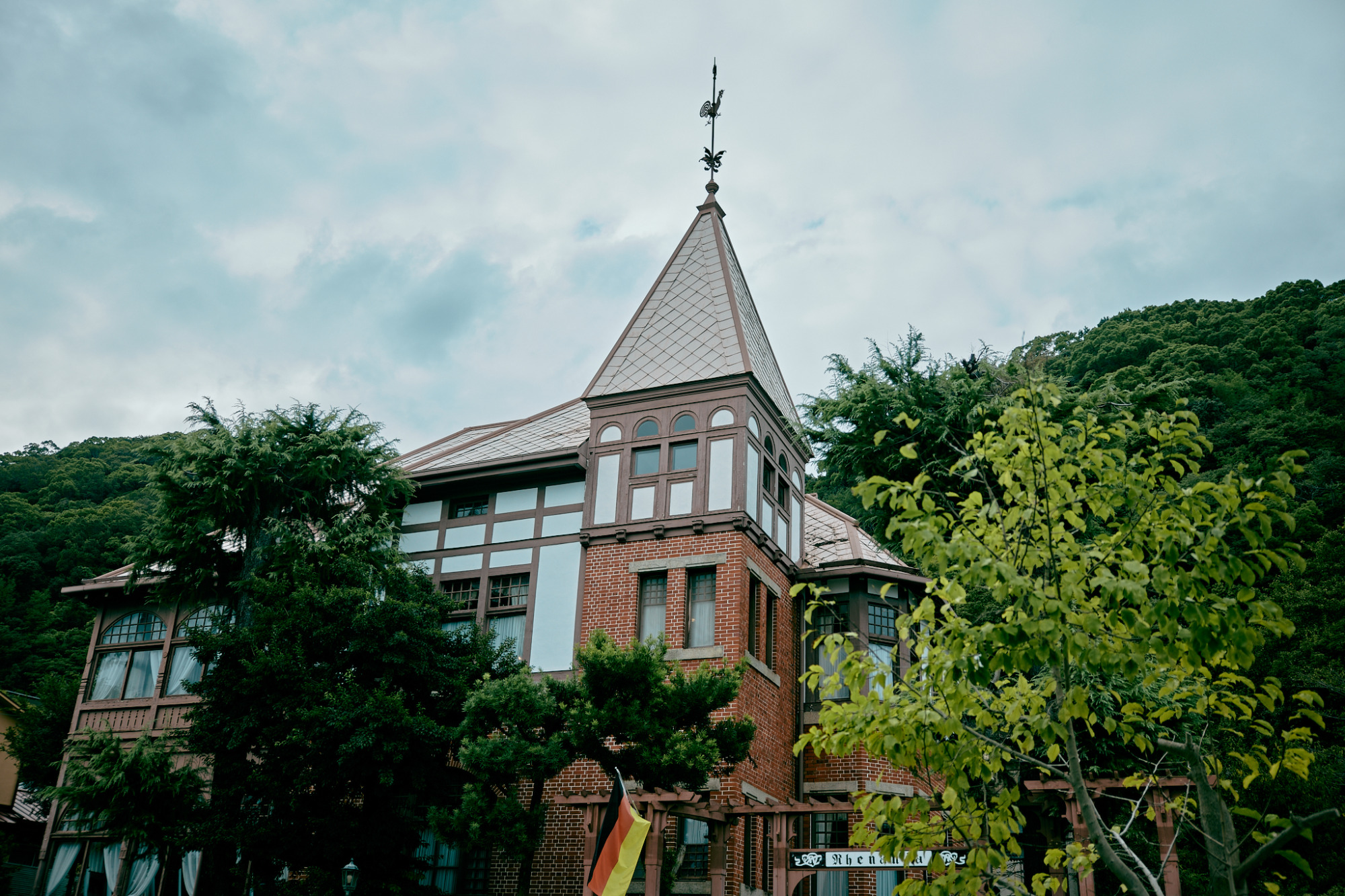 The weathercock indicates wind direction and is also believed to ward off evil spirits.
A symbol of Kobe’s Kitano district, the Weathercock House (Kazamidori no Yakata) was built around 1909 as the residence of German merchant Gottfried Thomas. It is the only building in Kitano Ijinkan-Gai with a brick exterior, and its distinctive weathercock stands atop a pointed tower.
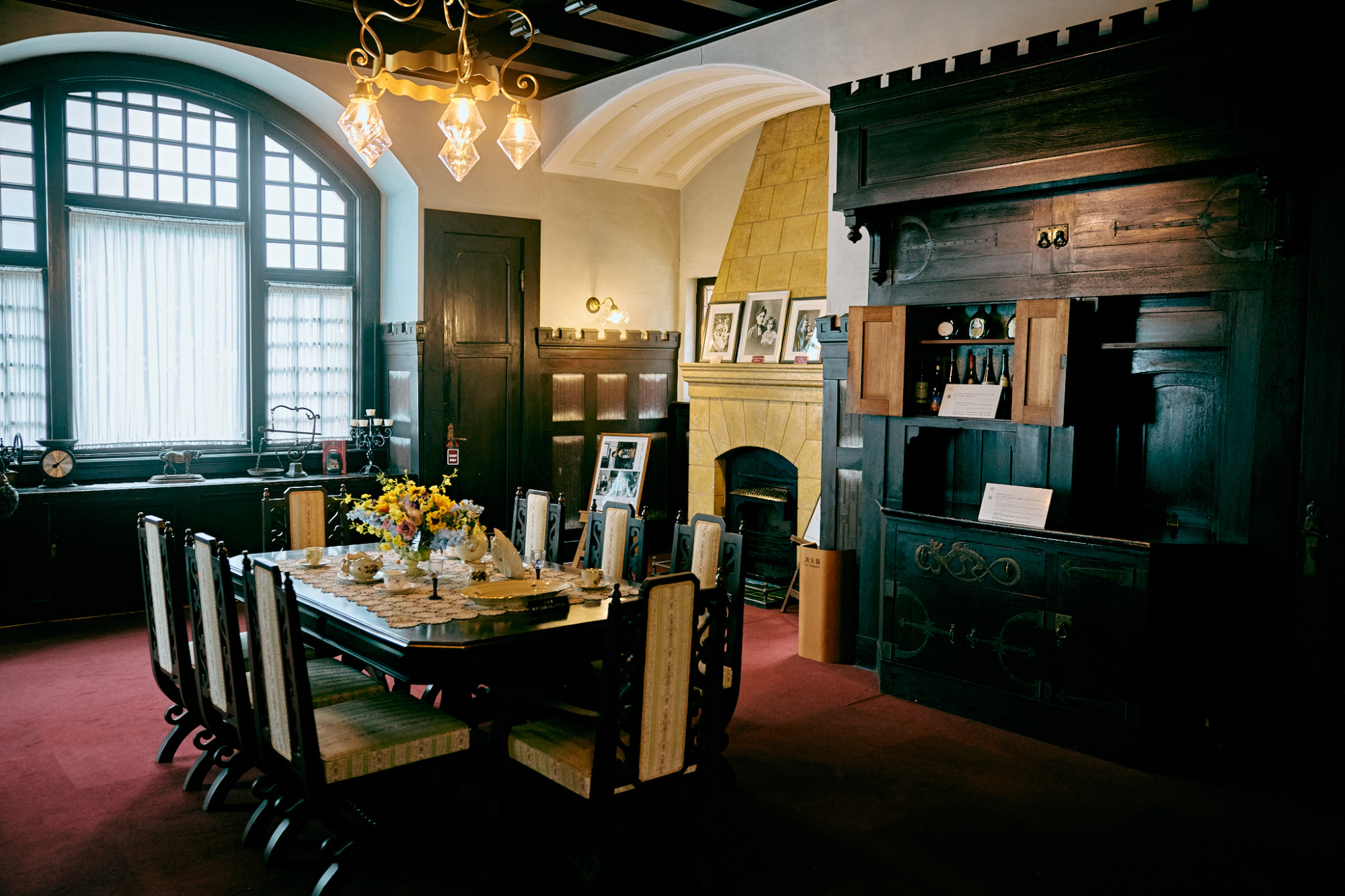 The dining room features a stately design reminiscent of German palaces and castles.
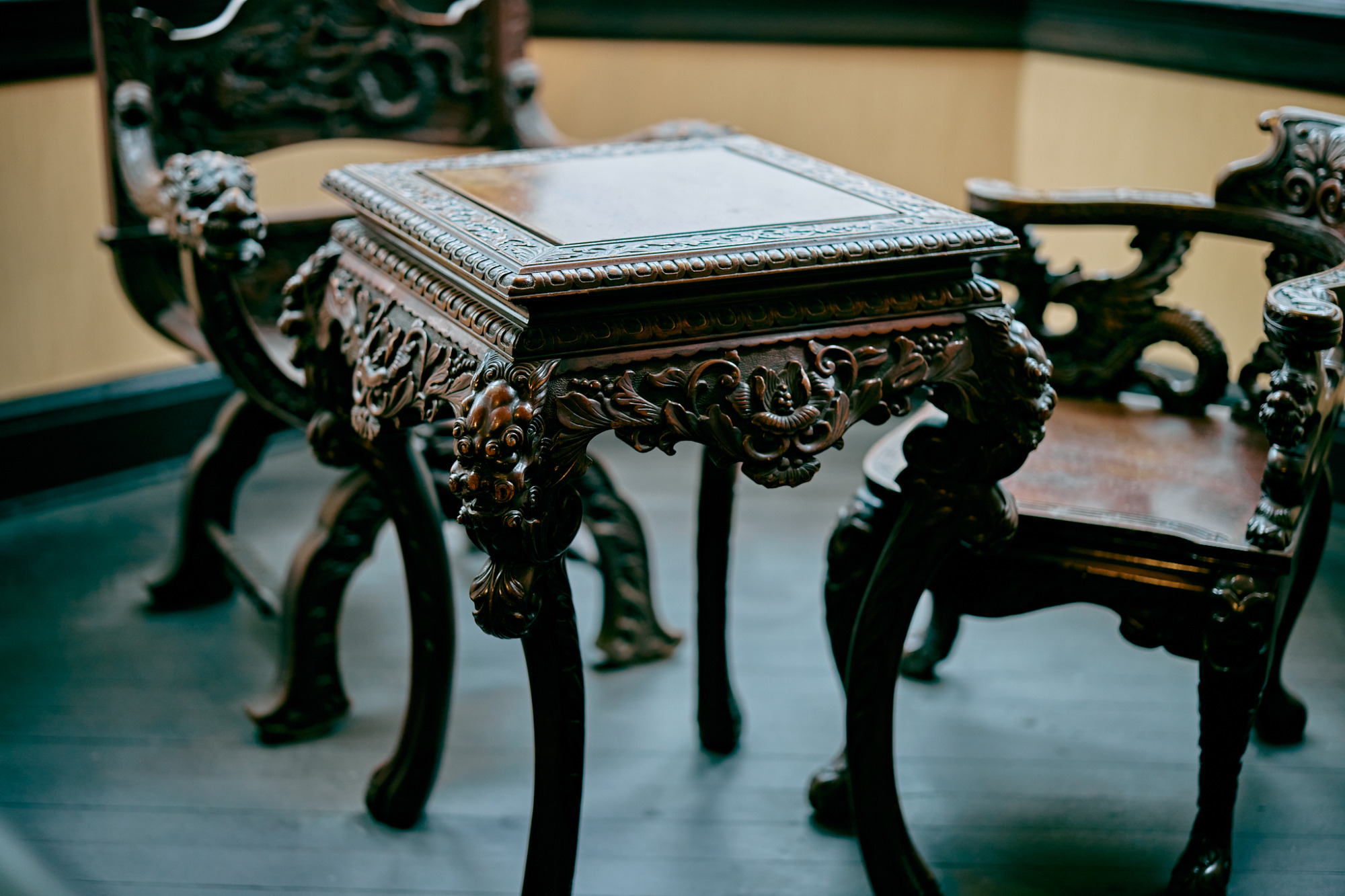 Furniture made for export around the time the house was built remains on display. These valuable pieces were crafted by Japanese artisans, including traditional temple and shrine carpenters.
The interiors combine the grandeur of traditional German design with Art Nouveau decorative elements that were fashionable at the time. Look closely at the details, from the distinctive ceiling designs in each room to the elegant pendant lights.
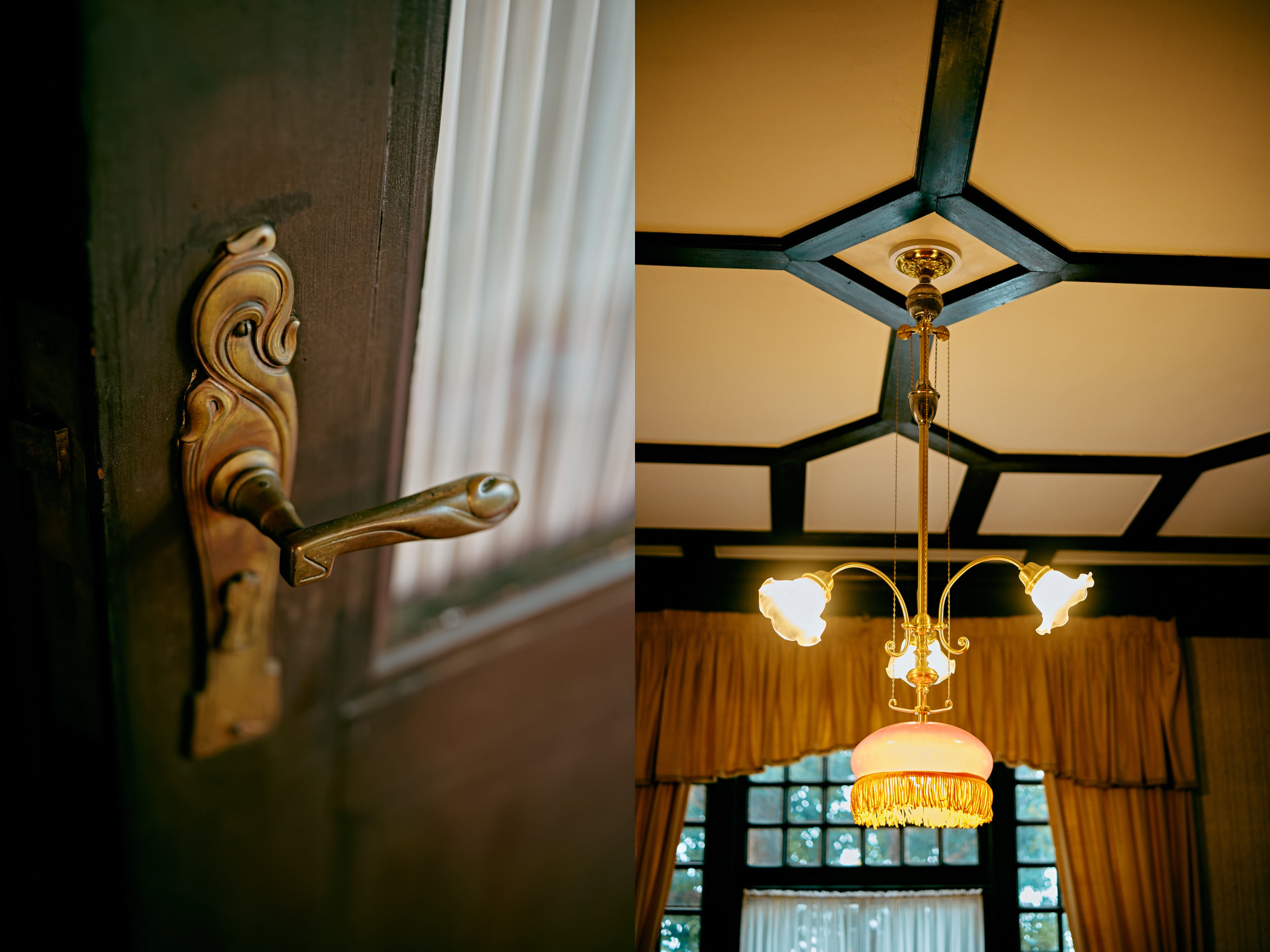 Left: A door handle showing the influence of Art Nouveau. Right: A geometric ceiling design and pendant lighting.
◇Weathercock House (Kazamidori no Yakata)
Address: 3-13-3 Kitano-cho, Chuo-ku, Kobe, Hyogo
Tel.: 078-242-3223
Hours: 9:00–17:00 (last admission 16:45)
Closed: Third Tuesday of each month (following day if a national holiday)
Admission: Adults ¥500; high school students and younger free
A “Scale”-Covered House with Panoramic Views of Kobe
Continue uphill from the Weathercock House to Uroko House & Observation Gallery. One of Kobe’s most iconic Western-style residences, Uroko House was the first of its kind in the city to open to the public and is a nationally Registered Tangible Cultural Property. With its cylindrical tower, the building looks as though it belongs in a fairy tale. Its name, meaning “Scale House,” comes from the natural stone slate covering its exterior, which resembles fish scales. It is said to have been built in the foreign settlement near the port in the late Meiji period as a luxury rental residence for foreign residents, before being relocated to its present site during the Taisho period.
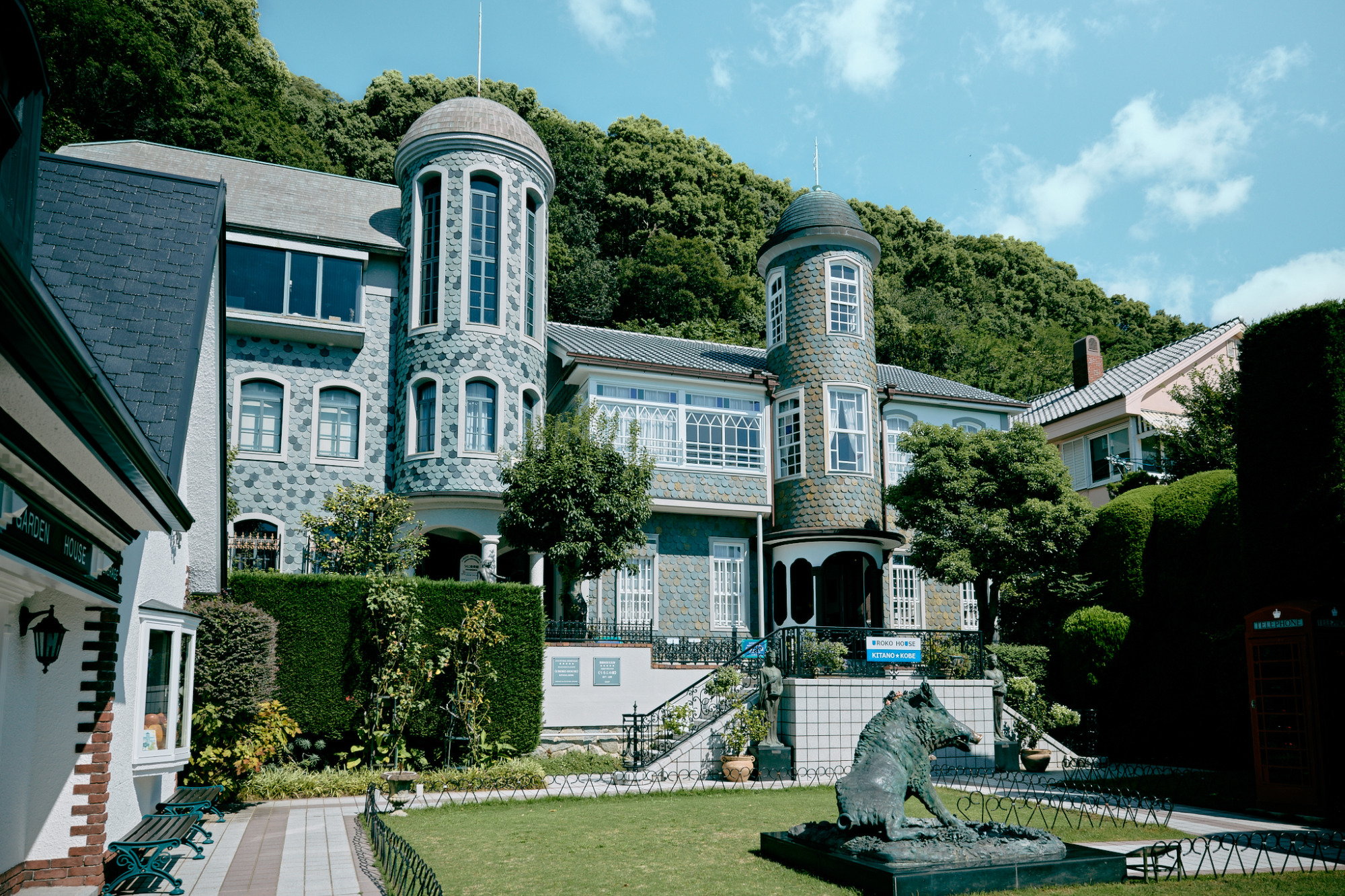 Uroko House (right) and the Observation Gallery (left), built in 1982.
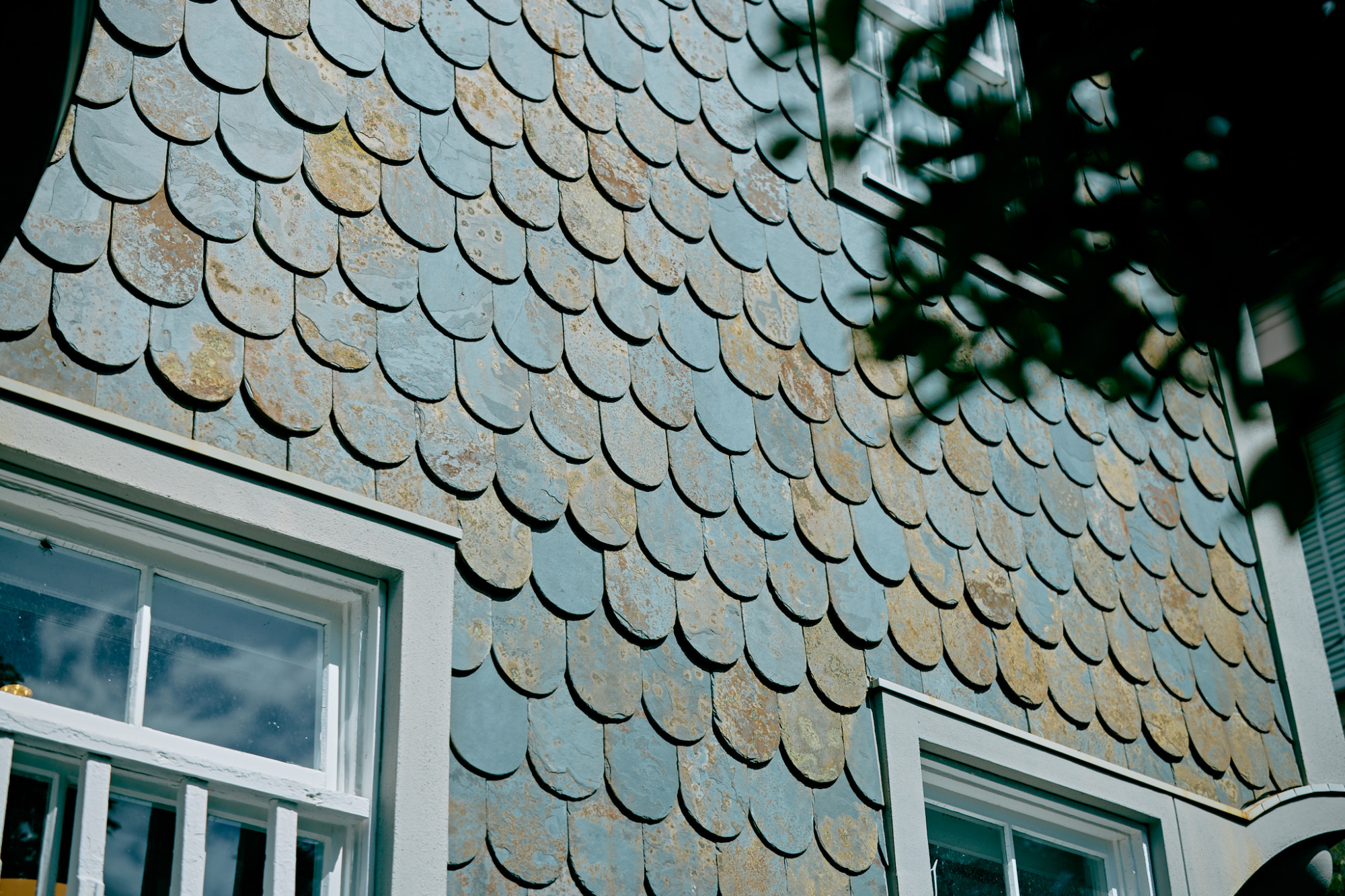 Approximately 4,000 slate tiles cover the exterior walls of Uroko House.
Inside, antique furniture, decorative arts, and European tableware offer a glimpse into the lifestyles of the foreign residents who once lived in Kobe. Particularly impressive is the collection of fine porcelain from prestigious manufacturers such as Meissen of Germany and Royal Copenhagen of Denmark.
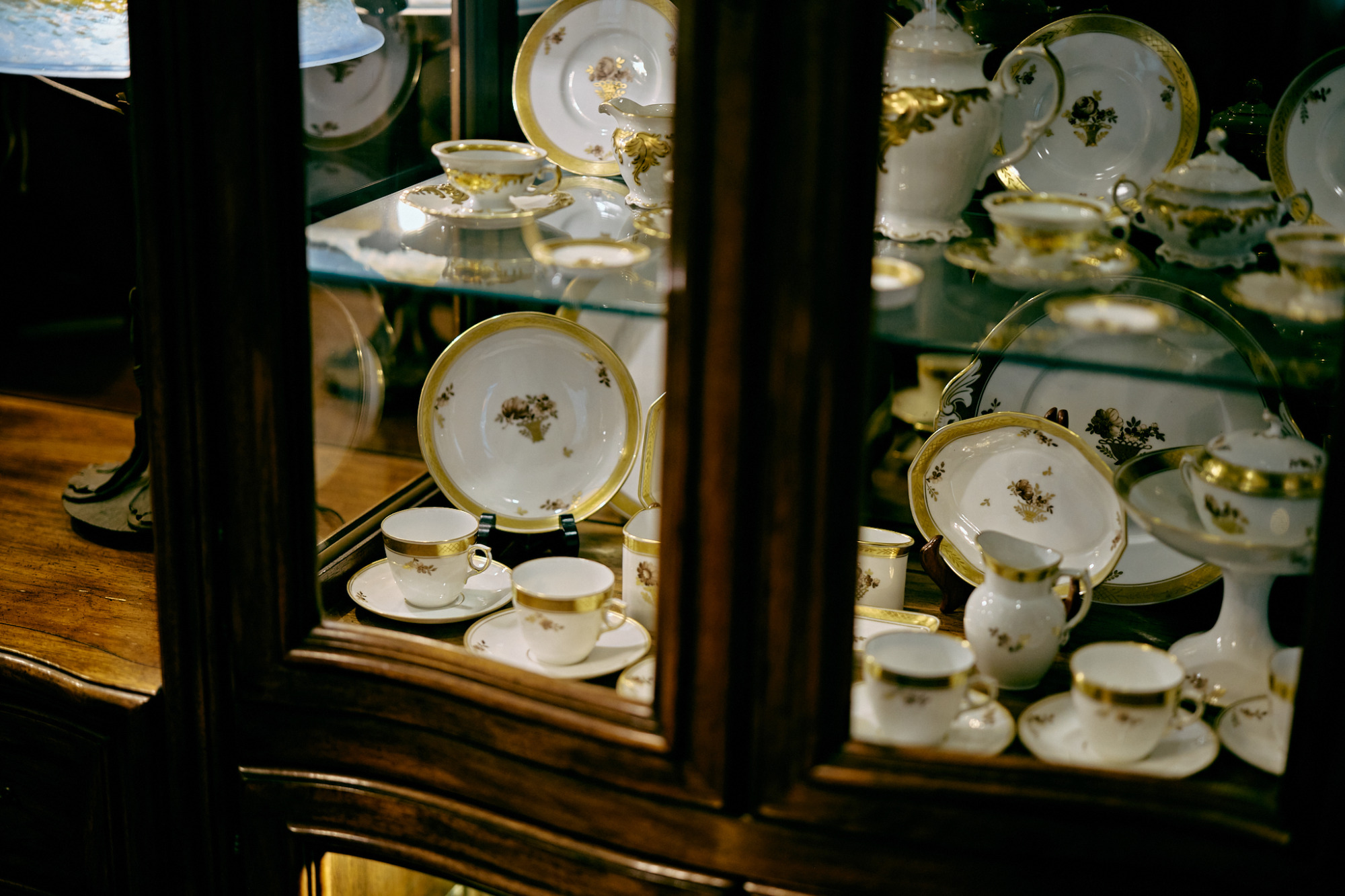 Approximately 250 pieces of European tableware are on display inside the house.
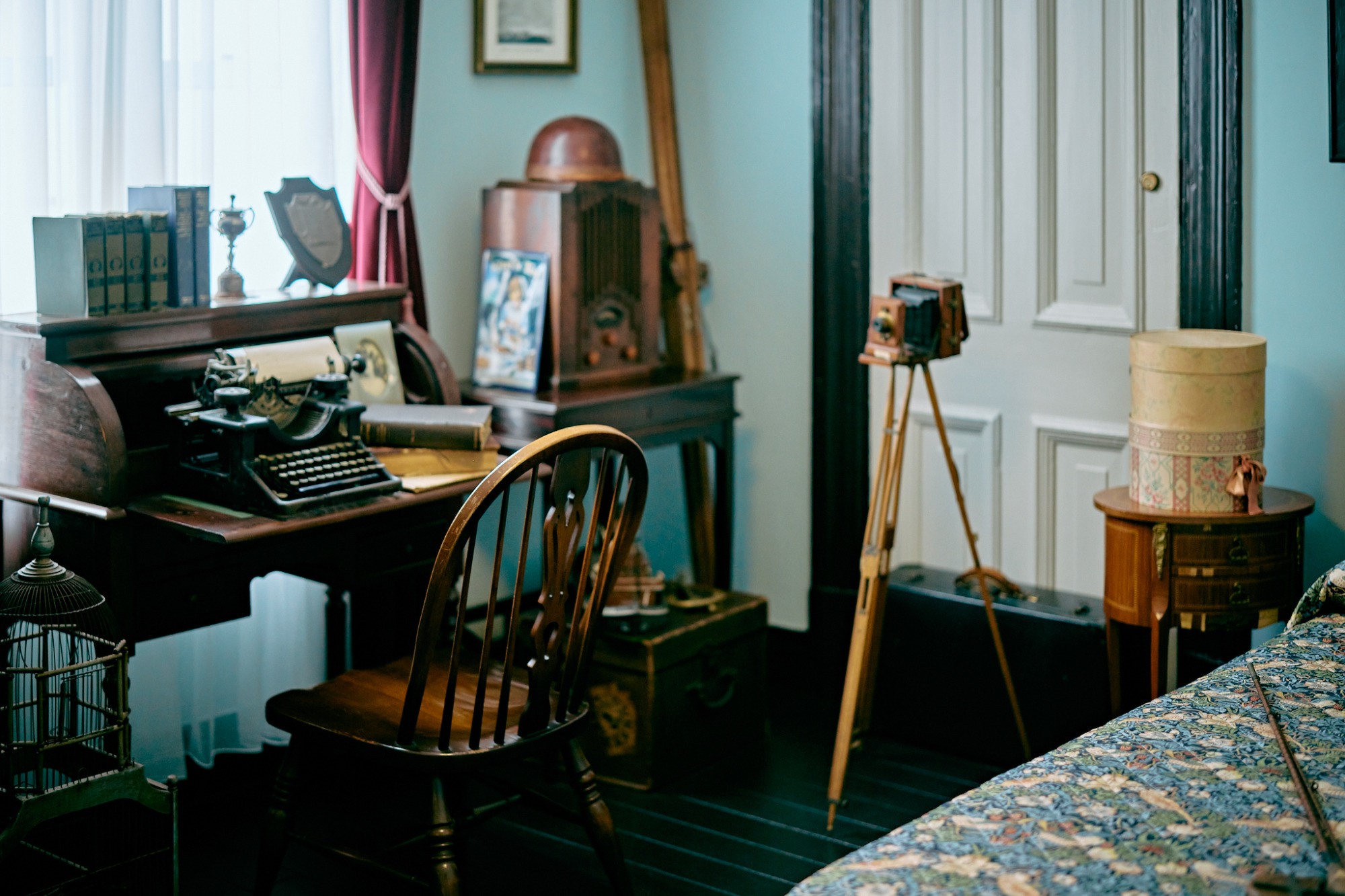 Furniture and furnishings evoke the atmosphere of Kobe around the time its port opened to international trade.
The adjacent Observation Gallery exhibits modern and contemporary European paintings, including works by Henri Matisse and Maurice Utrillo. From the third floor, visitors can enjoy sweeping views of Kobe, extending as far as Osaka Bay and Awaji Island.
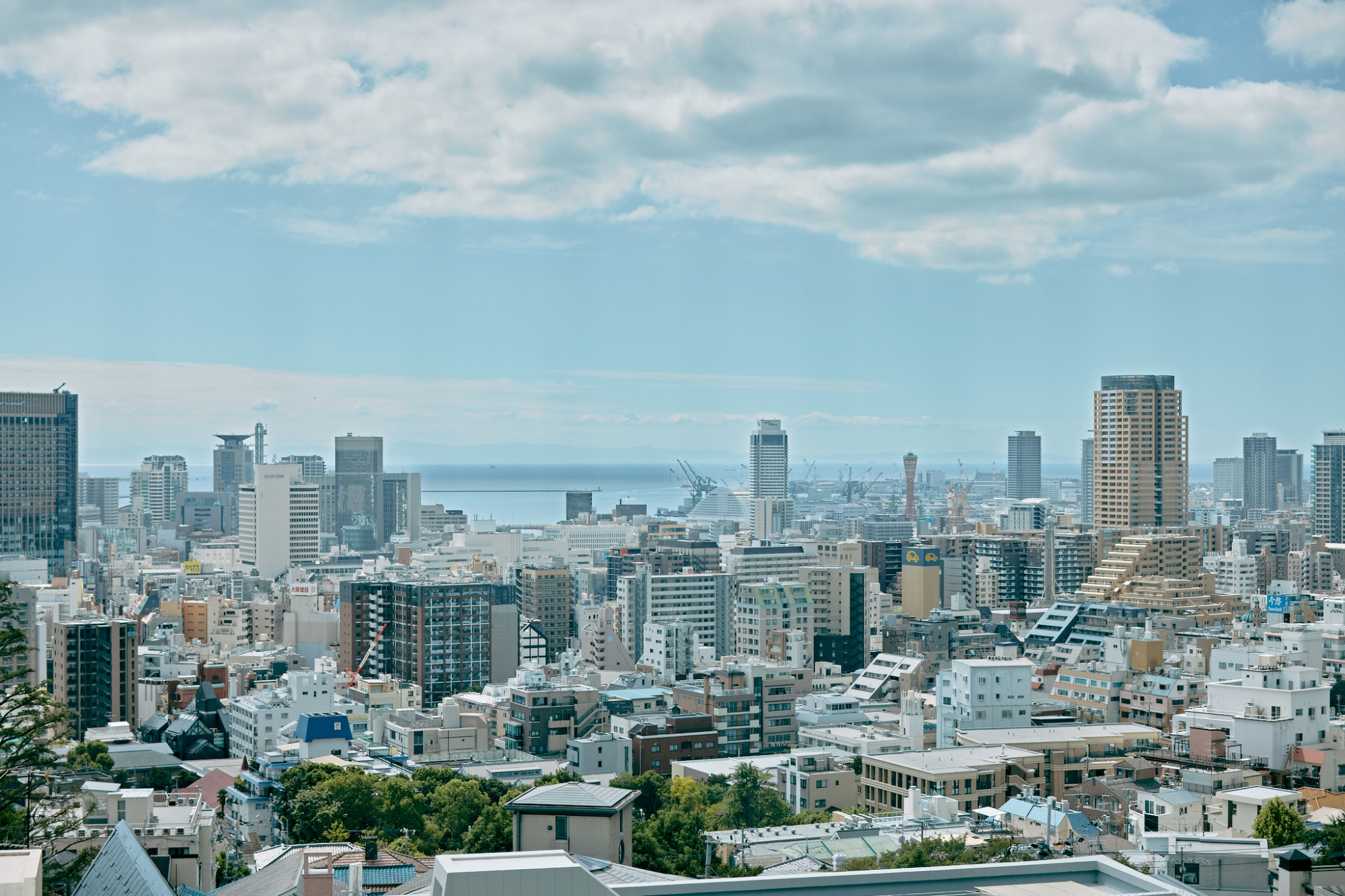 The view from the third floor.
◇Uroko House & Observation Gallery
Address: 2-20-4 Kitano-cho, Chuo-ku, Kobe, Hyogo
Tel.: 0120-888581 (Ijinkan Uroko Group)
Hours: April–September, 10:00–18:00; October–March, 10:00–17:00
Closed: Open year-round (temporary closures announced on the official website)
Admission: Adults ¥1,100; children ¥220
Explore the Bustling Streets of Kobe’s Chinatown
Take the City Loop sightseeing bus from Uroko House & Observation Gallery for approximately 30 minutes to reach Nankinmachi, Kobe’s Chinatown, located south of JR and Hanshin Motomachi Station. Along with Yokohama Chinatown in Kanagawa and Nagasaki Shinchi Chinatown in Nagasaki, Nankinmachi is considered one of Japan’s three major Chinatowns.
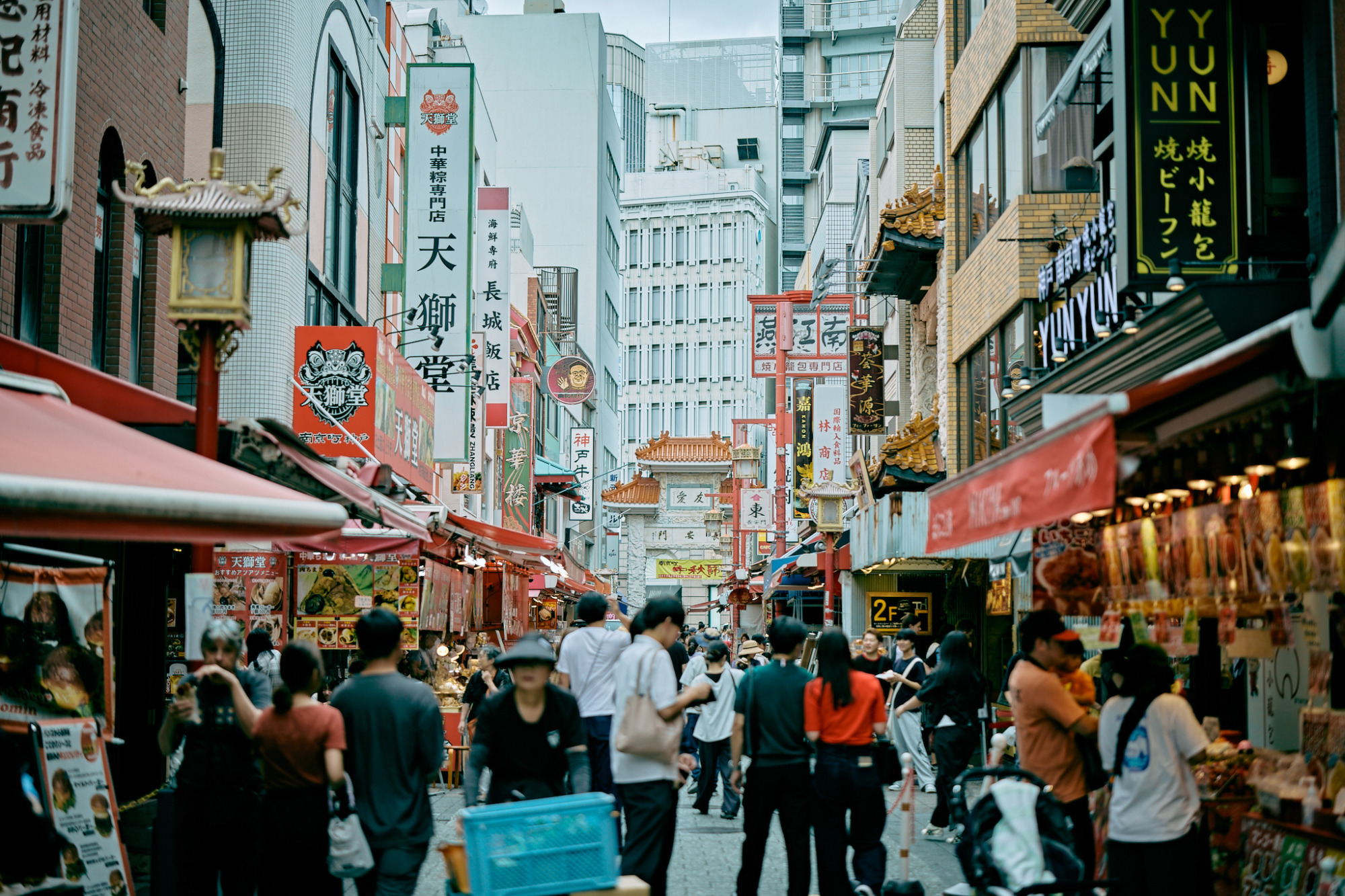 Nankinmachi’s bustling main street, filled with visitors.
The neighborhood’s history dates back to the opening of Kobe Port in 1868, when many Chinese immigrants settled in this area between the hillside district of Western-style residences and the foreign settlement closer to the waterfront. They established a market that eventually developed into today’s Nankinmachi.
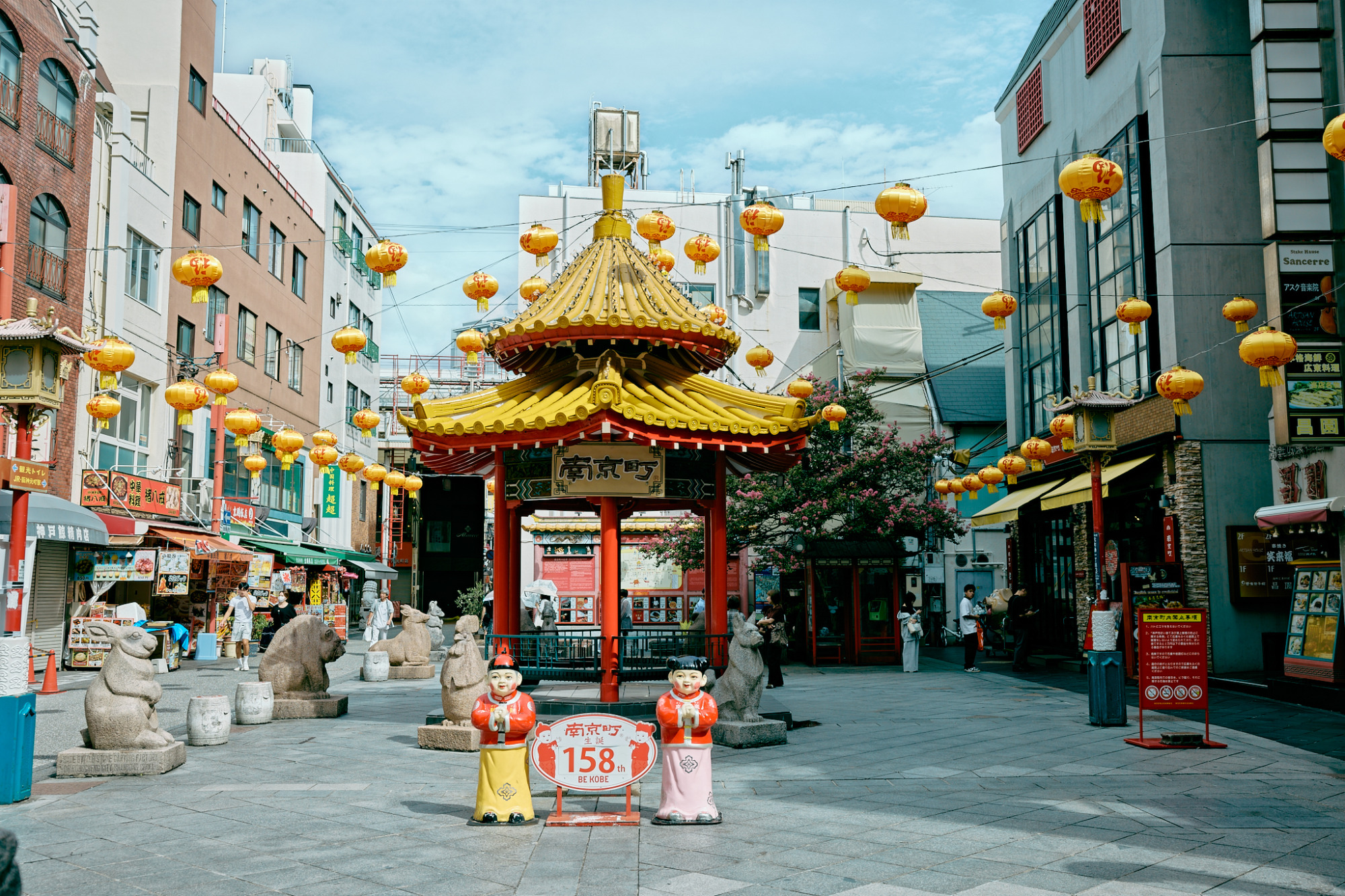 Nankinmachi Square.
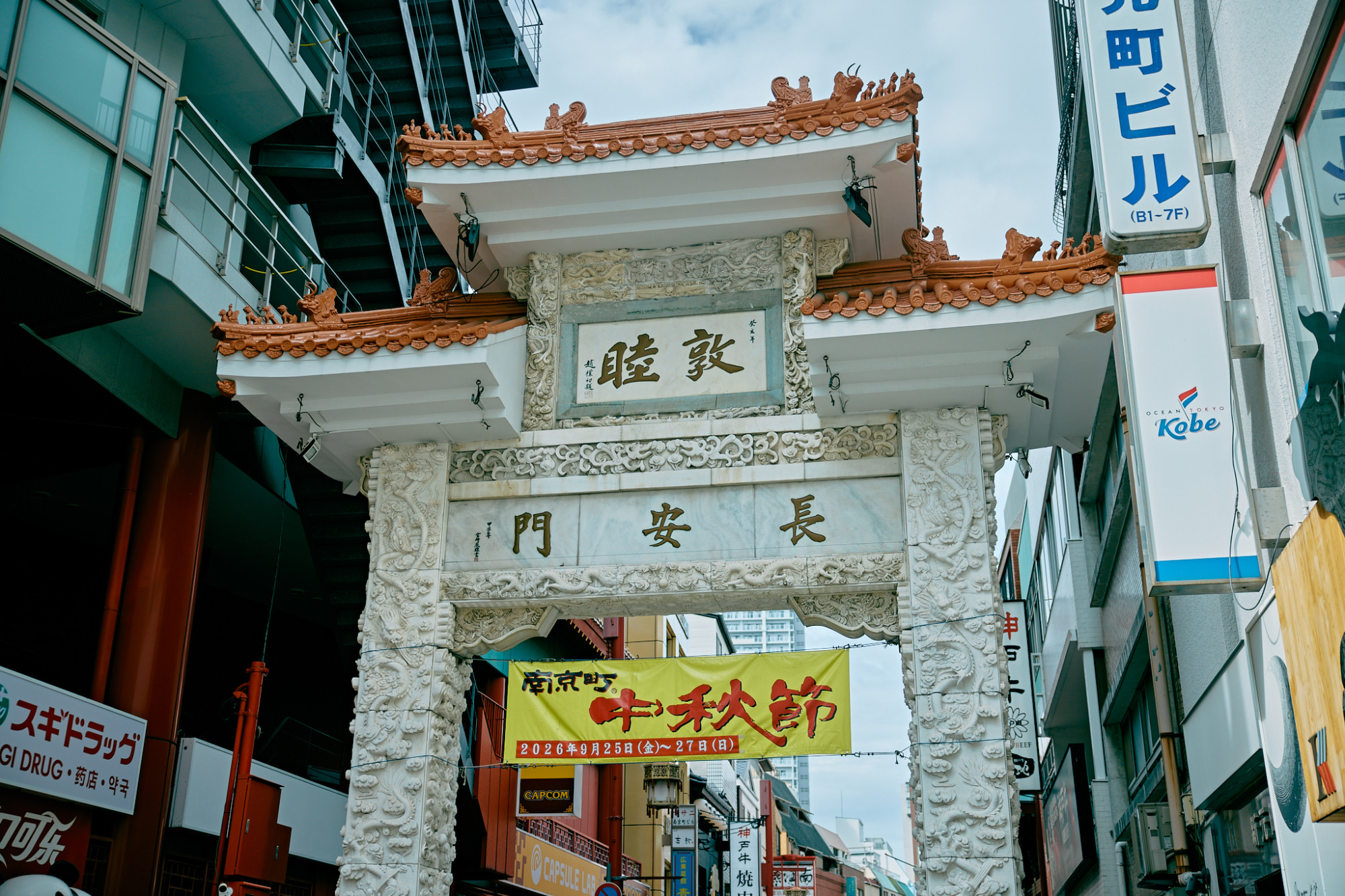 Choanmon Gate marks the eastern entrance to Nankinmachi.
Today, Nankinmachi is one of Kobe’s most popular sightseeing destinations. Stretching approximately 270 meters from east to west and 110 meters from north to south, its streets are lined with Chinese restaurants, food shops, and stores selling a wide variety of goods. There are plenty of photo opportunities, from Nankinmachi Square with its traditional Chinese-style pavilion to the ornate gates marking the entrances to the shopping streets. Take your time exploring this lively neighborhood and soaking up its Chinese cultural atmosphere.
◇Nankinmachi (Kobe Chinatown)
Address: 1-3-18 Sakaemachi-dori, Chuo-ku, Kobe, Hyogo (Nankinmachi Shopping Street Promotion Association Office)
Freshly Steamed Pork Buns Worth the Wait
Just across from Nankinmachi Square stands Roshoki, a popular shop known for its original pork buns and the long lines of customers waiting to buy them. The shop was founded in 1915, when its first owner adapted Tianjin baozi, a type of steamed bun from Tianjin, China, to suit Japanese tastes and began selling them under the name butaman (pork buns).
In February 2025, Roshoki temporarily relocated to its sister shop, Soke Baozi-kan, across the street while its original building was rebuilt. On November 11, 2026, it will reopen at its original location in a newly constructed building.
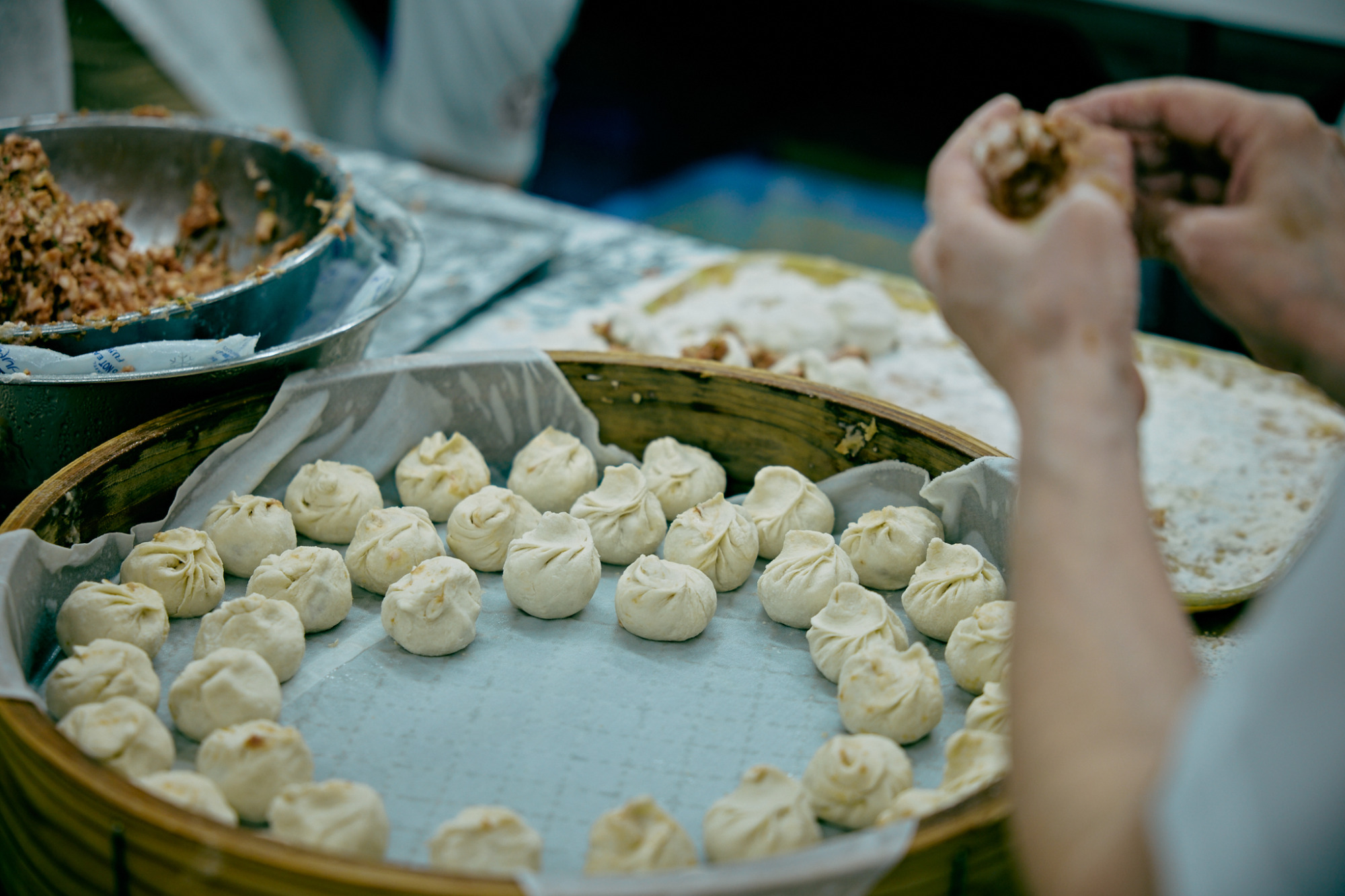 Skilled staff expertly wrap the filling in dough to make the pork buns.
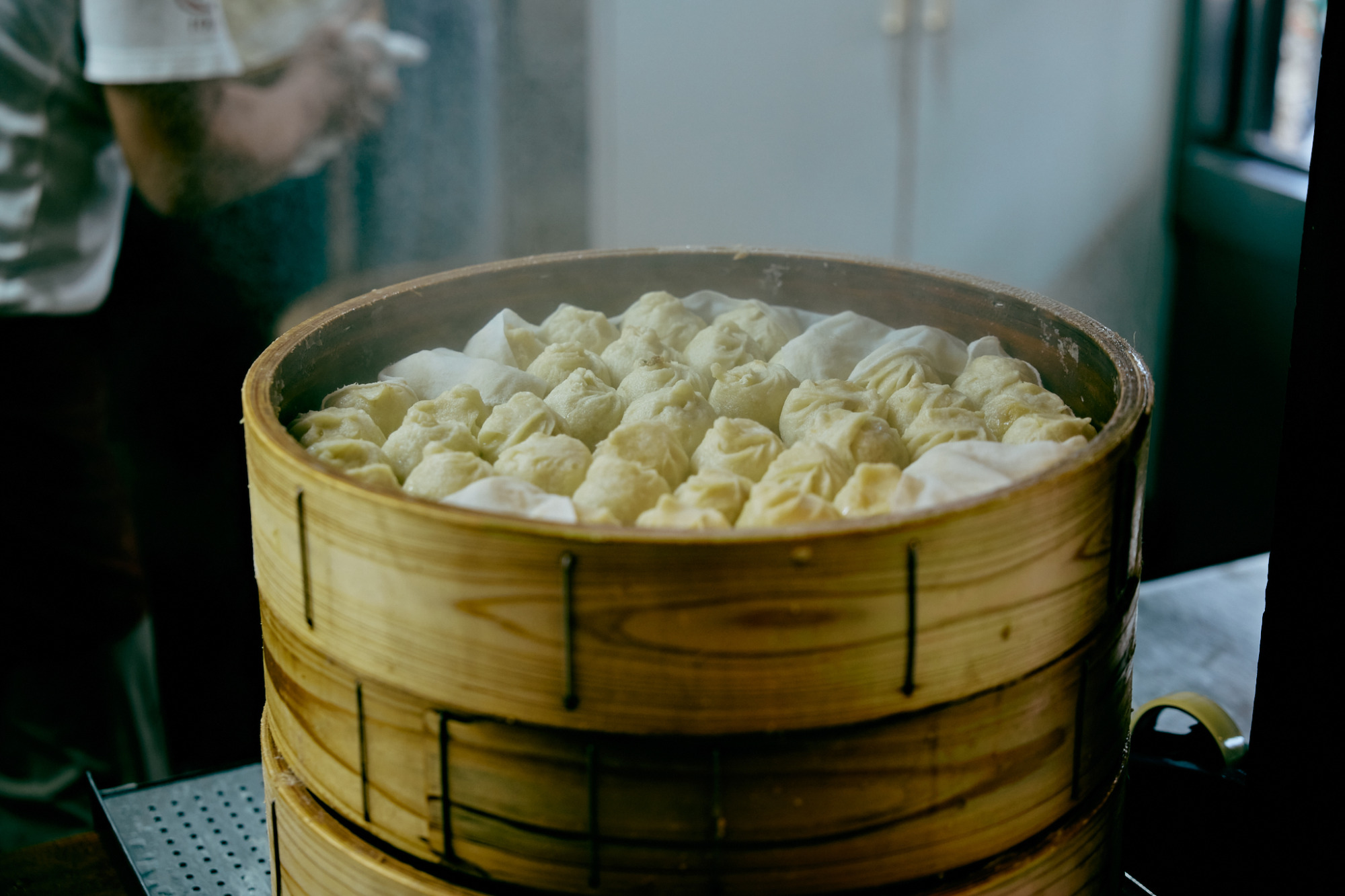 Freshly steamed pork buns.
Roshoki’s pork buns are small enough to fit in the palm of your hand and are sold in sets of five or ten. Experienced staff can wrap an impressive 13 buns per minute, and the shop produces approximately 13,000 each day. Fresh from the bamboo steamers at the storefront, the piping-hot buns sell almost as quickly as they are made.
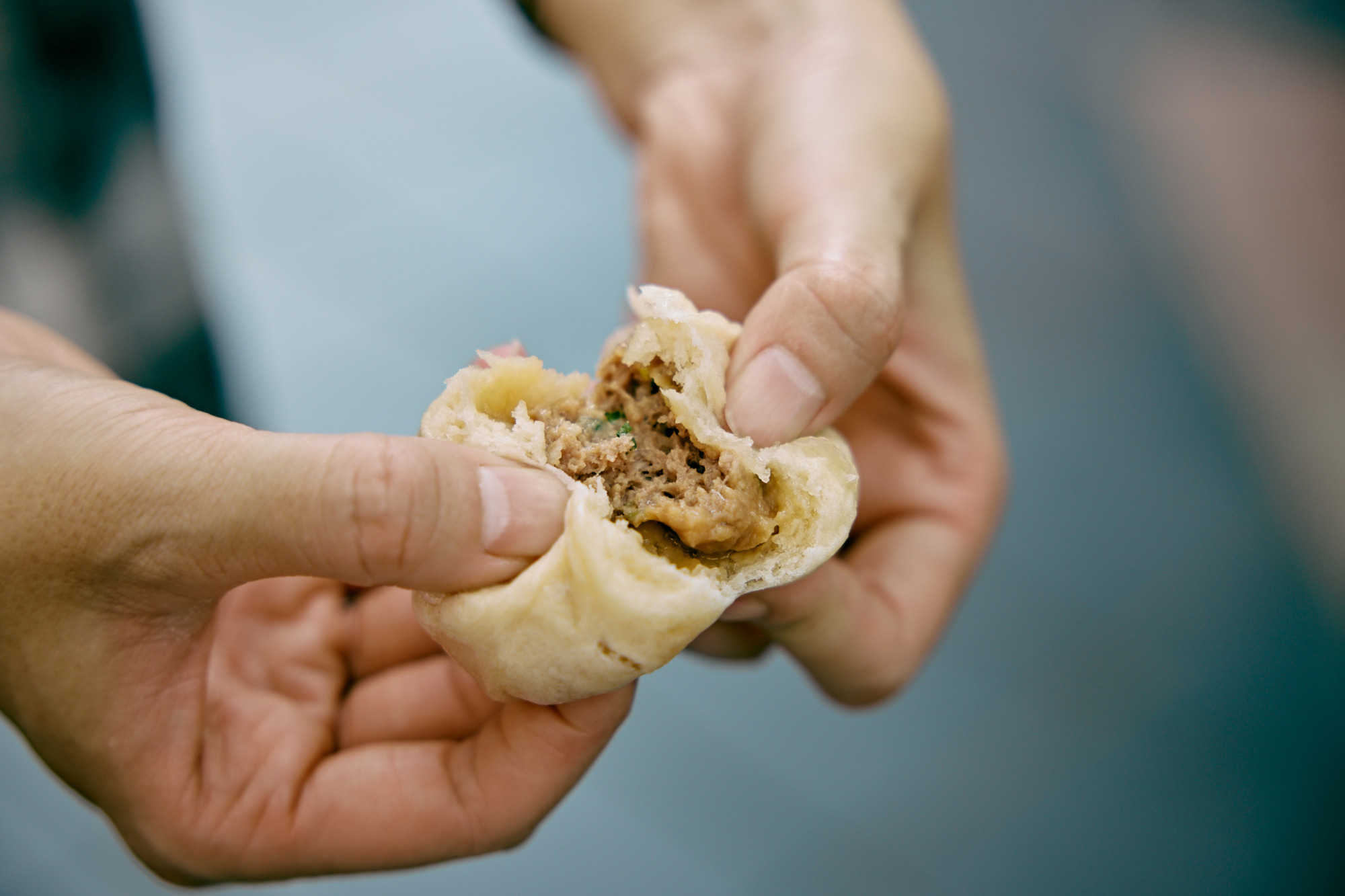 Break open a pork bun to reveal its juicy filling.
The savory, soy sauce-seasoned pork filling pairs perfectly with the soft, chewy dough, making it hard to stop at just one. The secret to the buns’ distinctive texture lies in the naturally fermented dough, made using a koji culture passed down through generations. Don’t miss the chance to try this one-of-a-kind local specialty.
◇Roshoki
Address: 2-1-14 Motomachi-dori, Chuo-ku, Kobe, Hyogo
Tel.: 078-331-7714
Hours: 10:00–18:30 (or until sold out)
Closed: Mondays (following day if a national holiday)
Note: On Roshoki’s regular closing days, pork buns are sold at its sister shop, Soke Baozi-kan, across the street.
Cantonese Cuisine That Brings Out the Best in Every Ingredient
Located on Nankin Higashi-dori, Nankinmachi’s main street, Minsei is one of the neighborhood’s most popular long-established Cantonese restaurants. Its history dates back to the 1920s, when the original owner came to Kobe from China and opened a pork shop. Drawing on the family’s roots in Guangdong Province, the business later evolved into a Cantonese restaurant, continuing a culinary tradition that has endured for generations.
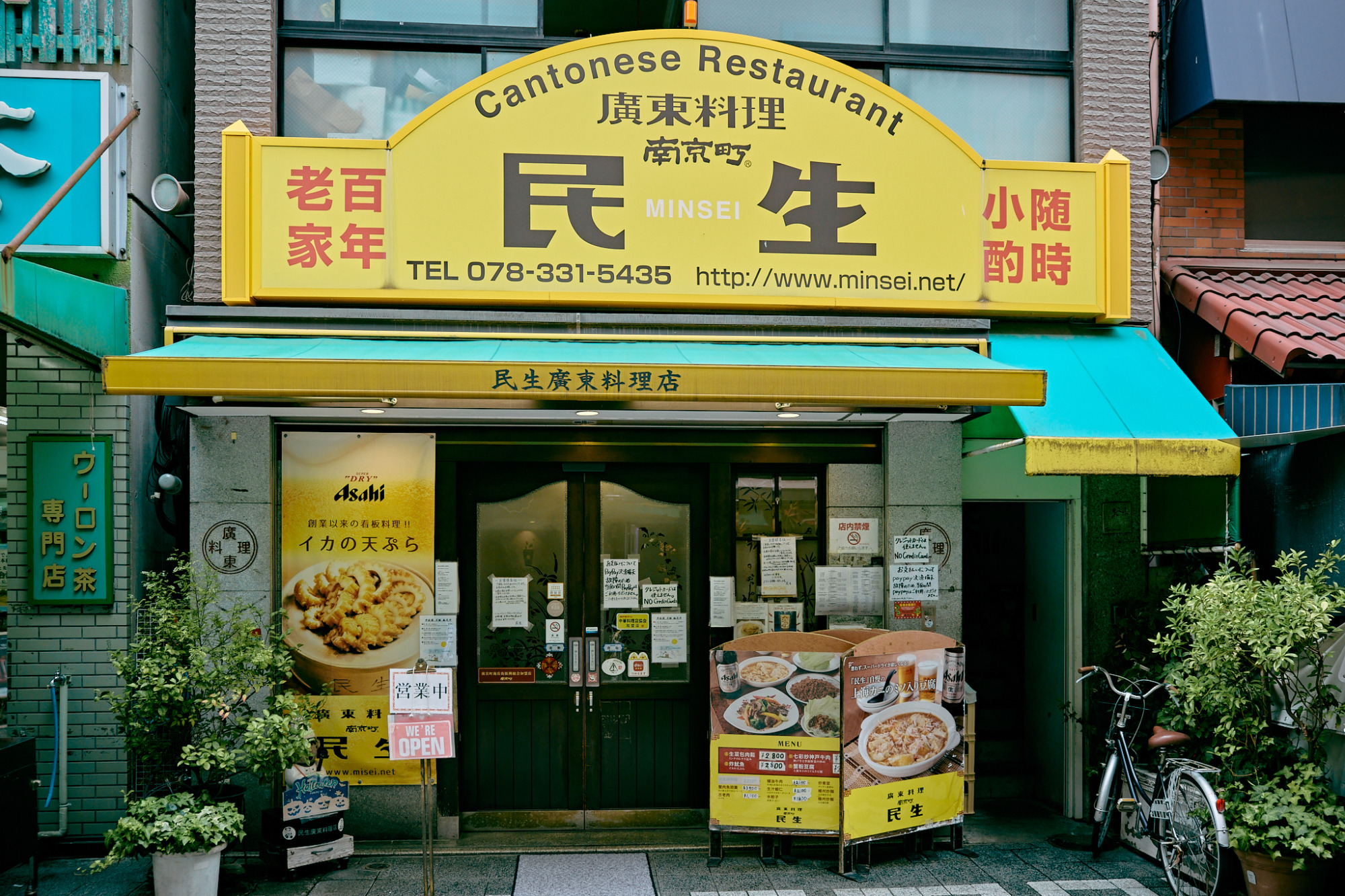 Look for Minsei’s distinctive yellow sign.
The spacious, 80-seat restaurant is always bustling, offering a wide selection of dishes, from à la carte specialties to noodles and rice dishes. Its signature dish is squid tempura, made by coating bigfin reef squid in potato starch and frying it until crisp. The irresistible crunchy texture has made it a firm favorite among customers.
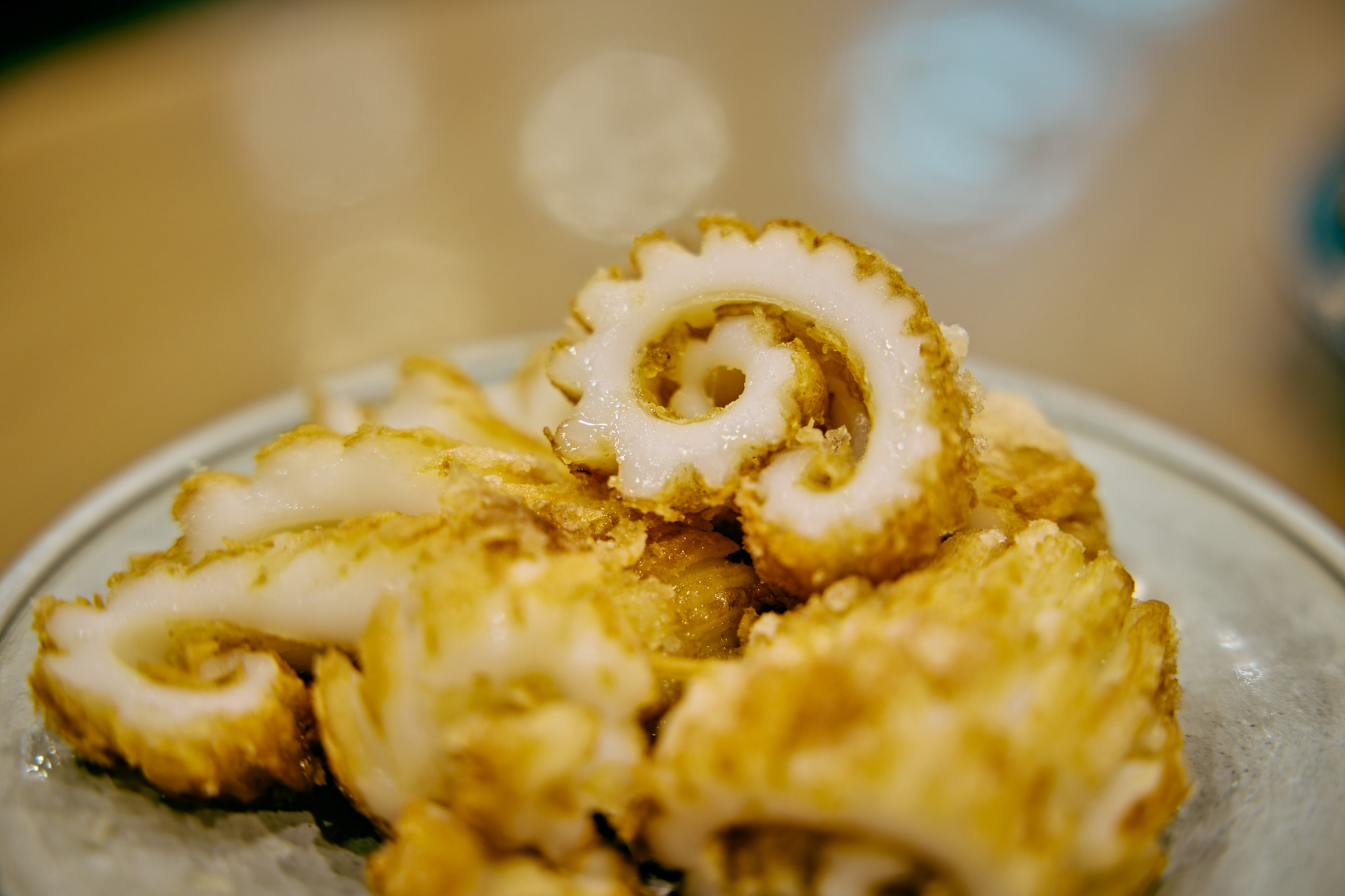 Minsei’s squid tempura is reportedly ordered by 80% of customers.
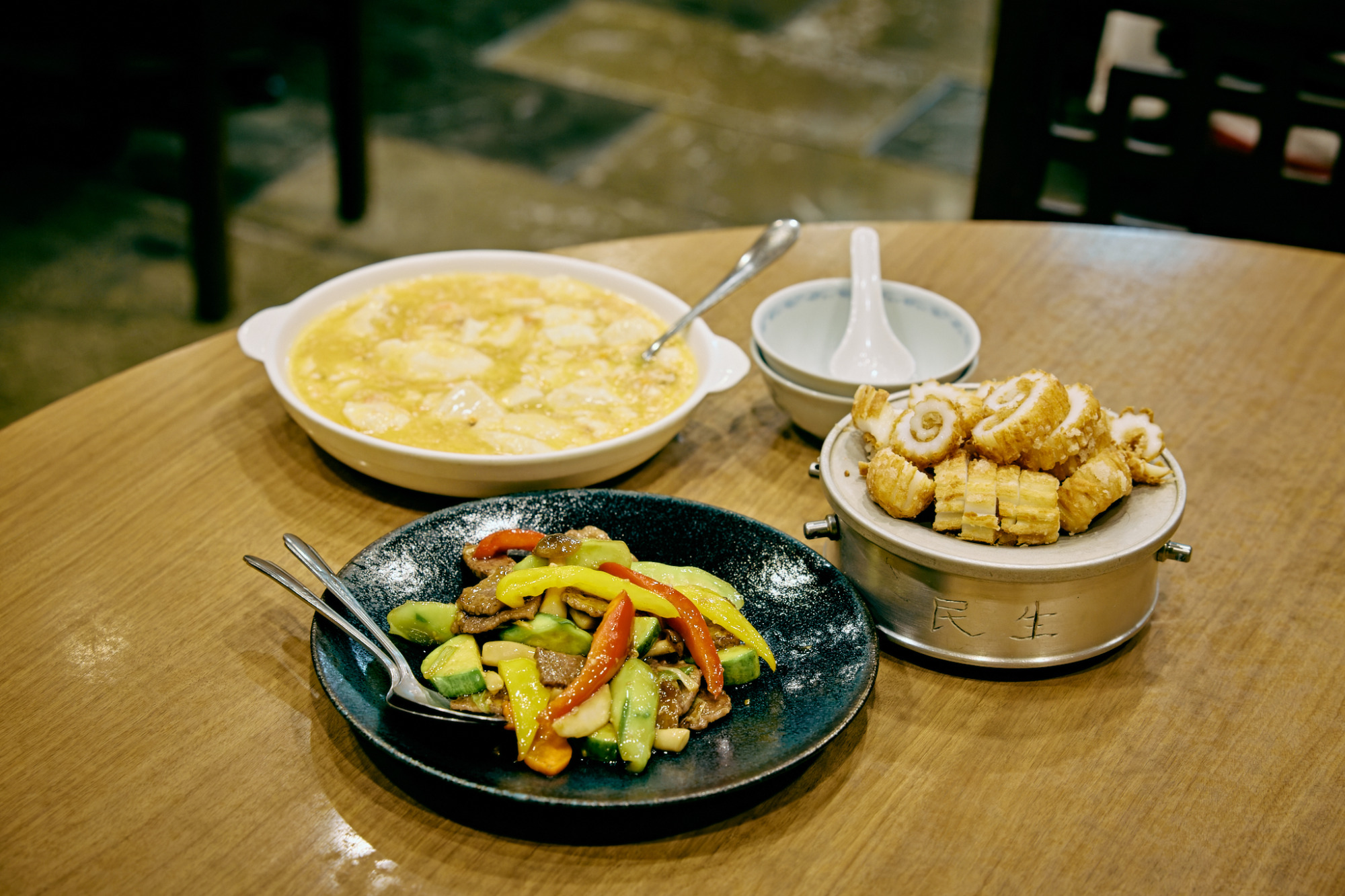 Stir-fried Kobe Beef with seasonal vegetables; Shanghai crab roe and tofu stew; squid tempura.
Dishes featuring ingredients from Hyogo are also popular. The stir-fried Kobe Beef with seasonal vegetables, made with A5-grade beef, combines the meat’s rich, subtly sweet flavor with the fresh texture of seasonal vegetables. The Shanghai crab roe and tofu stew also features generous portions of Kasumi crab meat, offering a deeply concentrated seafood flavor. Discover the essence of Cantonese cuisine through dishes that make the most of each ingredient’s natural qualities.
◇Minsei (Nankinmachi)
Address: 1-3-4 Motomachi-dori, Chuo-ku, Kobe, Hyogo
Tel.: 078-331-5435
Hours: 11:30–14:30 (last order 14:00); 17:00–20:00 (last order 19:00)
Closed: Mondays (following Tuesday if a national holiday)
Picture-Perfect Views at Meriken Park
About 10 minutes from Nankinmachi by City Loop bus, Meriken Park is one of Kobe’s most iconic waterfront destinations. Its name dates back to the opening of Kobe Port, when an American consulate stood nearby. Local residents began referring to the area as “Meriken Wharf,” after their pronunciation of the word “American.”
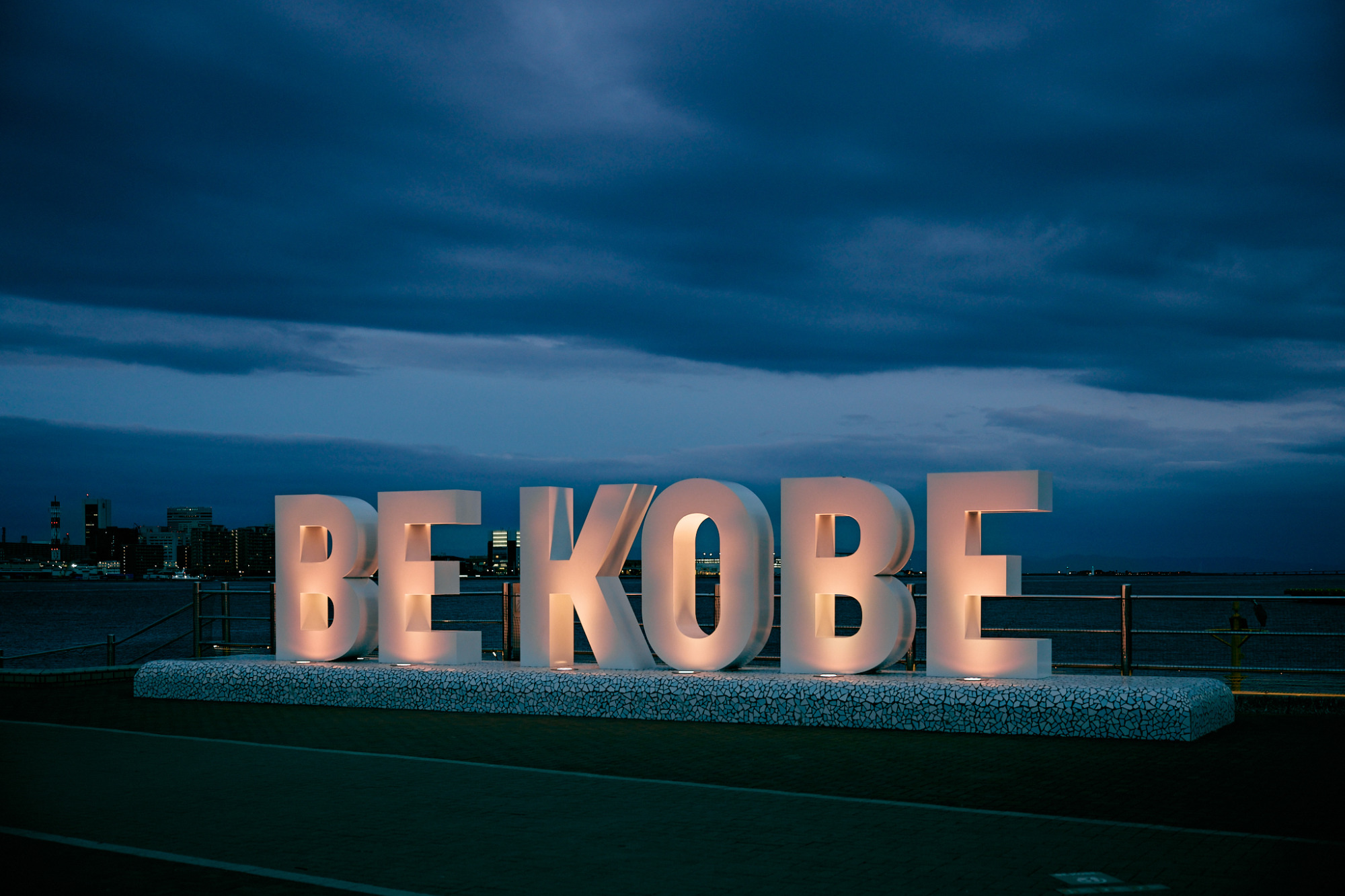 The illuminated BE KOBE monument at night.
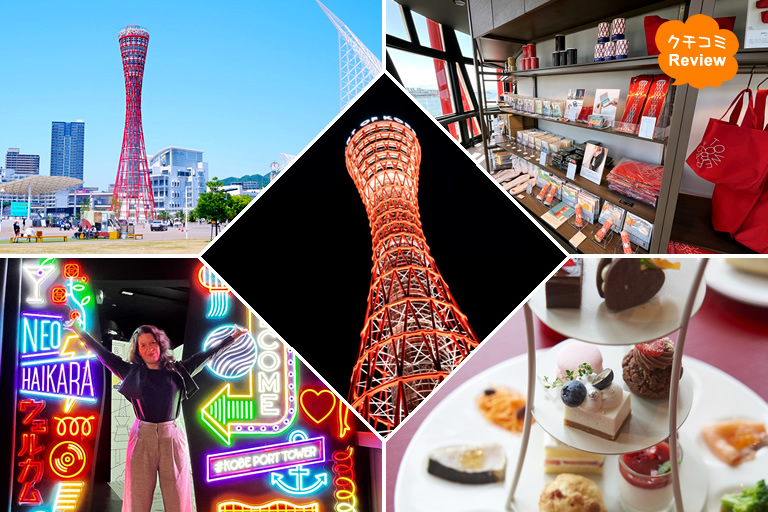
Overlooking Kobe Port Tower, one of the city’s best-known landmarks, Meriken Park is home to the BE KOBE monument and the Kobe Maritime Museum, whose striking roof is designed to evoke a ship’s sails and ocean waves. Both are popular photo spots.
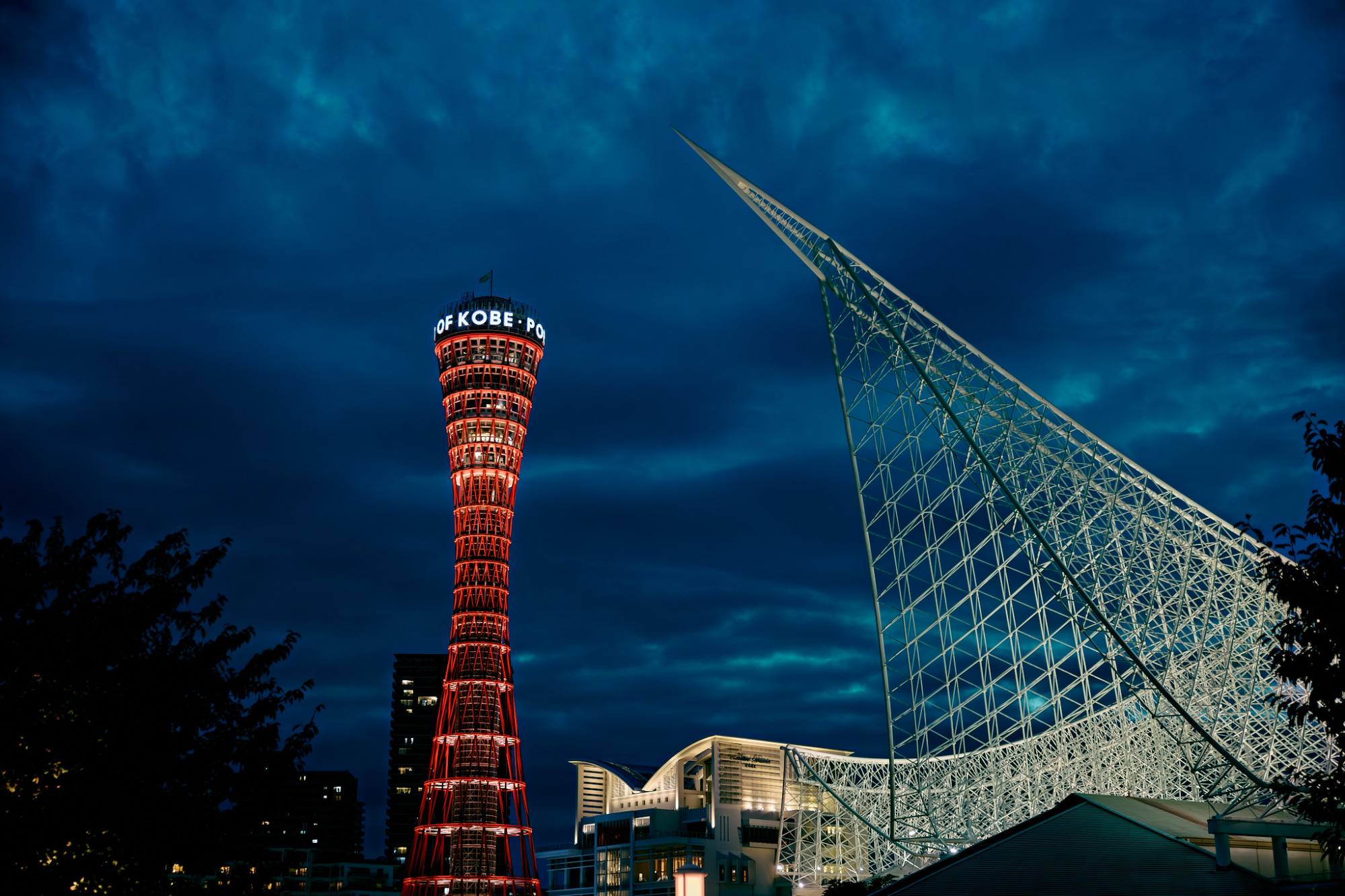 Kobe Port Tower and the Kobe Maritime Museum
Kobe is also renowned for its beautiful night views, ranking alongside Hakodate and Nagasaki as one of Japan’s three great night-view cities. Enjoy the romantic atmosphere as you take in the sparkling waterfront scenery and refreshing sea breeze.
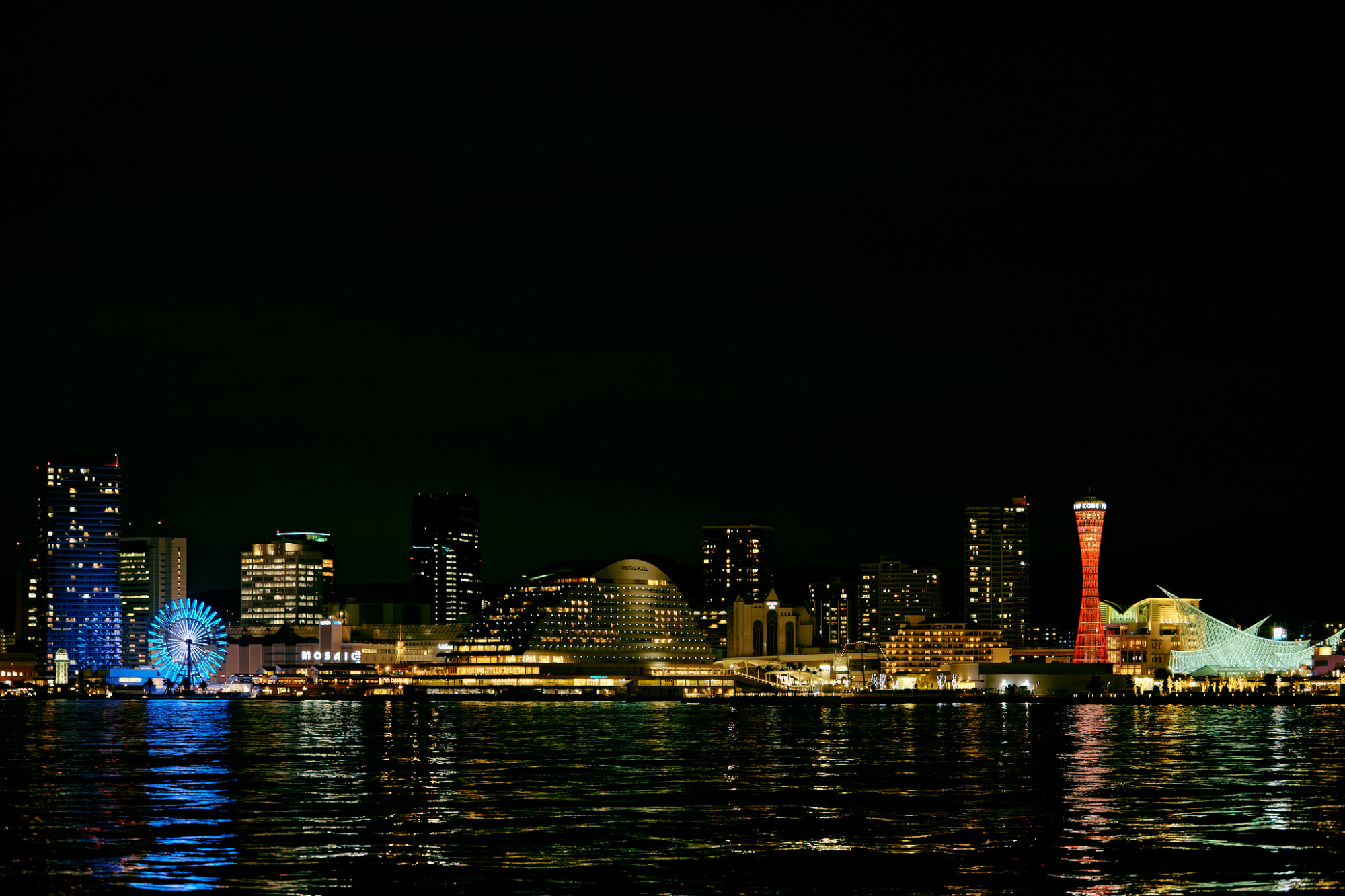 The glittering waterfront at night.
◇Meriken Park
Address: 2 Hatoba-cho, Chuo-ku, Kobe, Hyogo
URL: https://www.feel-kobe.jp/en/attractions/detail_1006.html
Kobe’s Evolving Waterfront: A New Marina Set to Open in 2027
The Naka Pier and Shinko Pier areas, home to Meriken Park and the surrounding waterfront, have undergone extensive redevelopment in recent years. In 2025, two new attractions opened: GLION ARENA KOBE, a multipurpose arena accommodating approximately 10,000 people, and TOTTEI PARK, an open waterfront space surrounded by the sea. Together, they are bringing new energy to the area.
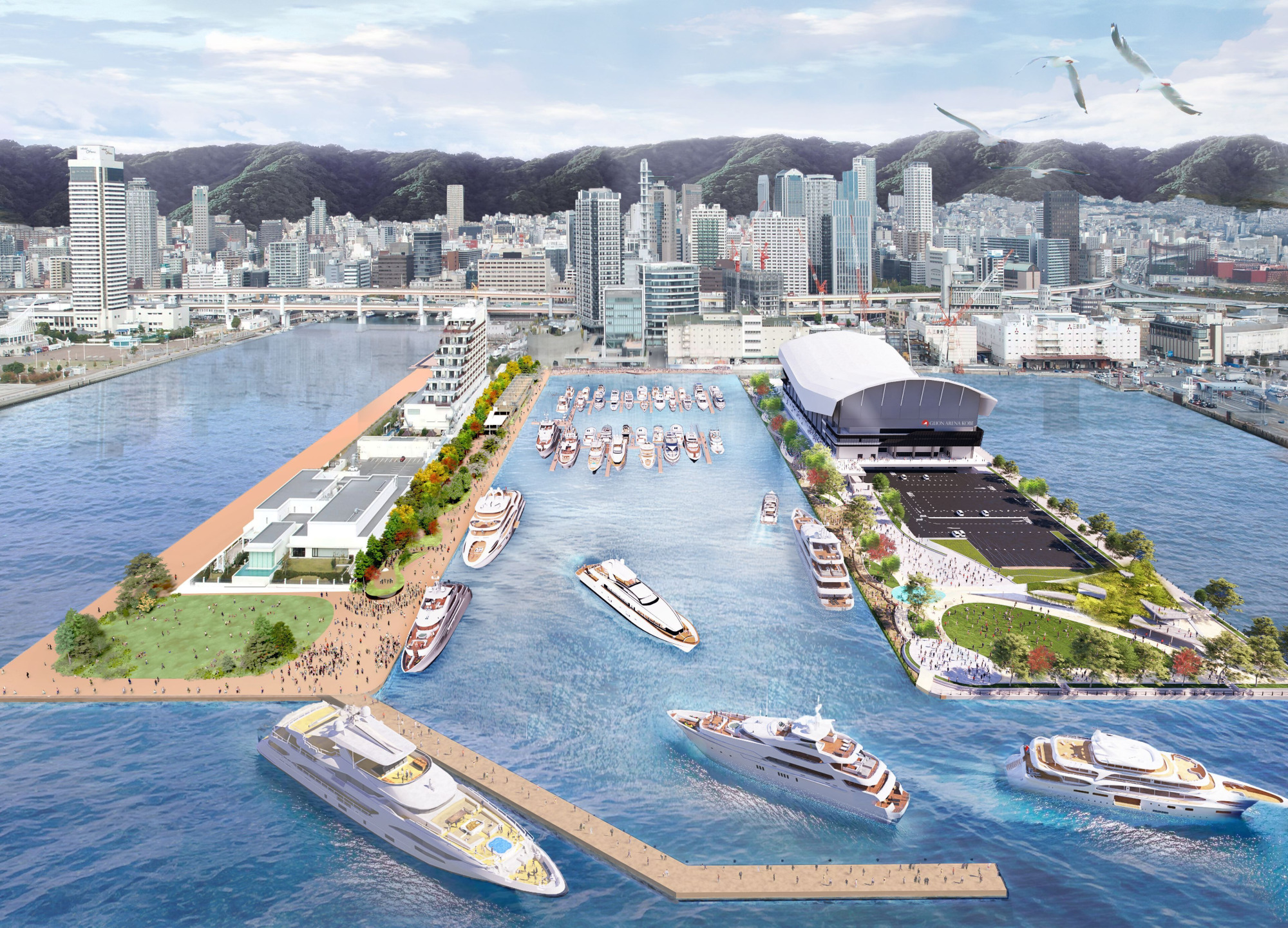 The new marina is scheduled to open next to GLION ARENA KOBE and TOTTEI PARK (right). Image courtesy of TOMOHIRO HATA Architect and Associates.
In spring 2027, SUPERYACHT BASE KOBE is scheduled to open as Japan’s first urban marina specializing in large recreational vessels. Designed to attract luxury boats, including superyachts, from Japan and overseas, it is expected to become a hub for cruising around the Seto Inland Sea. Plans also include a restaurant and clubhouse open to the public, making the marina a promising new attraction on Kobe’s waterfront.
◇SUPERYACHT BASE KOBE
Address: Off 100 Shinko-cho, Chuo-ku, Kobe, Hyogo
Experience Extraordinary Hospitality Aboard a Luxury Cruise Ship
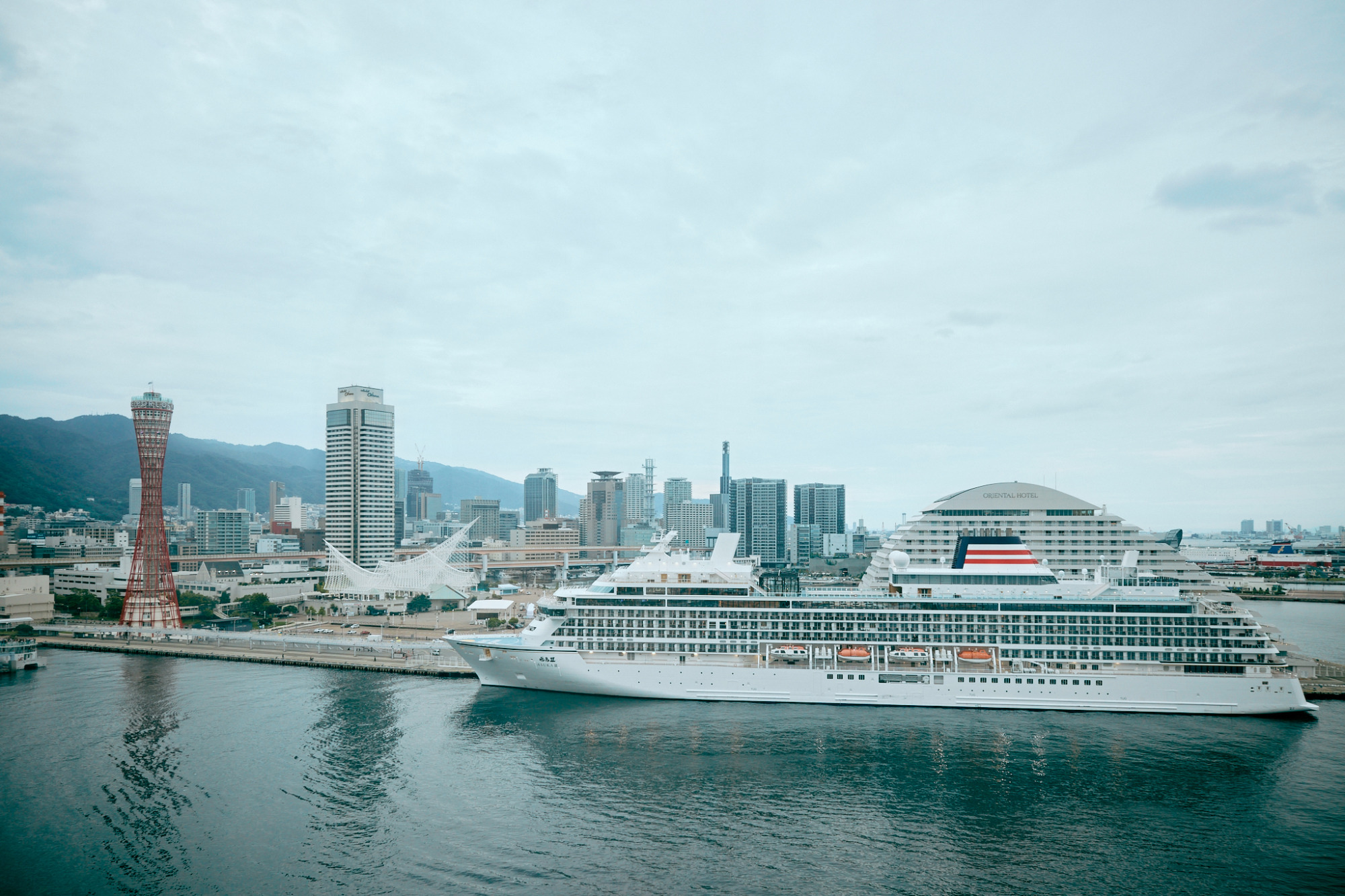
After exploring the many charms of Kobe, it’s time to set sail. Cruise ships from around the world call at the Nakatottei Terminal, just a short walk from Meriken Park, and the Kobe Port Terminal, which is directly connected to a train station.
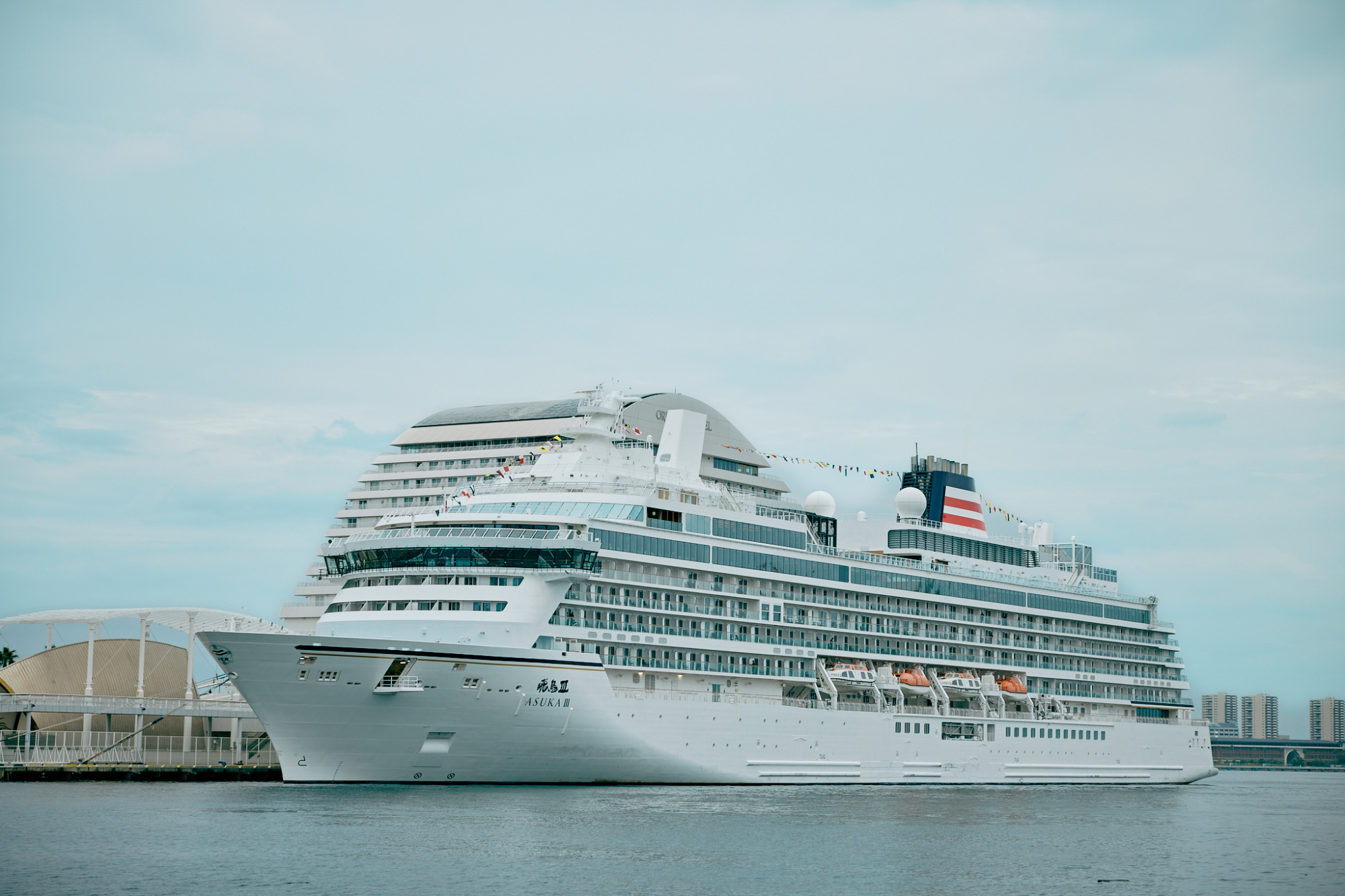 ASUKA III docked at the Nakatottei Terminal.
Asuka Cruise, which offers voyages departing from Kobe Port, has been a leading name in Japan’s luxury cruise industry since its first ship entered service in 1991. In 2025, the company introduced ASUKA III, its first newly built cruise ship in 34 years, attracting considerable attention.
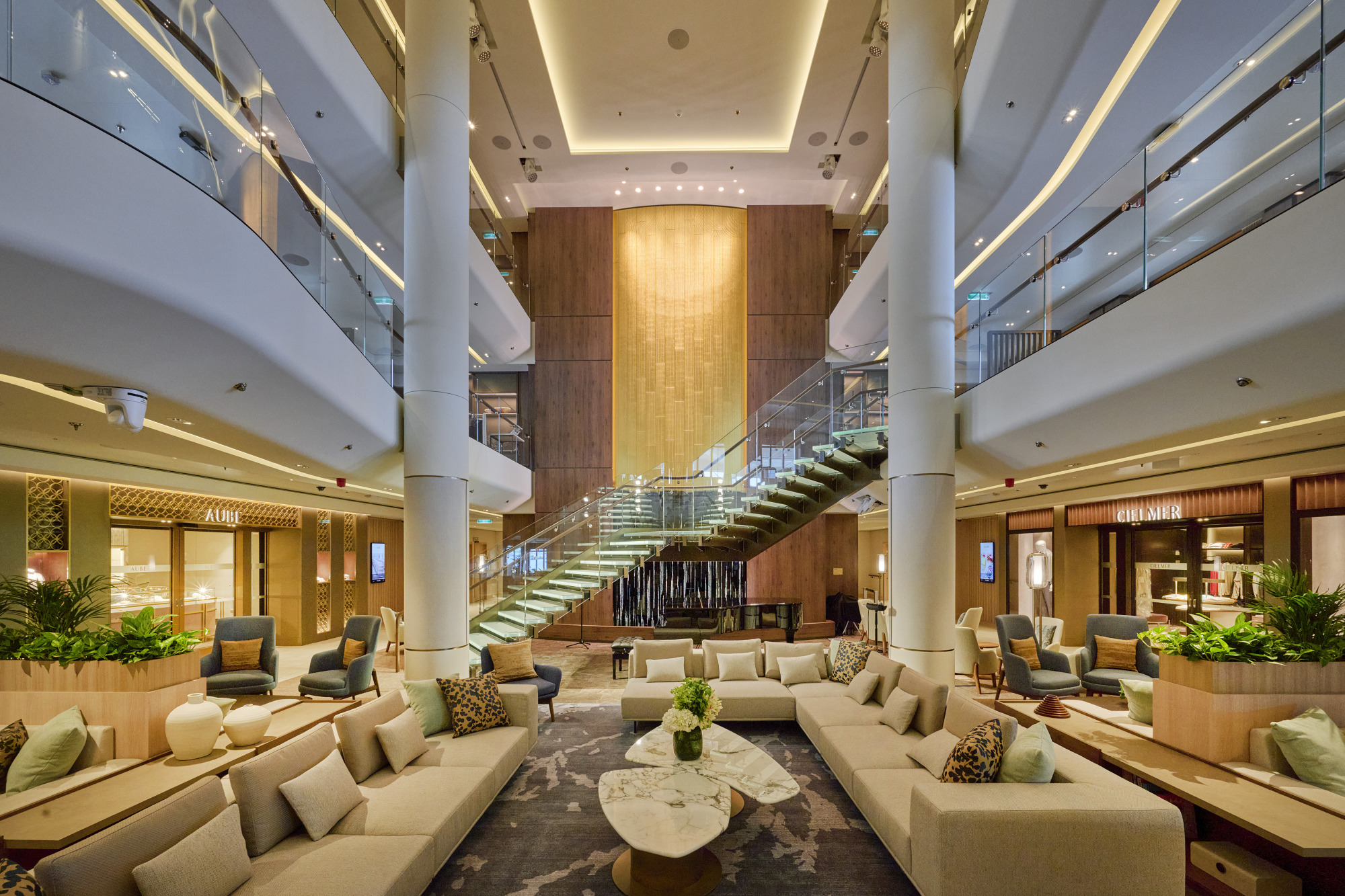 A magnificent work of lacquer art by artist Kazumi Murose is displayed in Asuka Plaza. Courtesy of Yusen Cruise.
Every guest room faces the ocean and features a private balcony, providing a luxurious space in which to relax. Works by some of Japan’s leading artists are displayed throughout the ship, creating an atmosphere reminiscent of an art gallery at sea.
Accommodations are available in three classes—Penthouse, Suite, and Balcony—allowing guests to choose according to their travel preferences and how they wish to spend their time on board.
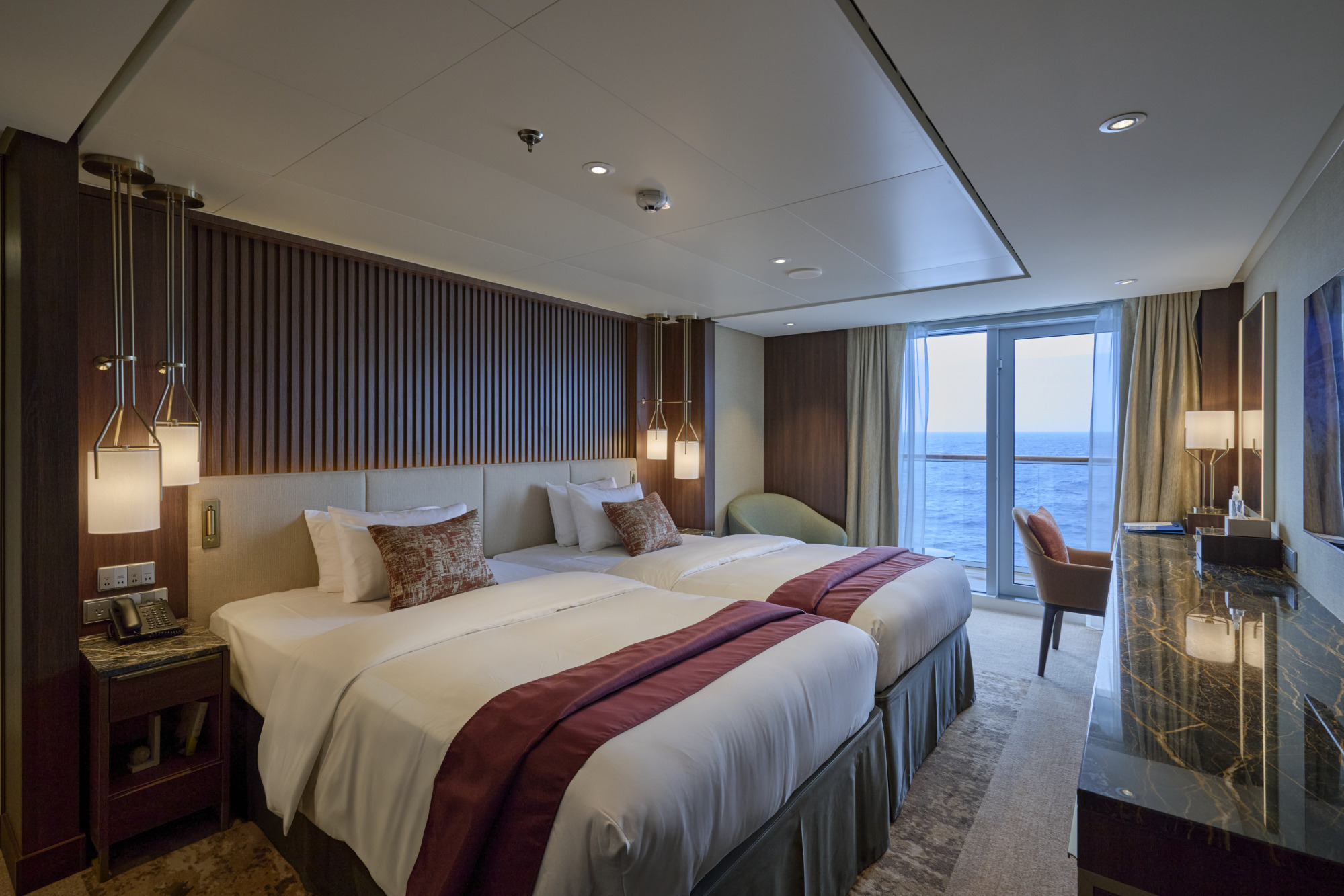 The bedroom of a Grand Penthouse, one of the ship’s most luxurious accommodations. Courtesy of Yusen Cruise.
A particularly distinctive feature is a collection of 47 Midship Suites, each inspired by one of Japan’s 47 prefectures. Created to introduce guests to the country’s diverse regional cultures, these rooms feature traditional crafts from their respective prefectures, offering a glimpse into local history and heritage.
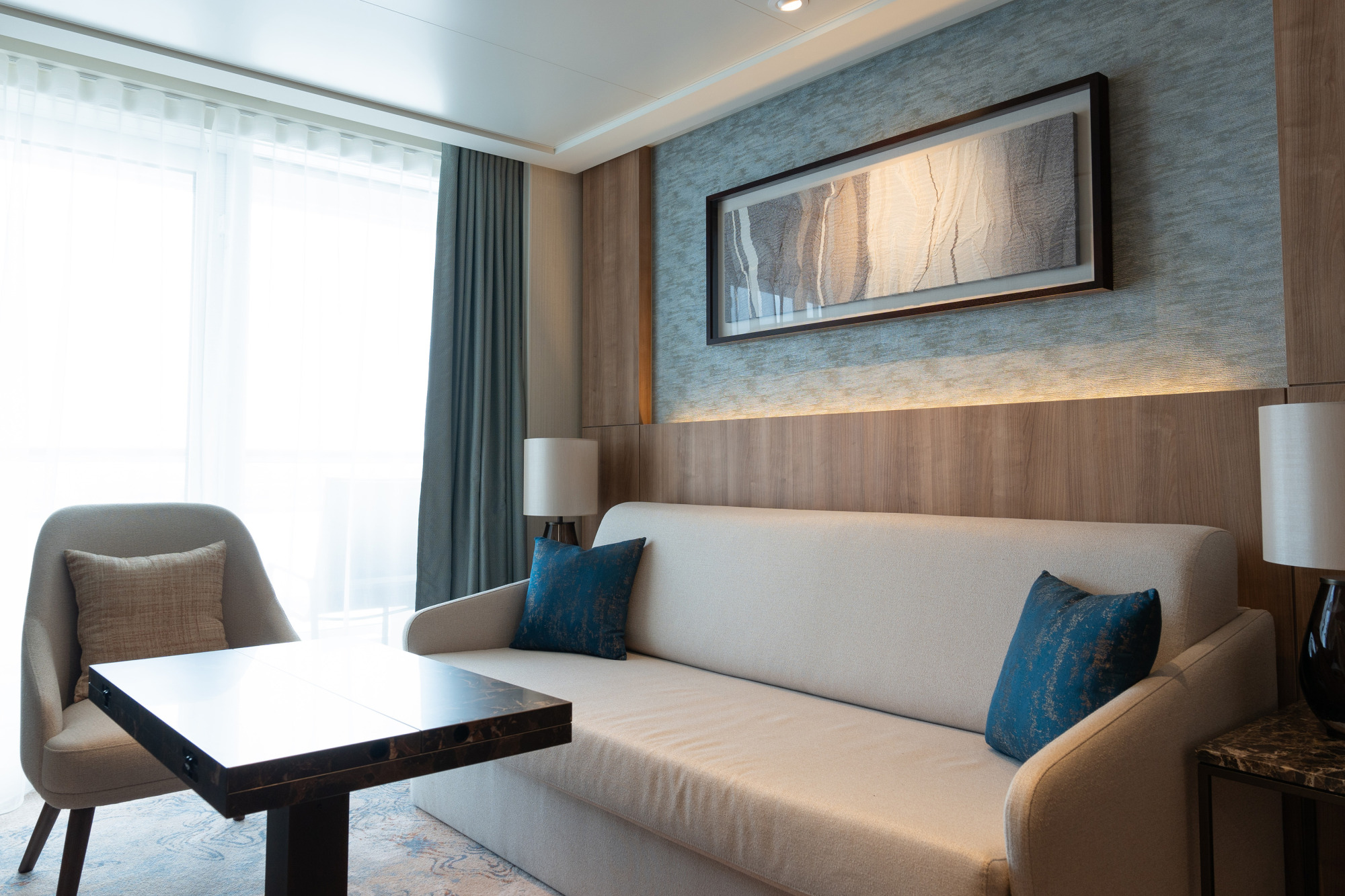 The Hyogo-themed suite features a Banshu-ori textile wall hanging and a Sanda celadon incense burner, among other traditional crafts. Courtesy of Yusen Cruise.
Dining is another highlight of the cruise experience. The ship has six restaurants catering to a wide range of tastes, including the Four Seasons Dining Room, which serves Japanese cuisine and Western-style dishes developed in Japan. Other options include Japanese kappo cuisine, French and Italian dining, grilled specialties, and a buffet. Some restaurants require reservations or additional charges.
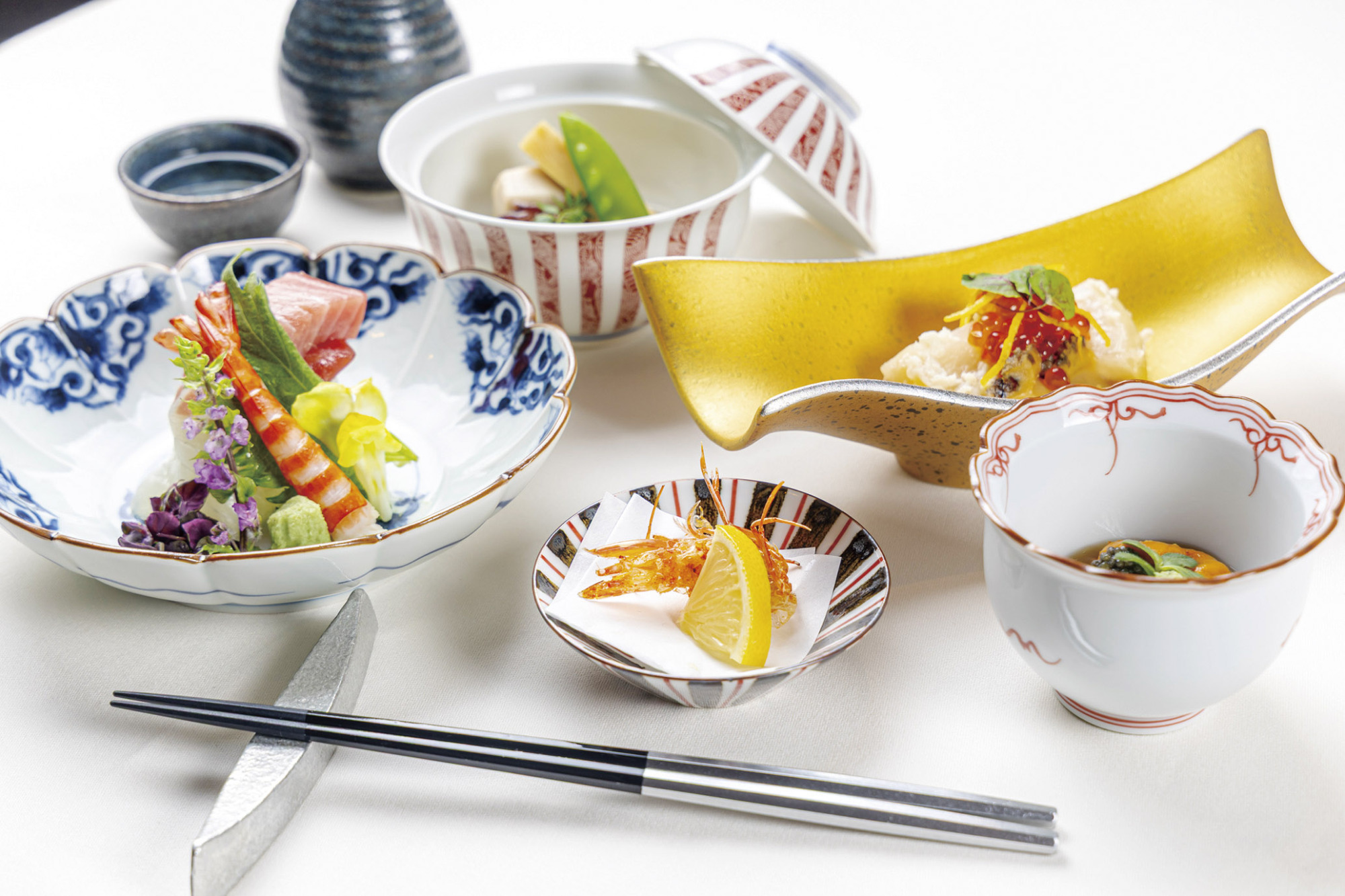 An example of the Japanese cuisine served at the Four Seasons Dining Room. Courtesy of Yusen Cruise.
The ship also offers a variety of wellness and relaxation facilities, including the Grand Spa, a large public bathing area with panoramic views. Entertainment is equally impressive, with original performing arts productions combining digital art projections and dance to create a captivating onboard experience.
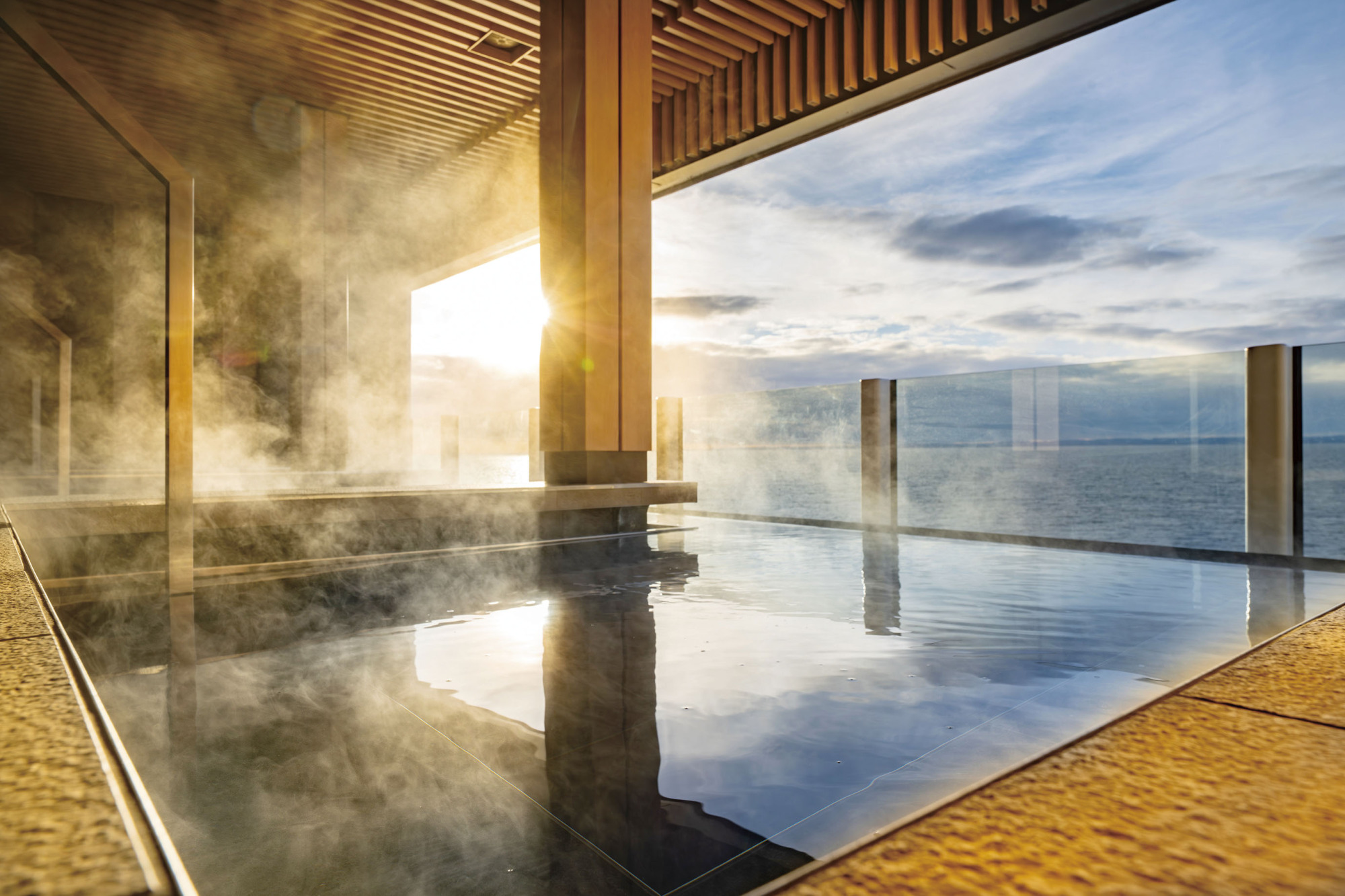 The open-air bath at the Grand Spa. Courtesy of Yusen Cruise.
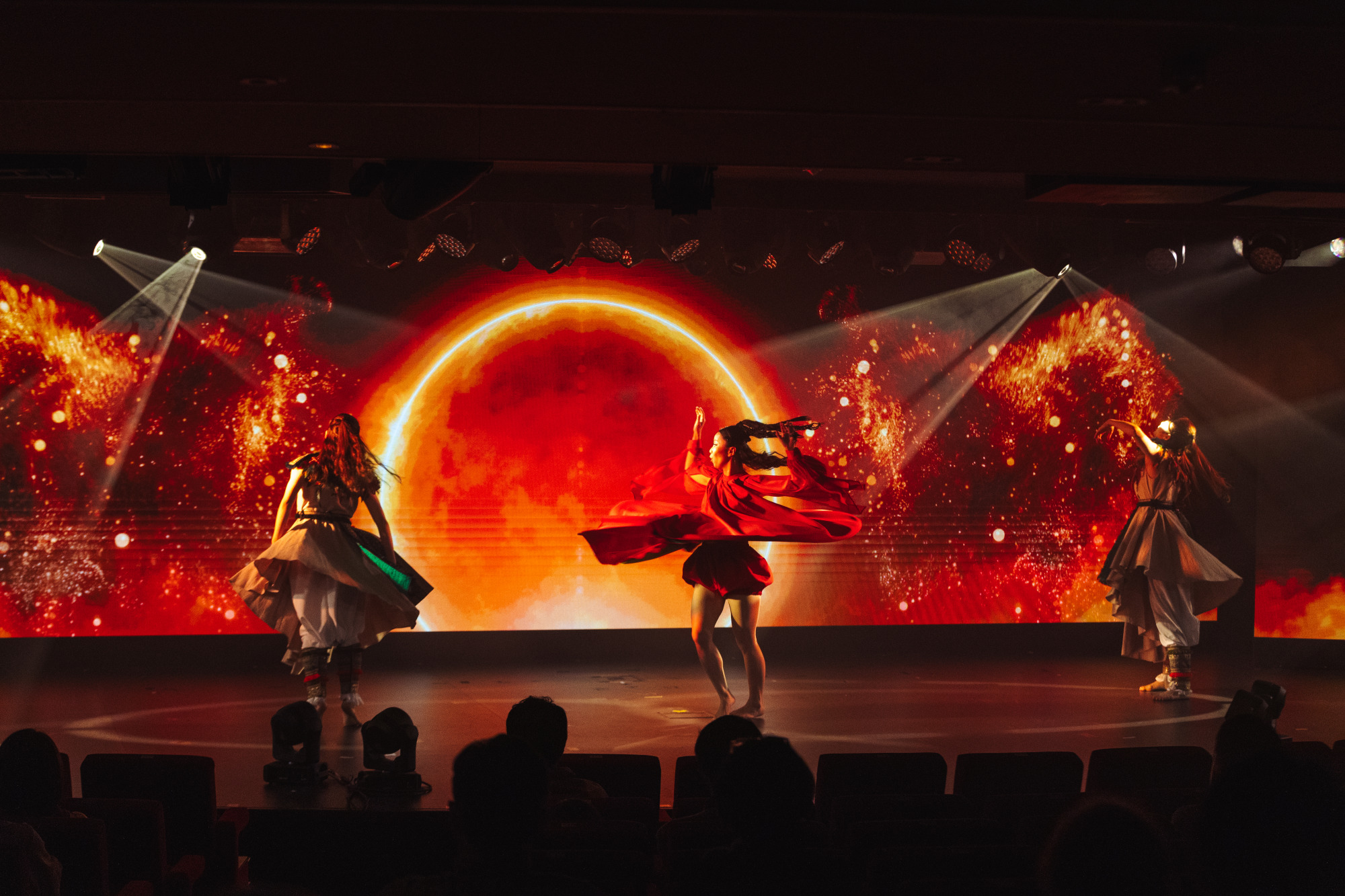 An enchanting performing arts production unfolds on stage. Courtesy of Yusen Cruise.
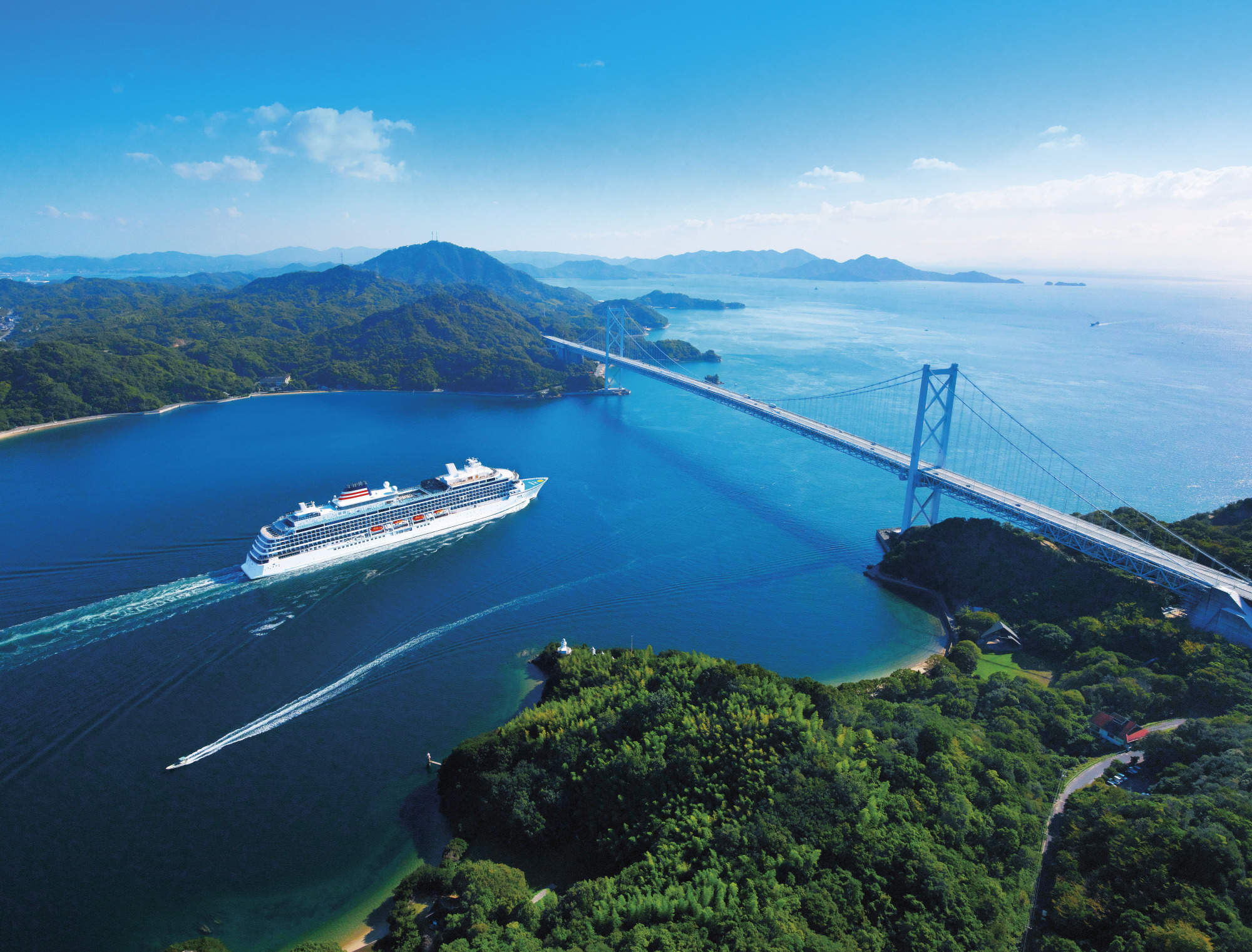 ASUKA III passing beneath the Innoshima Bridge in the Seto Inland Sea. Courtesy of Yusen Cruise.
Cruises departing from and returning to Kobe Port visit a variety of destinations depending on the season. Itineraries include Kochi, a historic castle town; Beppu, one of Kyushu’s leading hot spring destinations; and Tanegashima and the islands of Okinawa, known for their beautiful coastal scenery.
From elegant accommodations that offer an escape from everyday life to sweeping ocean views and the landscapes of each port of call, a cruise aboard ASUKA III promises memorable experiences that can only be enjoyed at sea.
◇Asuka Cruise
Tel.: 0570-666-154 (Asuka Cruise/Yusen Cruise; Monday–Friday, 10:30–17:00; closed Saturdays, Sundays, and national holidays)