Stay in Historic Homes and Travel Like a Local in Hyogo, Japan: Explore Fukusaki and Tamba-Sasayama with NIPPONIA
- Date posted
- 2026.10.01
- Date last updated
- 2026.10.07
Member of the *noi* editorial staff. After working as an international flight attendant, I became a broadcaster. On radio programs and other platforms, I share the charms of regions across Japan as a “travel expert.” Currently, with a focus on tourism, I’m also involved in planning and organizing events that connect different parts of Japan, and I’m dedicated to creating spaces where people and communities can come together.
- Hobbies
- Travel
![[ Undefined: article-review-plain ]](/lsc/upfile/article/0000/0836/836_2_m.jpg)
INDEX
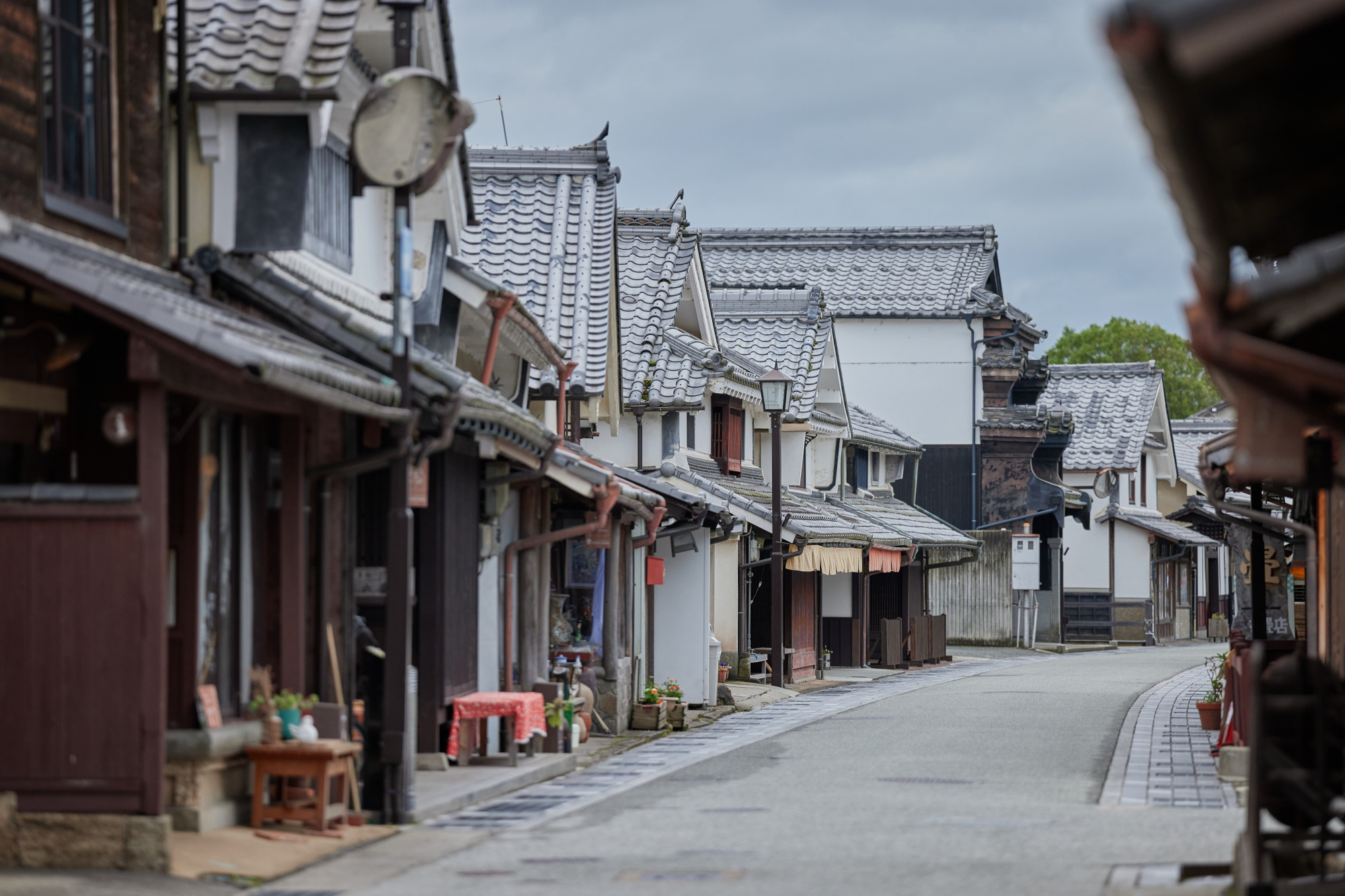
After arriving at Kansai International Airport, set out on a journey that invites you to stay awhile in one place and experience its culture and way of life in greater depth. NIPPONIA breathes new life into traditional homes and historic buildings across Japan, transforming them into accommodations where travelers can experience the culture and everyday life unique to each region. Now found in communities across the country, the initiative had its beginnings in Tamba-Sasayama, Hyogo Prefecture.
It all began with a project to revitalize the village of Maruyama, where vacant homes had become increasingly common. Launched in 2009, the initiative took shape in 2015 with the opening of NIPPONIA Sasayama Castle Town Hotel and developed into a model for a “dispersed hotel,” where historic buildings scattered throughout a community are repurposed as accommodations.
This journey takes us between NIPPONIA properties in Hyogo, tracing the stories passed down through each place. Our first stop is Fukusaki, a town where legends of yokai live on.
【DAY 1】Fukusaki – Exploring a Town Where Yokai Legends Live On
Meet Yokai on Benches and Kappa at Tsujikawayama Park
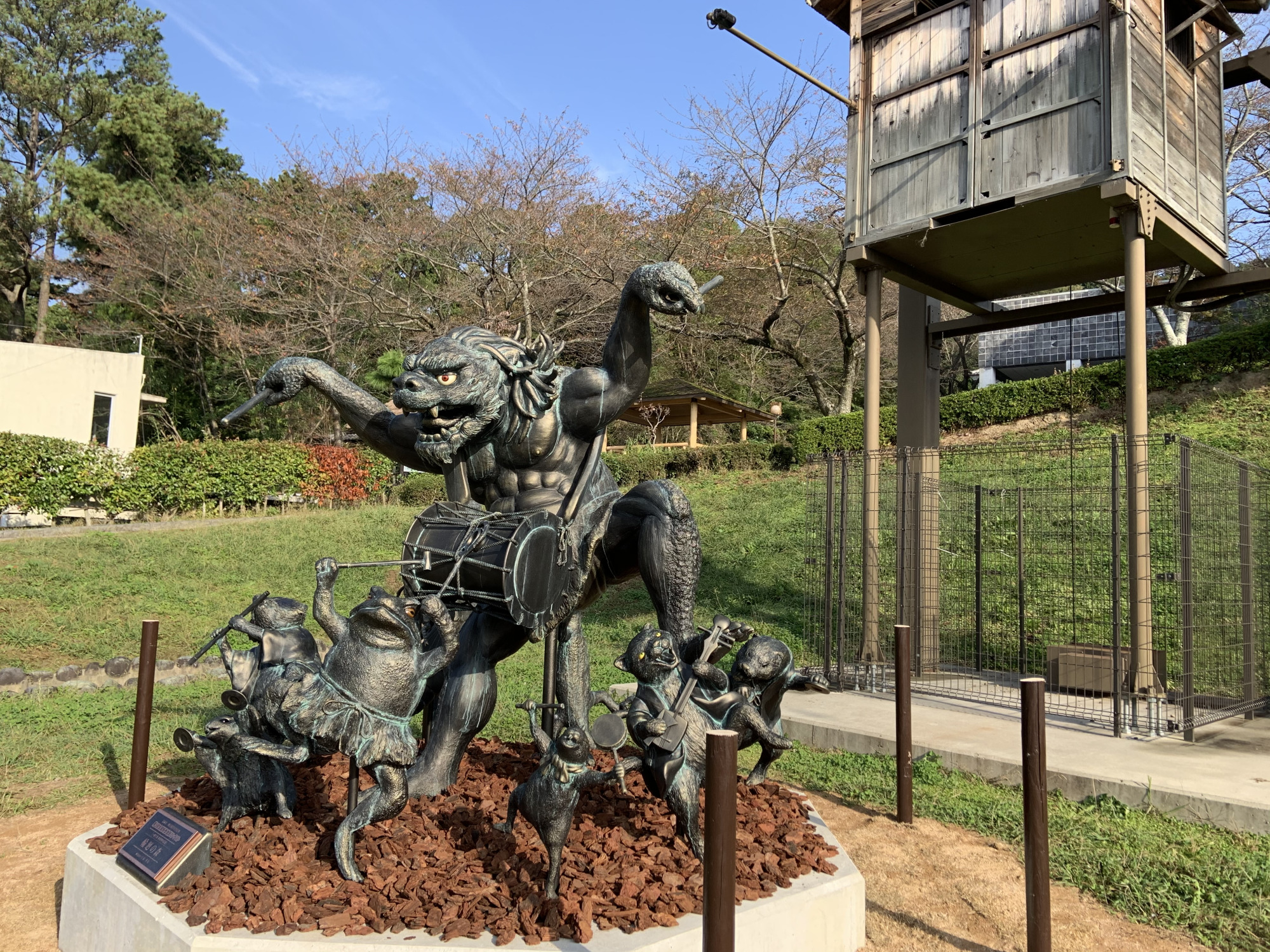 A large yokai statue in Tsujikawayama Park. This is Yamabayashi, a yokai said to beat a drum in the mountains at night.
From Kansai International Airport, it takes about two hours by limousine bus to Himeji Station. From there, transfer to the JR Bantan Line for the roughly 30-minute ride to Fukusaki Station. Far removed from the bustle of the city and surrounded by lush rural scenery, Fukusaki is a town where traces of an older Japan remain—a fitting place to begin the journey.
Fukusaki is the hometown of Kunio Yanagita, known as the father of Japanese folklore studies. In his book Seventy Years in My Hometown, Yanagita recounted a story about encountering a kappa beside the Ichikawa River as a child. Today, Fukusaki has become known as the “town of yokai.”
From Fukusaki Station, set out in search of the town’s “Yokai Benches,” inspired by creatures such as kappa and tengu, as you make your way to the first stop: Tsujikawayama Park.
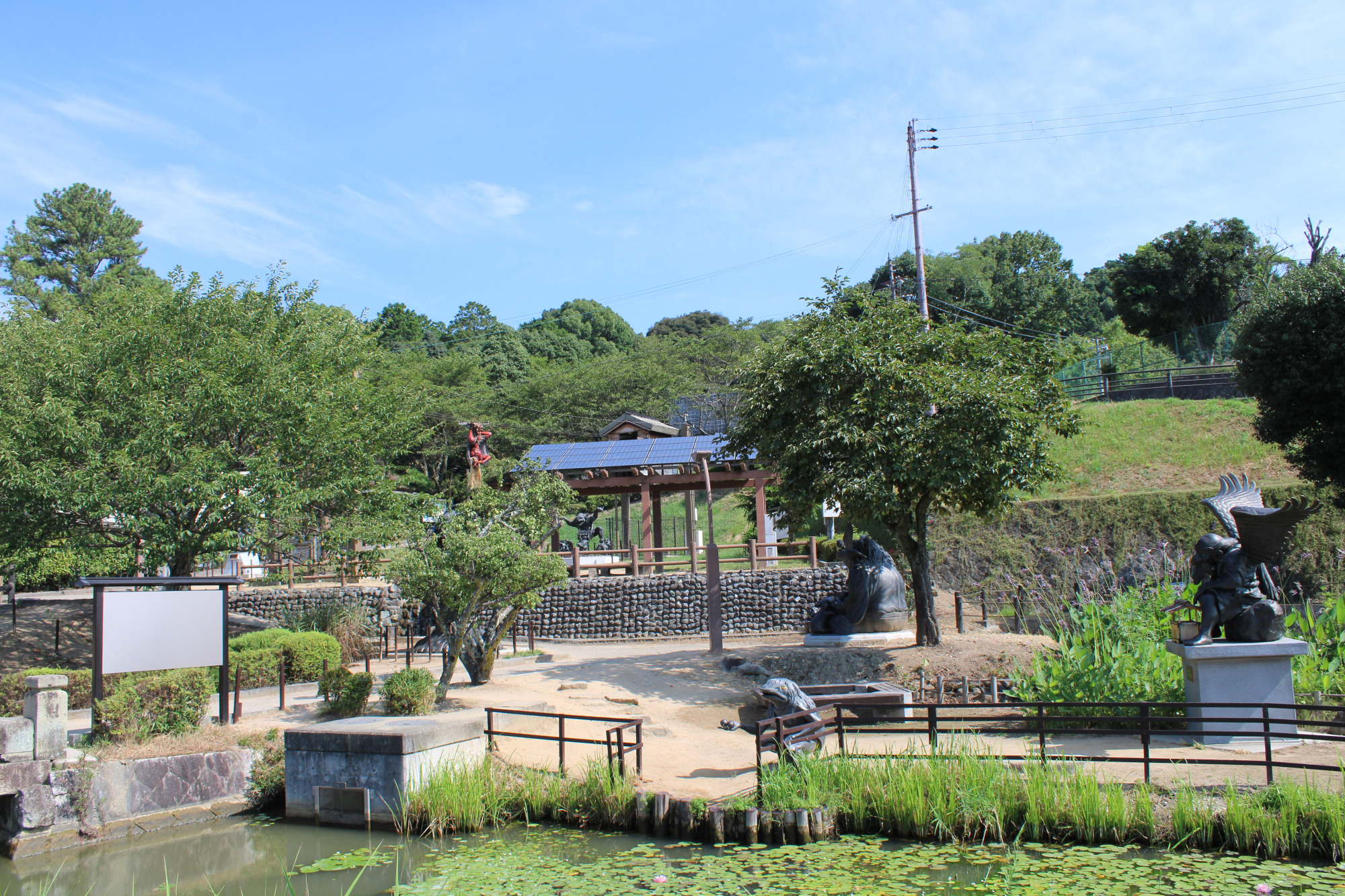 Tsujikawayama Park can be reached from Fukusaki Station on foot or by rental bicycle. Of the Yokai Benches scattered around town, around nine can be found between Fukusaki Station and the Tsujikawa area, making it fun to explore the streets in search of the different yokai.
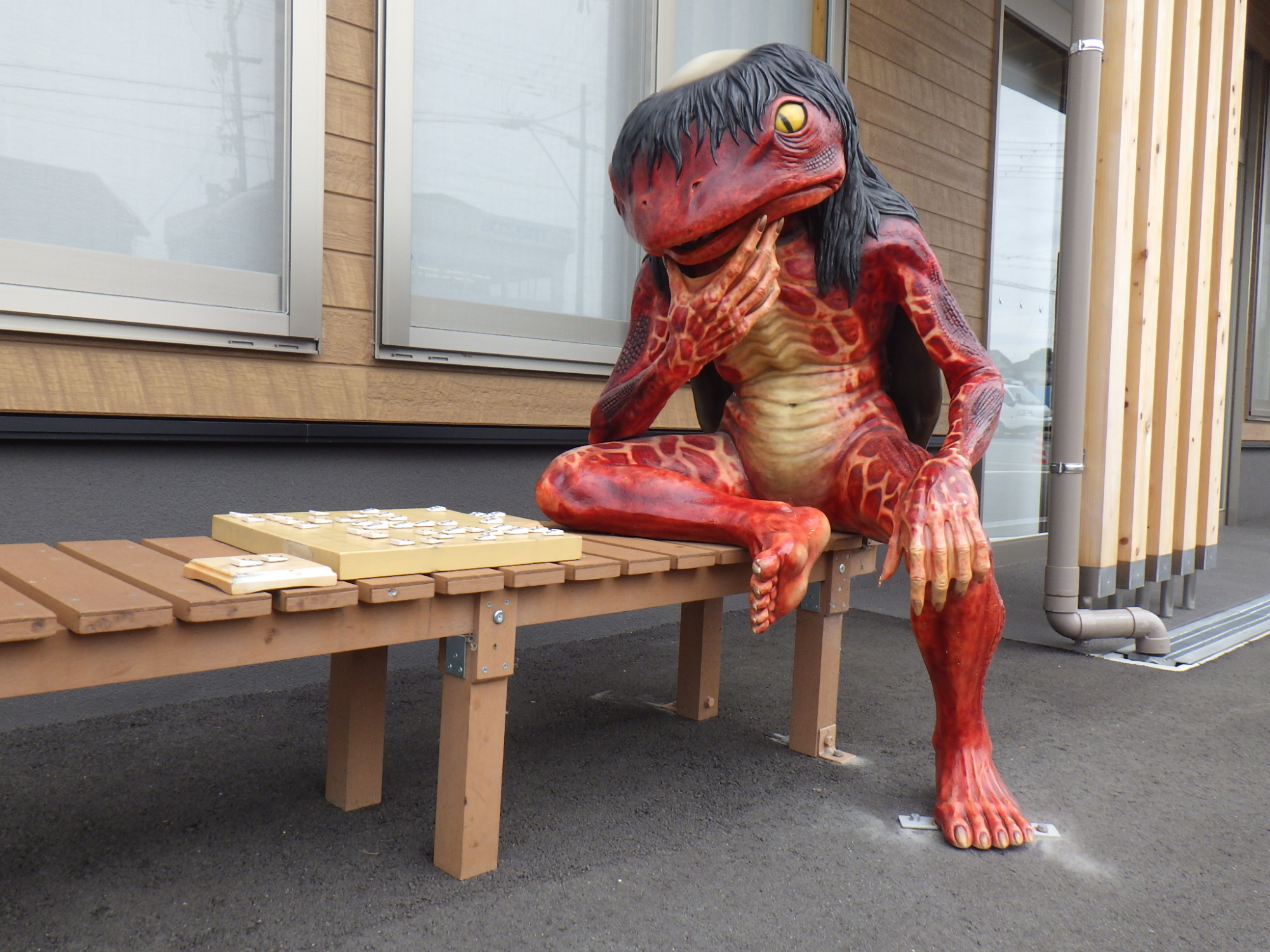 Kappa are said to enjoy shogi, a traditional Japanese board game. Take a seat on the Yokai Bench for a photo together.
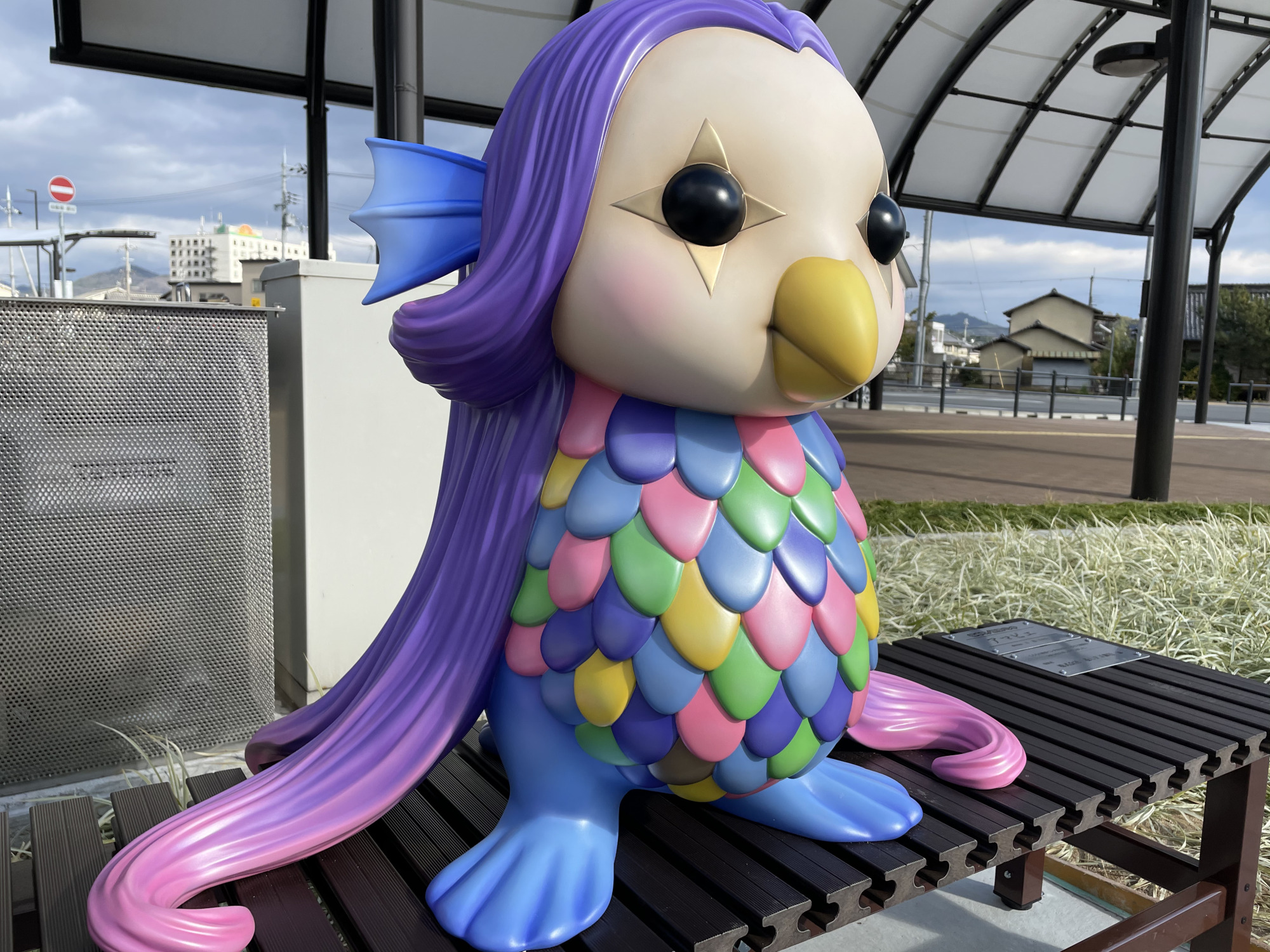 The Amabie Yokai Bench. Amabie are known as yokai associated with protection from epidemics, and legend holds that drawing their likeness can ward off illness.
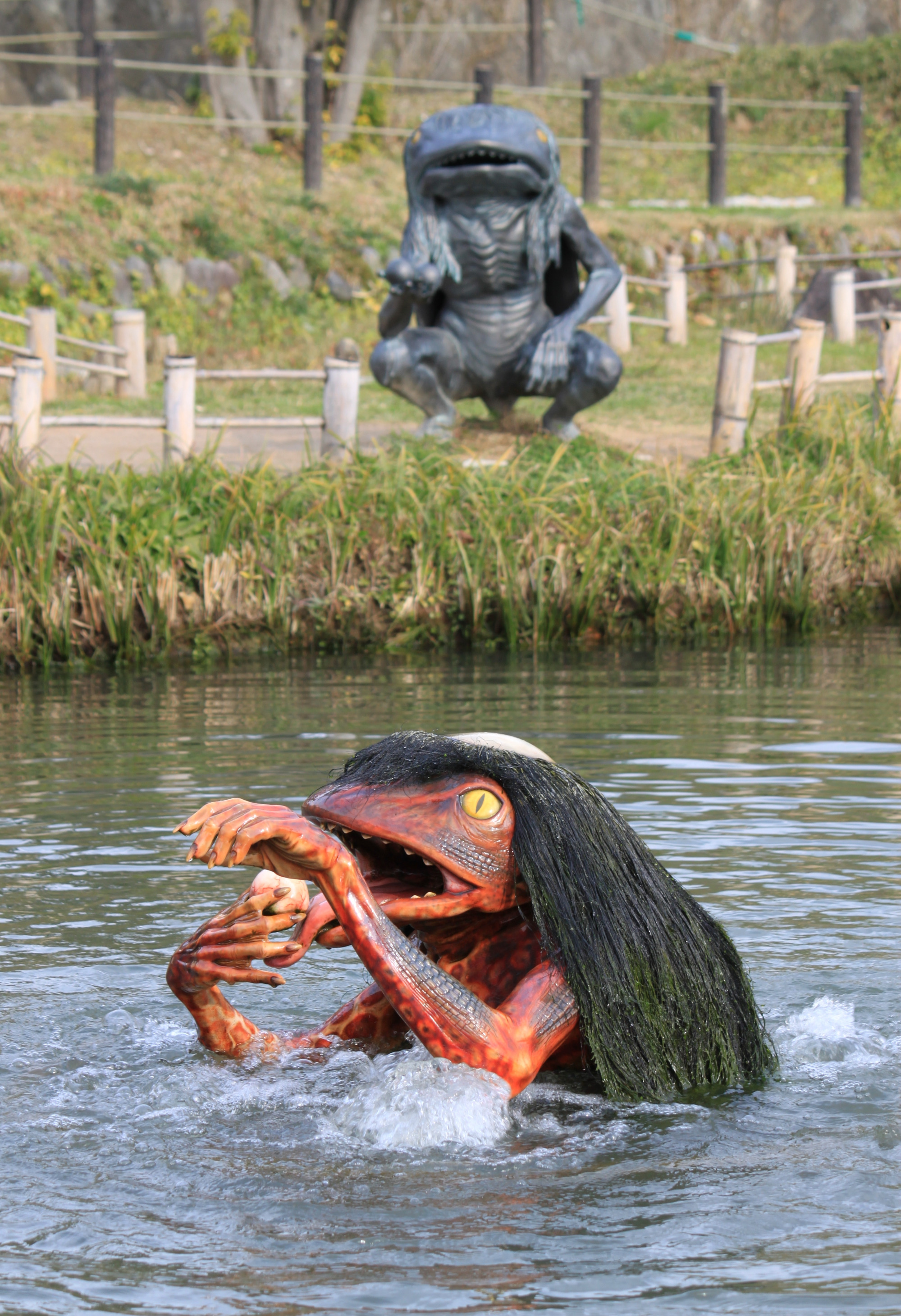 The kappa brothers: Gataro, beside the pond, and his younger brother Gajiro, who emerges from beneath the water.
After taking photos with the quirky Yokai Benches, make your way to the pond in the park. This is home to the kappa brothers Gataro and Gajiro, with a mechanism that sends them bursting up from the water every 15 minutes between 9:00 and 21:00.
The attraction was inspired by Yanagita’s account of Gataro, a kappa from local folklore associated with the Ichikawa River. At the appointed time, a kappa suddenly breaks through the surface of the pond, delighting visitors gathered around the water.
Tsujikawayama Park
Address: 1038-12 Nishitawara, Fukusaki, Kanzaki District, Hyogo
Admission: Free; visitors may enter at any time
Fukusaki Tourism Association
Address: 1470-1 Nishitawara, Fukusaki, Kanzaki District, Hyogo
Tel.: 0790-21-9056
URL: https://fukusakikankou.jp/en/the-yokai-of-tsujikawayama-park/
The Birthplace of Folklorist Kunio Yanagita, Who Recorded Japan’s Yokai Legends
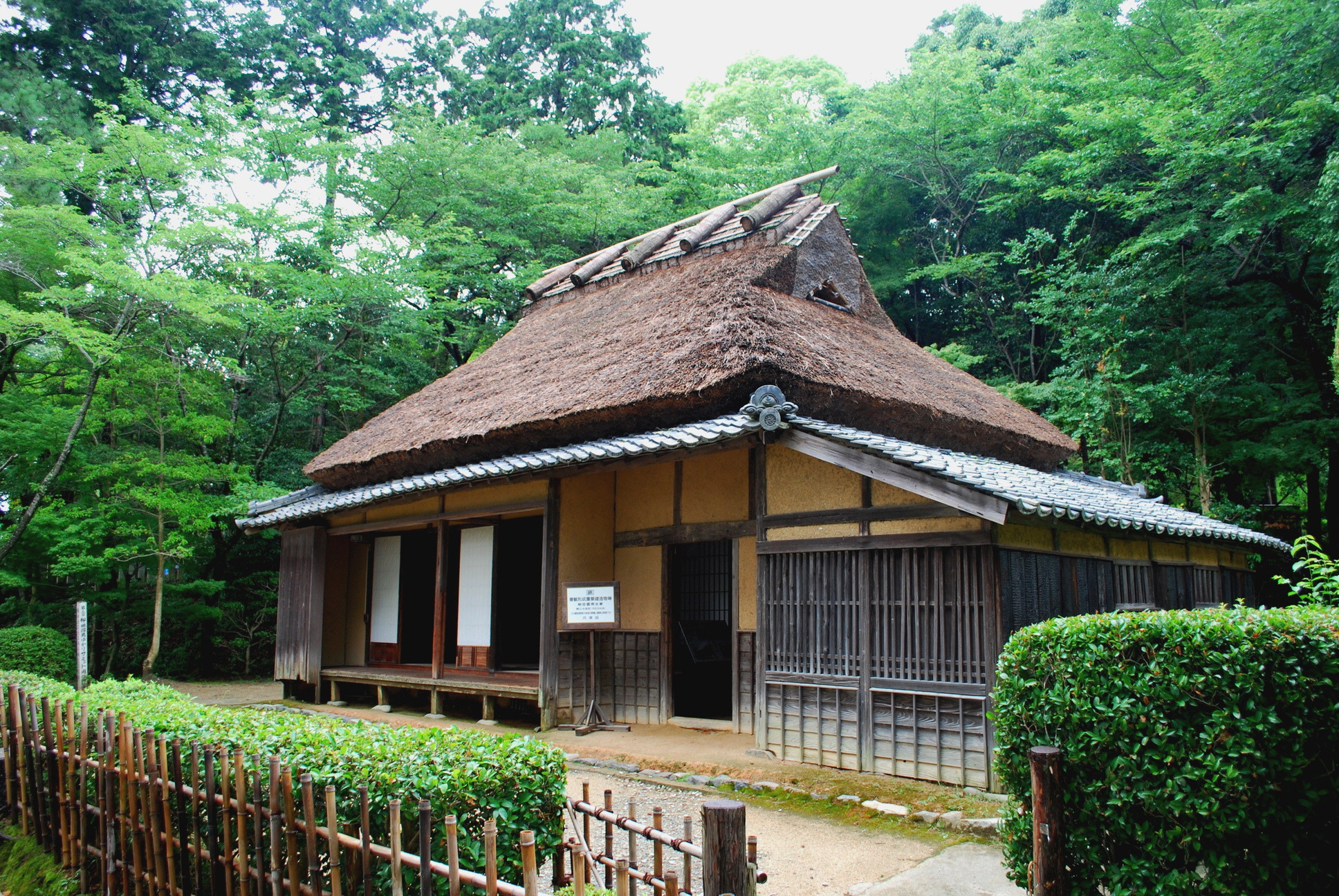 The house where Kunio Yanagita lived until 1884. Yanagita himself is said to have called it “the smallest house in Japan.”
Beyond the park, a gentle uphill walk leads to the birthplace of folklorist Kunio Yanagita (1875–1962), who preserved stories of kappa, tengu, and other legendary beings for future generations. It is an essential stop on any journey exploring Fukusaki’s yokai culture.
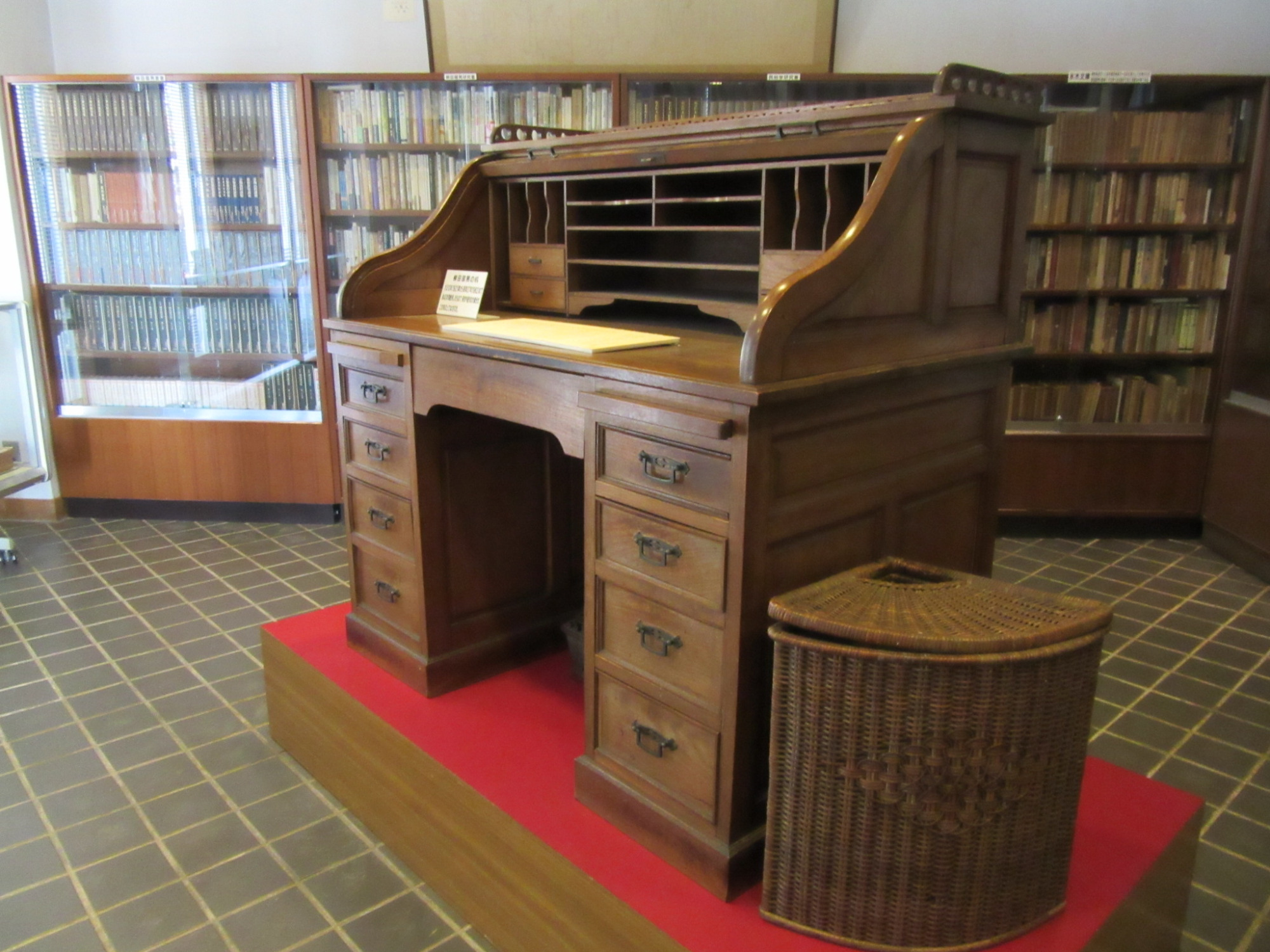 The memorial museum displays the desk used by Kunio Yanagita, along with numerous handwritten manuscripts, publications, and other materials, offering an up-close look at the life and work of the father of Japanese folklore studies.
One of the most striking exhibits at the memorial museum next to Yanagita’s birthplace is the large desk he once used. With its many drawers and compartments, it offers a glimpse into how he worked as he collected and organized legends and folk tales from across Japan.
Yanagita is said to have written many of his works at this desk. Among the best known is The Legends of Tono (1910), a collection of mysterious tales featuring kappa, tengu, and other supernatural beings. Today, the book has been translated into English, Chinese, and Korean.
Having grown up immersed in the stories passed down in this area, Yanagita went on to record folklore from throughout Japan. Carrying on that legacy, Fukusaki now shares its yokai traditions and folk culture as part of the town’s distinctive appeal.
Fukusaki Municipal Kunio Yanagita and Matsuoka-ke Family Memorial Museum
Address: 1038-12 Nishitawara, Fukusaki, Kanzaki District, Hyogo
Tel.: 0790-22-1000
Hours: 9:00–16:30 (last admission 16:00)
Closed: Mondays (open when Monday is a national holiday), the day following a national holiday, and December 28–January 4
Admission: Free
URL: https://www.town.fukusaki.hyogo.jp/html/kinenkan/en/index.html
Reflect on the Day at NIPPONIA Harima Fukusaki Library Maison
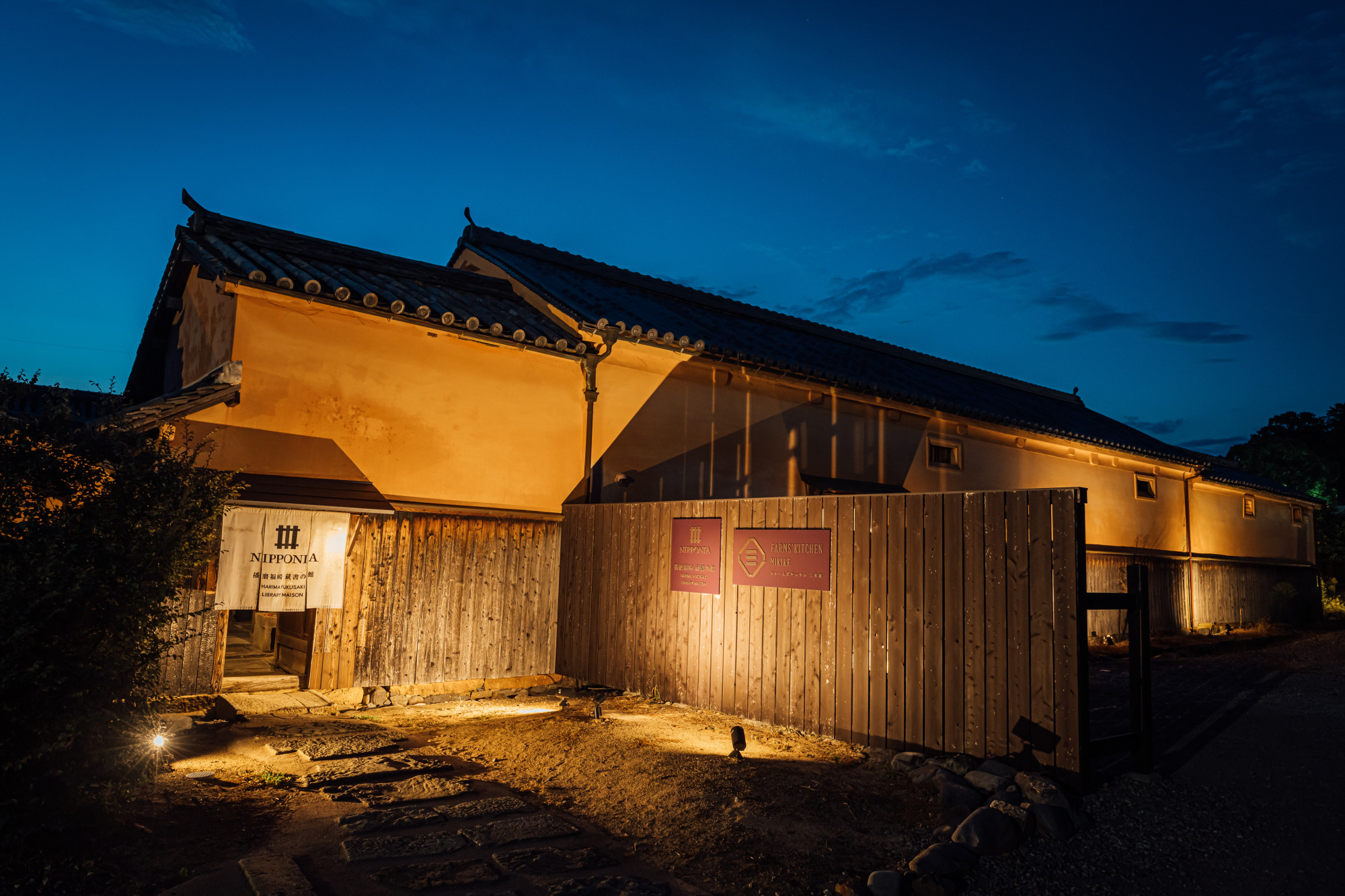 NIPPONIA Harima Fukusaki Library Maison, illuminated after dark.
After discovering the stories behind Fukusaki’s yokai traditions, it’s time to head to your accommodation for the night. Here, in one of the town’s historic buildings, you can quietly reflect on the stories encountered throughout the day.
NIPPONIA Harima Fukusaki Library Maison is housed in the former residence of the Miki family, prominent village officials during Japan’s Edo period (1603–1868). The roughly 300-year-old building has been restored and given new life as an accommodation. It is also known as a place where folklorist Kunio Yanagita spent part of his childhood.
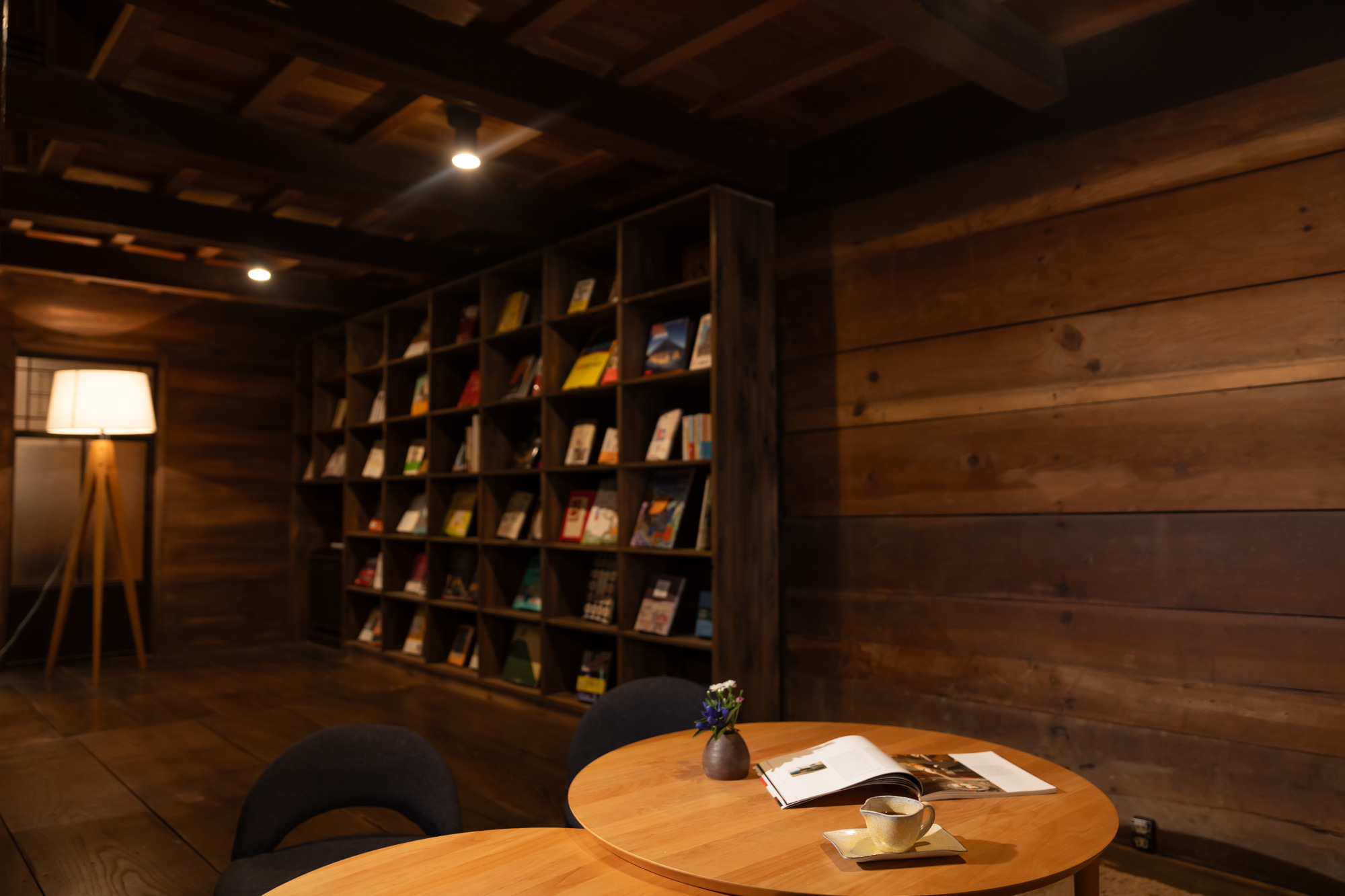 Guest rooms renovated from former storehouses are lined with books selected by YOURS BOOK STORE, a bookstore specializing in carefully curated titles.
A night at NIPPONIA Harima Fukusaki Library Maison is also an opportunity to connect with the memories of the town. Pick up one of the books lining your room and spend a quiet evening reading and reflecting on yokai and Japan’s folk culture.
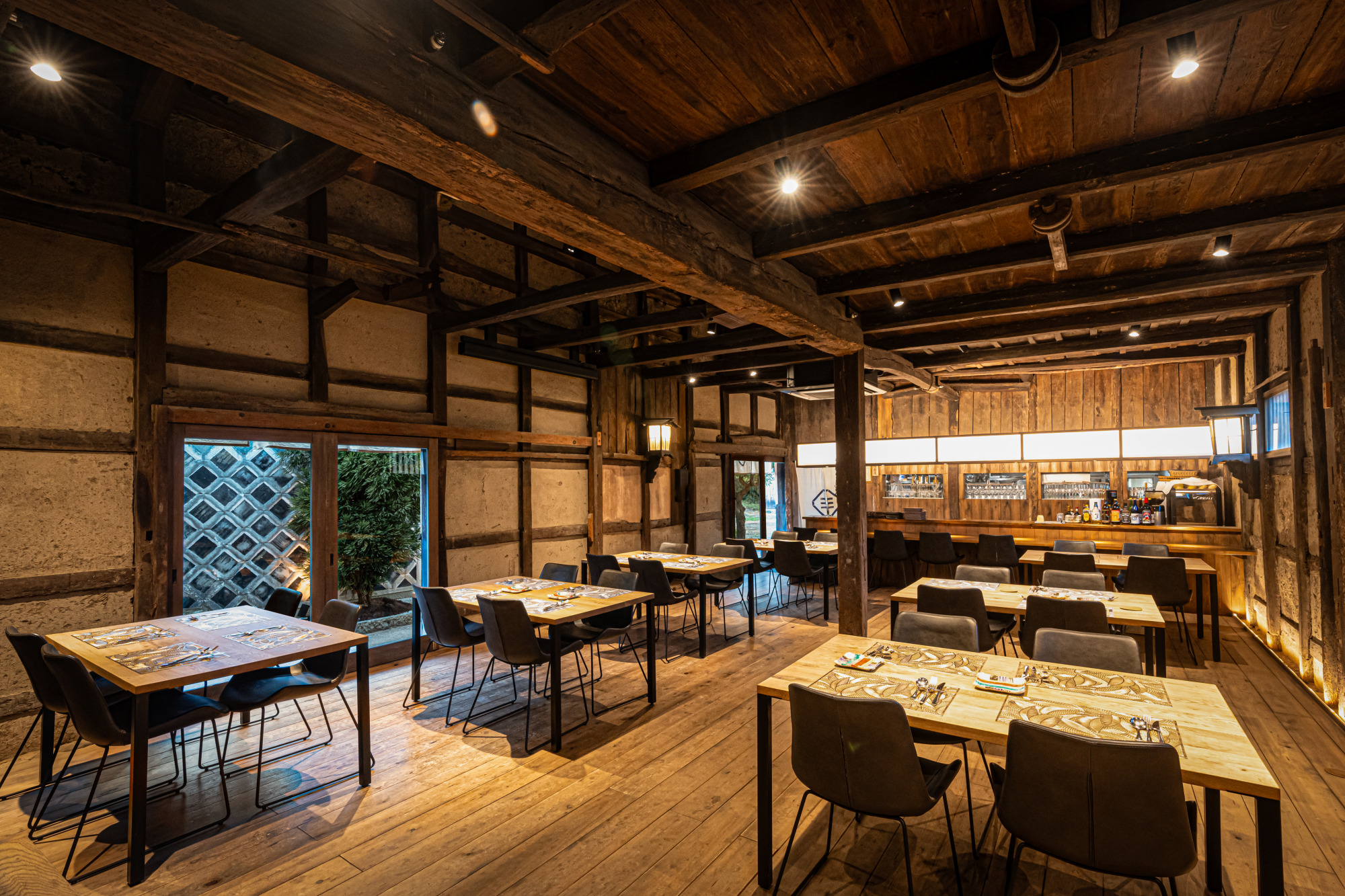 Farms’ Kitchen Miki-ke, a restaurant occupying a space once used for sake brewing.
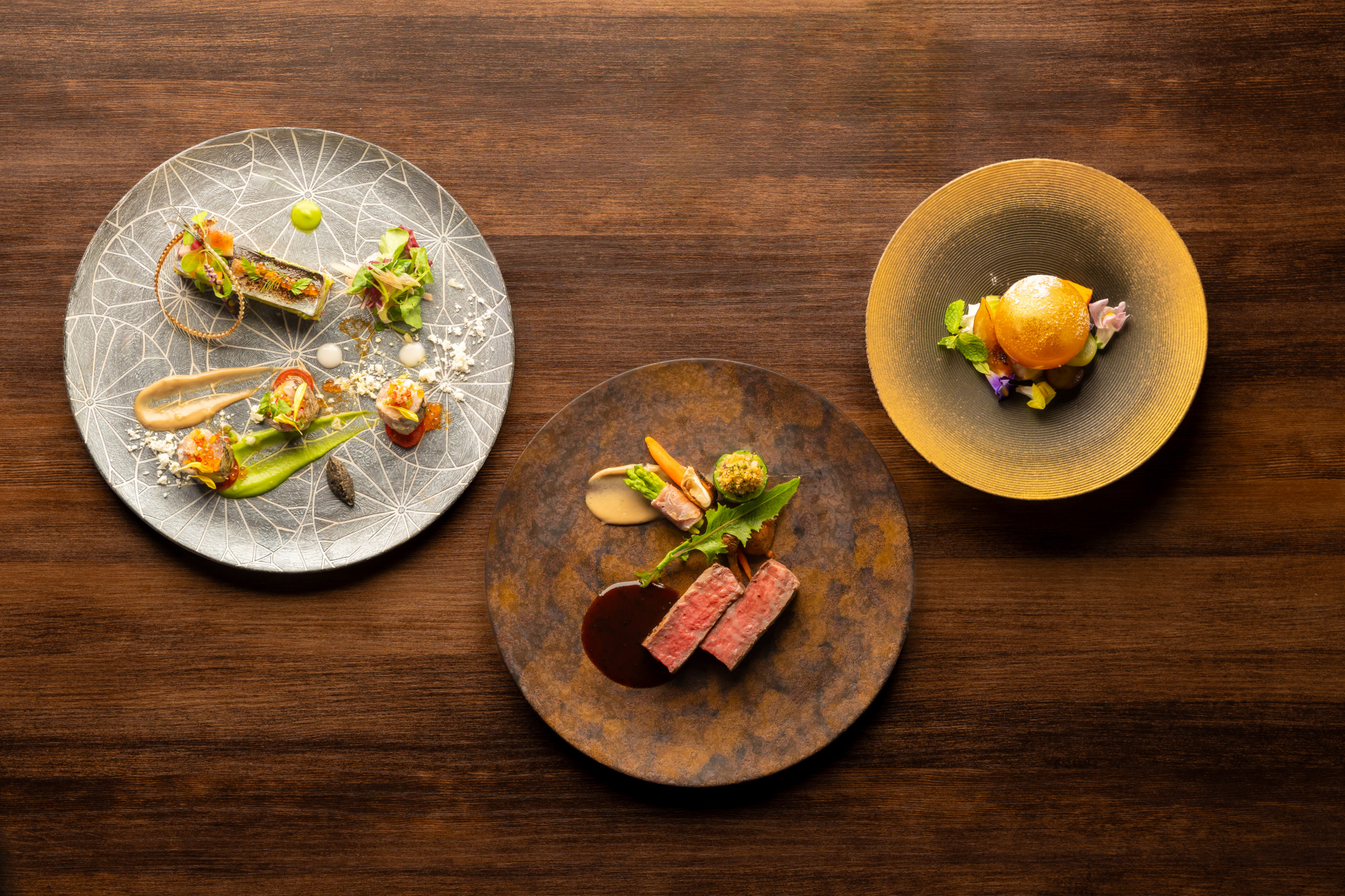 Part of the course menu, based on the concept of using locally produced ingredients for local consumption.
Dinner is creative French cuisine showcasing the bounty of the region, including Tamba chicken and seafood from the Harimanada Sea. Served on beautiful tableware, the dishes offer another way to discover Fukusaki’s rich food culture.
As the day draws to a close in the stillness of the historic storehouse, tomorrow’s journey leads to Tamba-Sasayama, where we will explore the culture of satoyama life passed down through black soybeans, pottery, and more.
NIPPONIA Harima Fukusaki Library Maison
Address: 1106 Nishitawara, Fukusaki, Kanzaki District, Hyogo 679-2204
Tel.: 0120-293-958
URL: https://nipponia-fukusaki.jp/feature/en/



【DAY 2】Tamba-Sasayama – Tracing a Way of Life Shaped by Black Soybeans
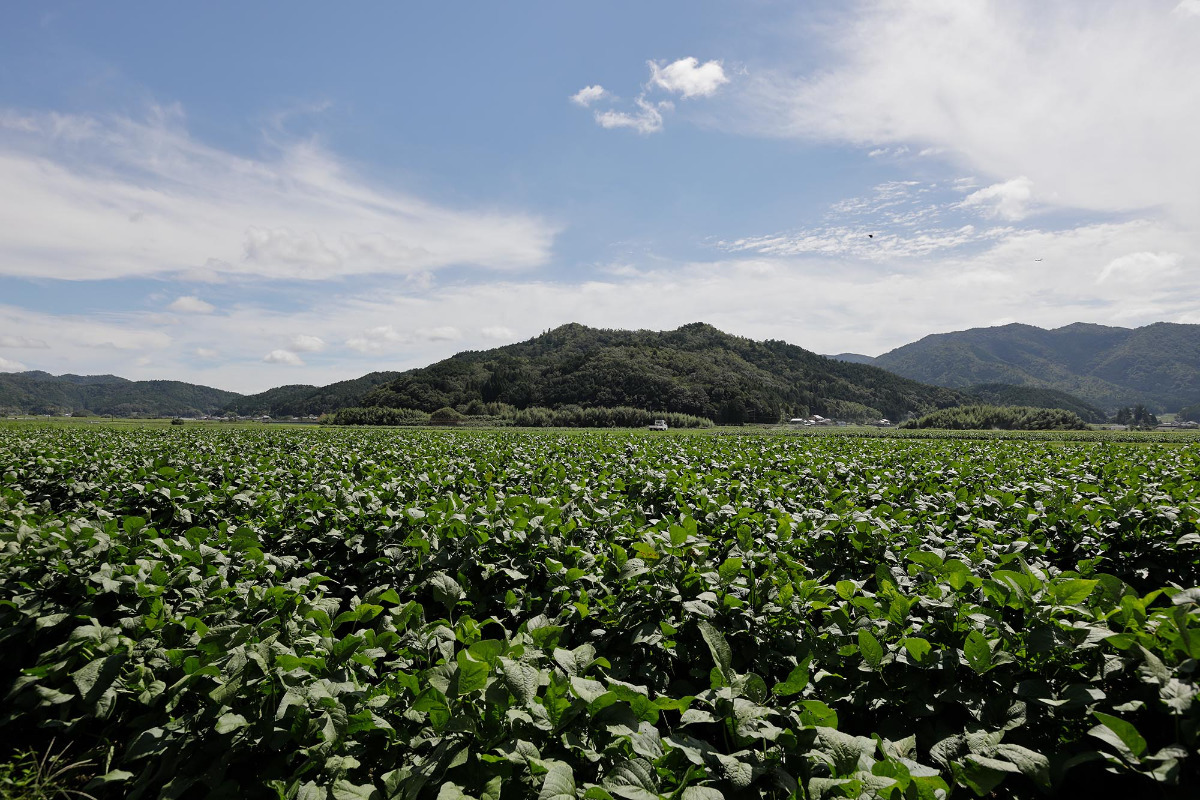 Tamba-Sasayama’s distinctive temperature differences between day and night help produce its delicious black soybeans.
The next morning, leave Fukusaki behind and head for Tamba-Sasayama, about a 90-minute drive away. As the road winds through the mountains, the scenery gradually gives way to the calm streets of an old castle town. Developed around the ruins of Sasayama Castle, now designated a National Historic Site, the area is also known for the distinctive temperature differences of its basin climate, which have helped nurture prized local ingredients such as black soybeans and matsutake mushrooms.
Discover the World of Tamba Kuro Soybeans at Odagaki Shoten
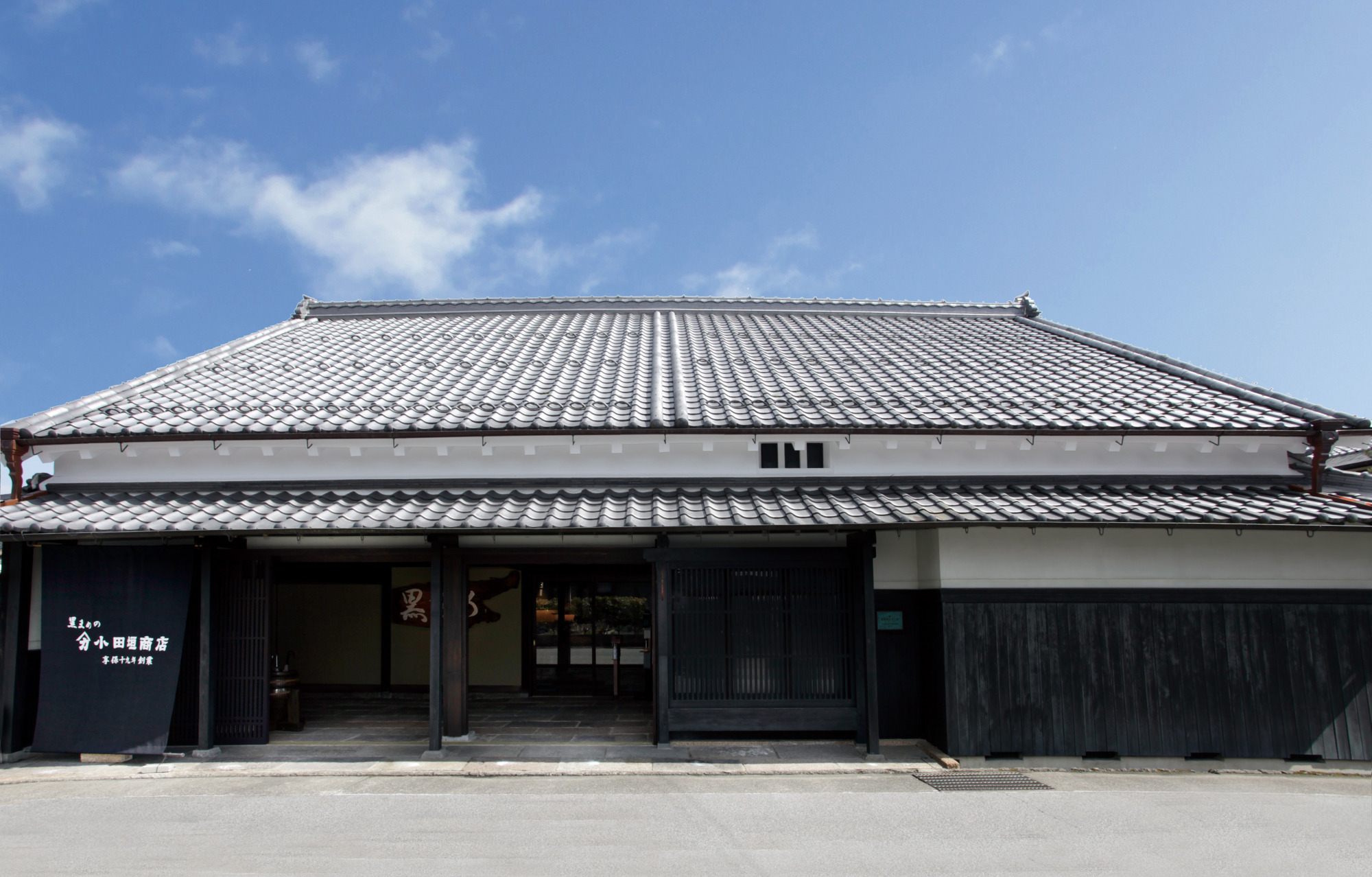 The storefront of Odagaki Shoten, a long-established purveyor of Tamba Kuro soybeans. A noren curtain bearing the characters for “black soybeans” hangs at the entrance.
Founded in 1734, Odagaki Shoten is a long-established purveyor of Tamba Kuro, the black soybeans for which Tamba-Sasayama is renowned. Its main store, with a history of nearly 290 years, is designated a National Registered Tangible Cultural Property. The stately white walls and tiled roofs speak to its long history, while stepping inside brings the inviting roasted aroma of carefully selected Tamba Kuro soybeans.
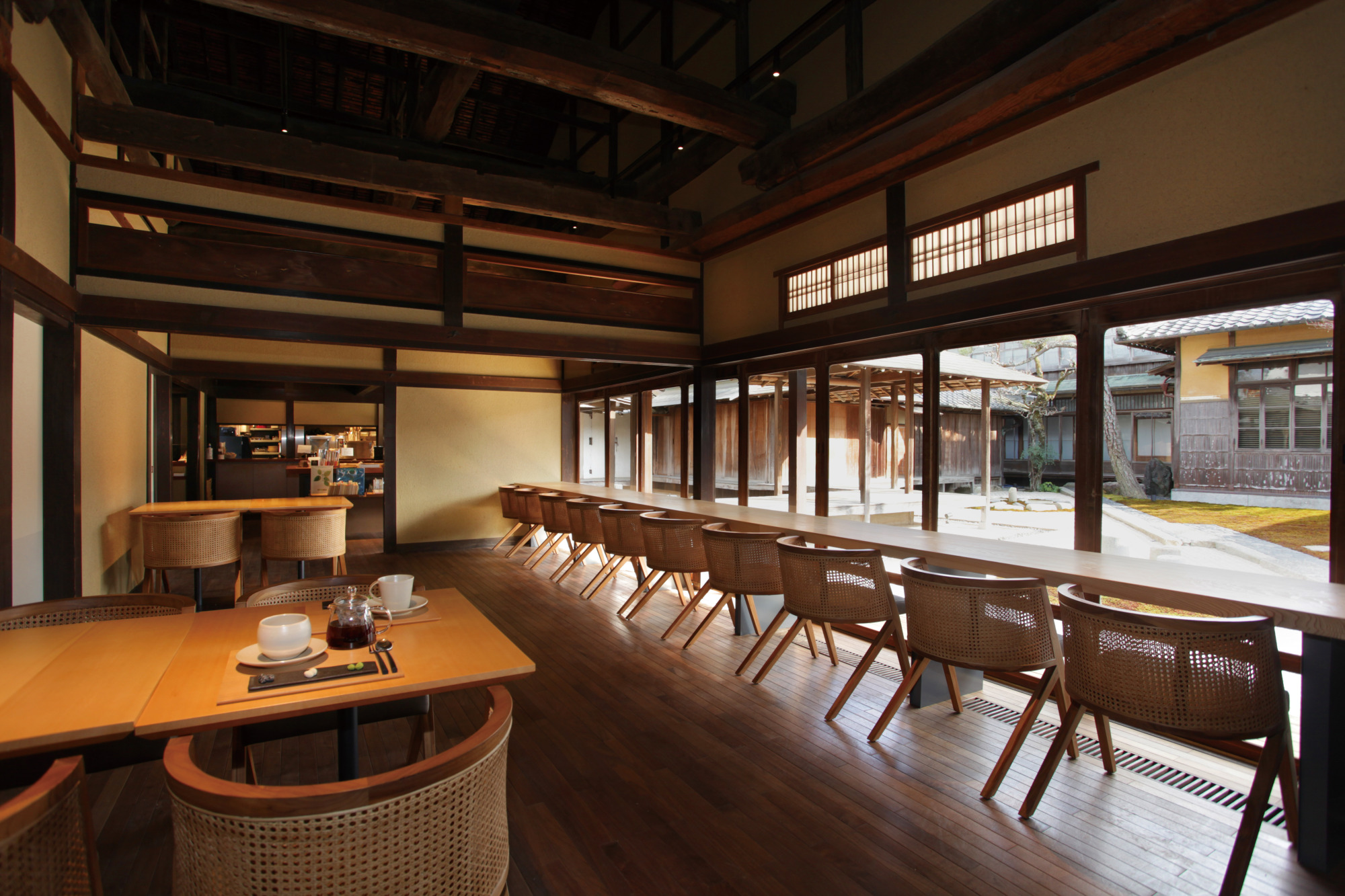 Odagaki Mamedo, the café inside the store. The space retains its original wooden beams and looks out over the garden.
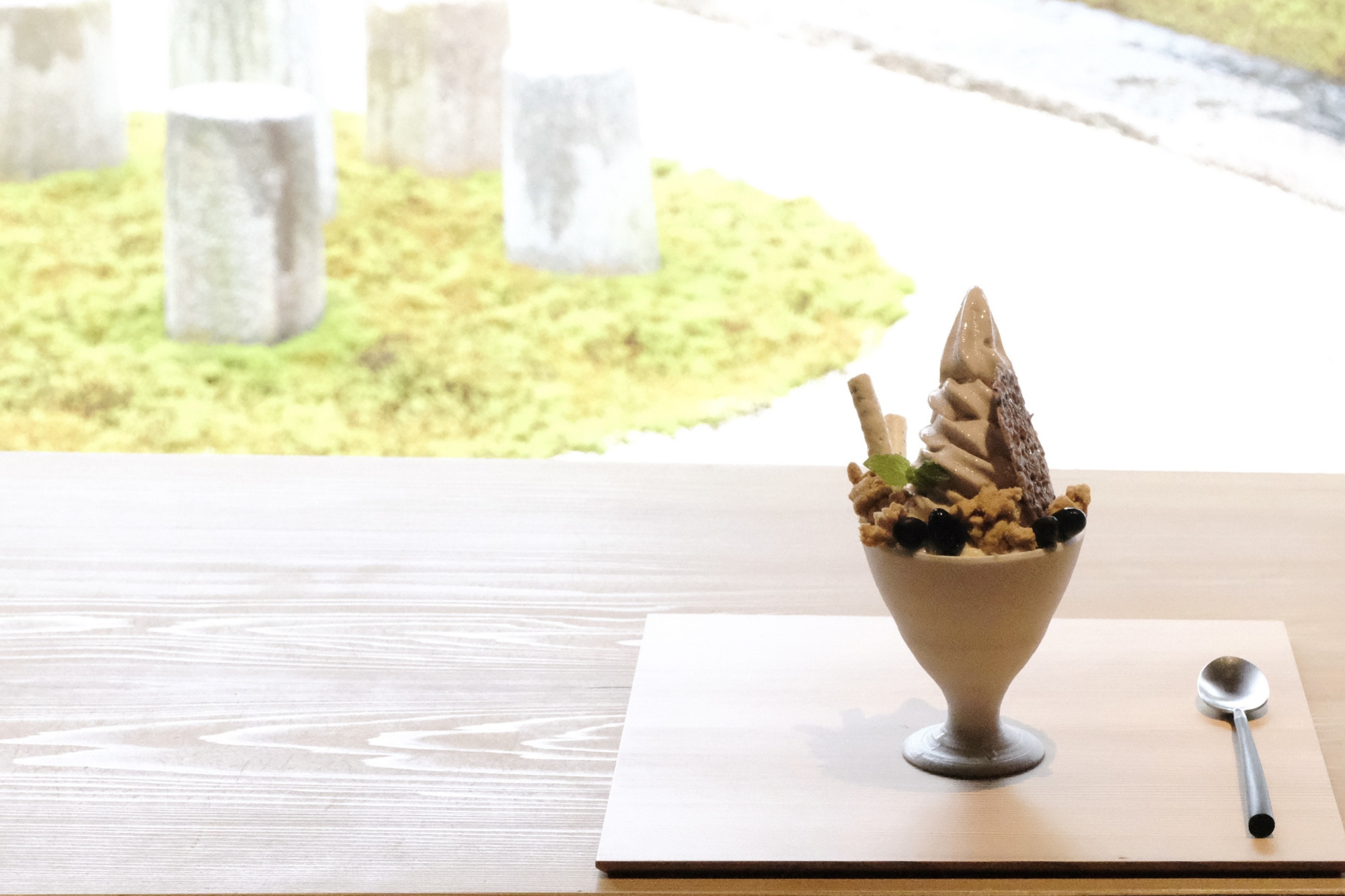 The black soybean kinako soft-serve parfait (1,200 yen including tax) is one of Odagaki Mamedo’s signature desserts.
The adjoining Odagaki Mamedo café occupies a space designed by a renowned architect. Its soaring ceiling retains the building’s original exposed beams, while a long counter overlooking the garden preserves the atmosphere of the historic structure. Here, visitors can enjoy fragrant black soybean tea made with Tamba Kuro, along with light meals and sweets. Looking out over the garden, it is an inviting place to pause between stops on the journey.
Want to Learn More? Get Hands-On with the Beans
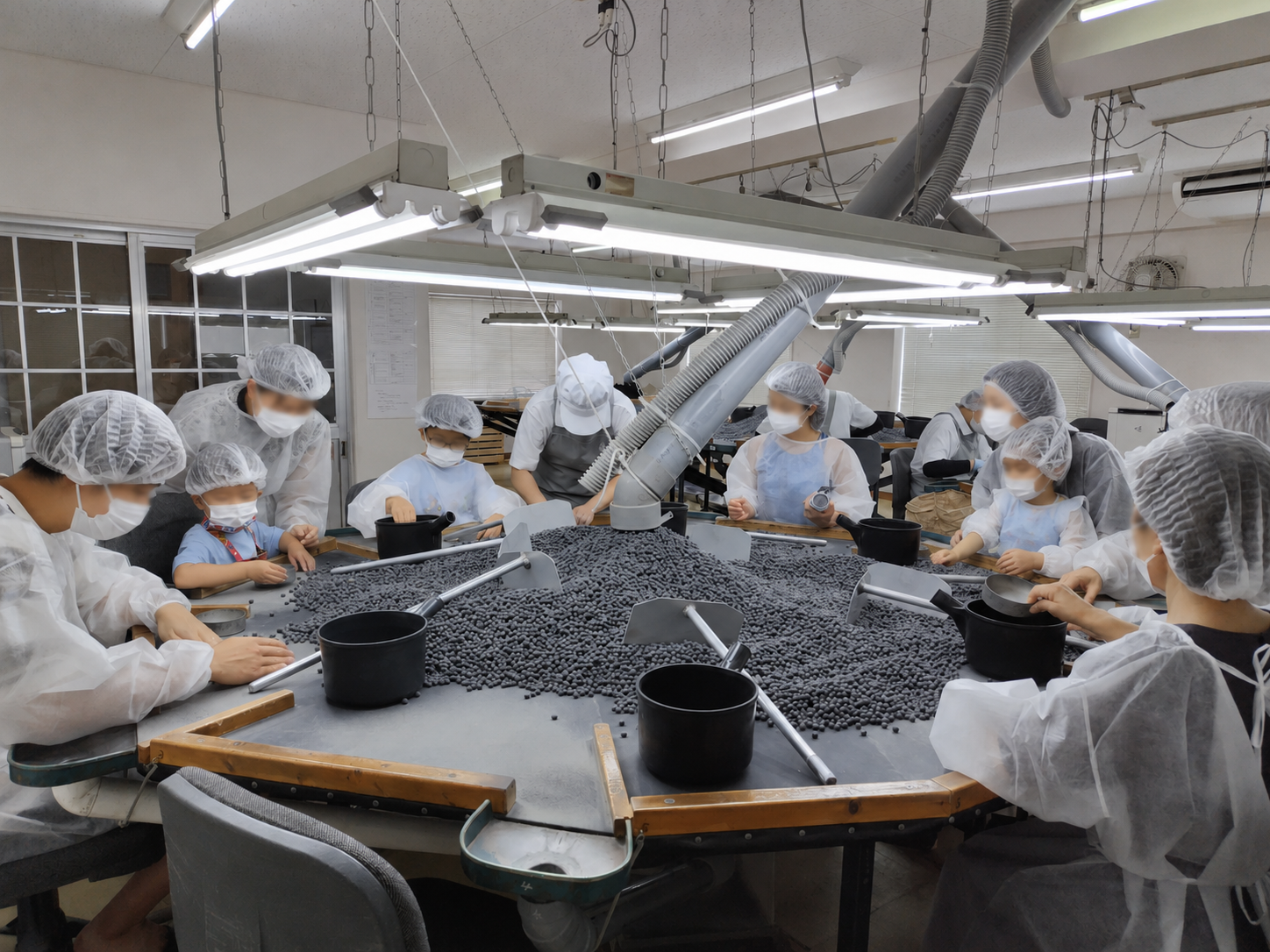 A black soybean sorting experience that families can enjoy together.
After discovering the depth of Tamba Kuro at Odagaki Shoten, consider joining one of the hands-on programs offered at different times of the year. In the hand-sorting experience, participants examine harvested Tamba Kuro soybeans one by one and sort them by hand. Feeling the texture and weight of the beans for yourself offers a deeper appreciation of why Tamba Kuro has been treasured for generations—and of the painstaking work behind its quality.
Mameya WITH NIPPONIA: Stay in the Home of Black Soybeans
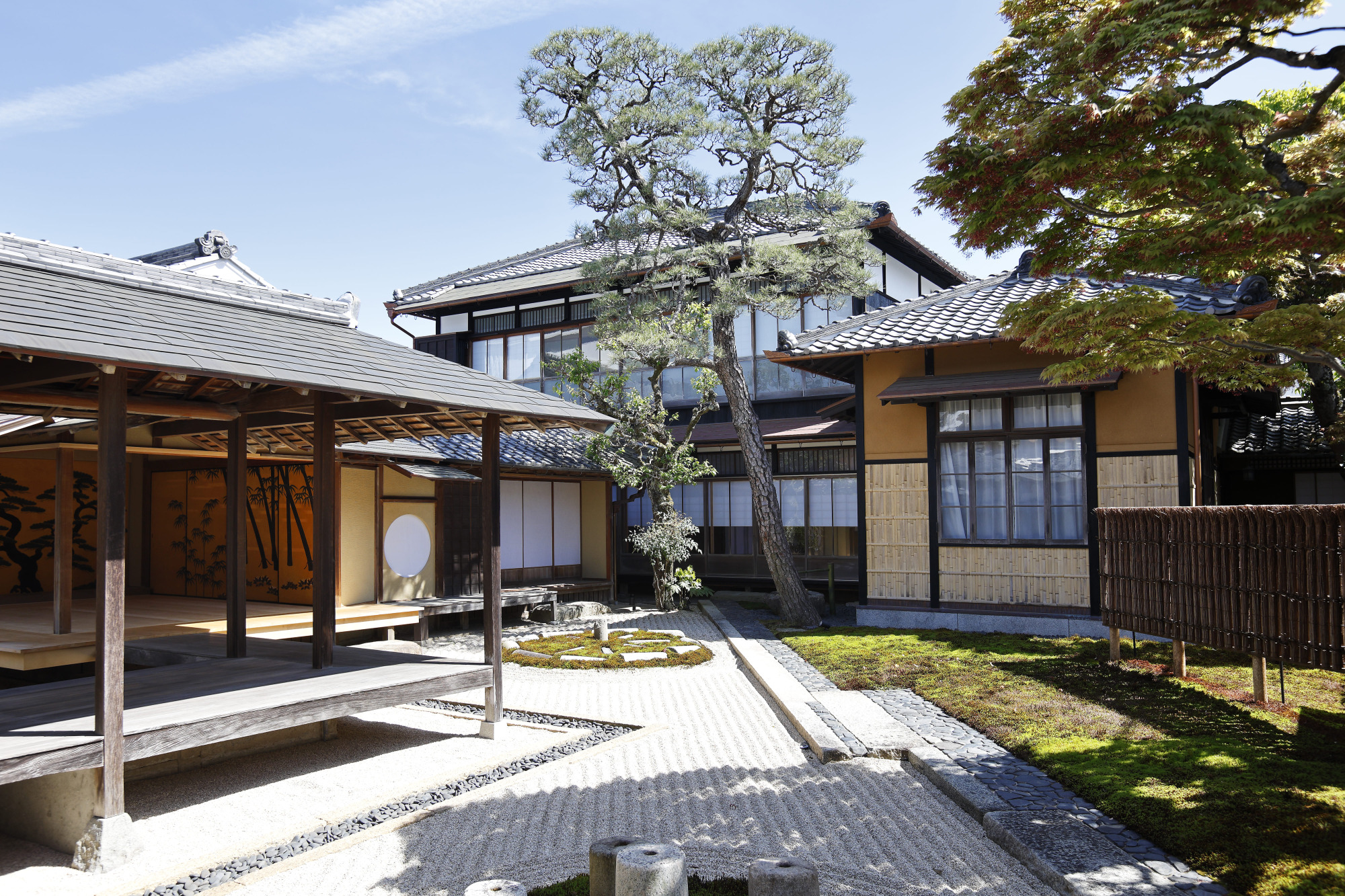 Mameya, a private rental accommodation created by renovating a residence built around 110 years ago.
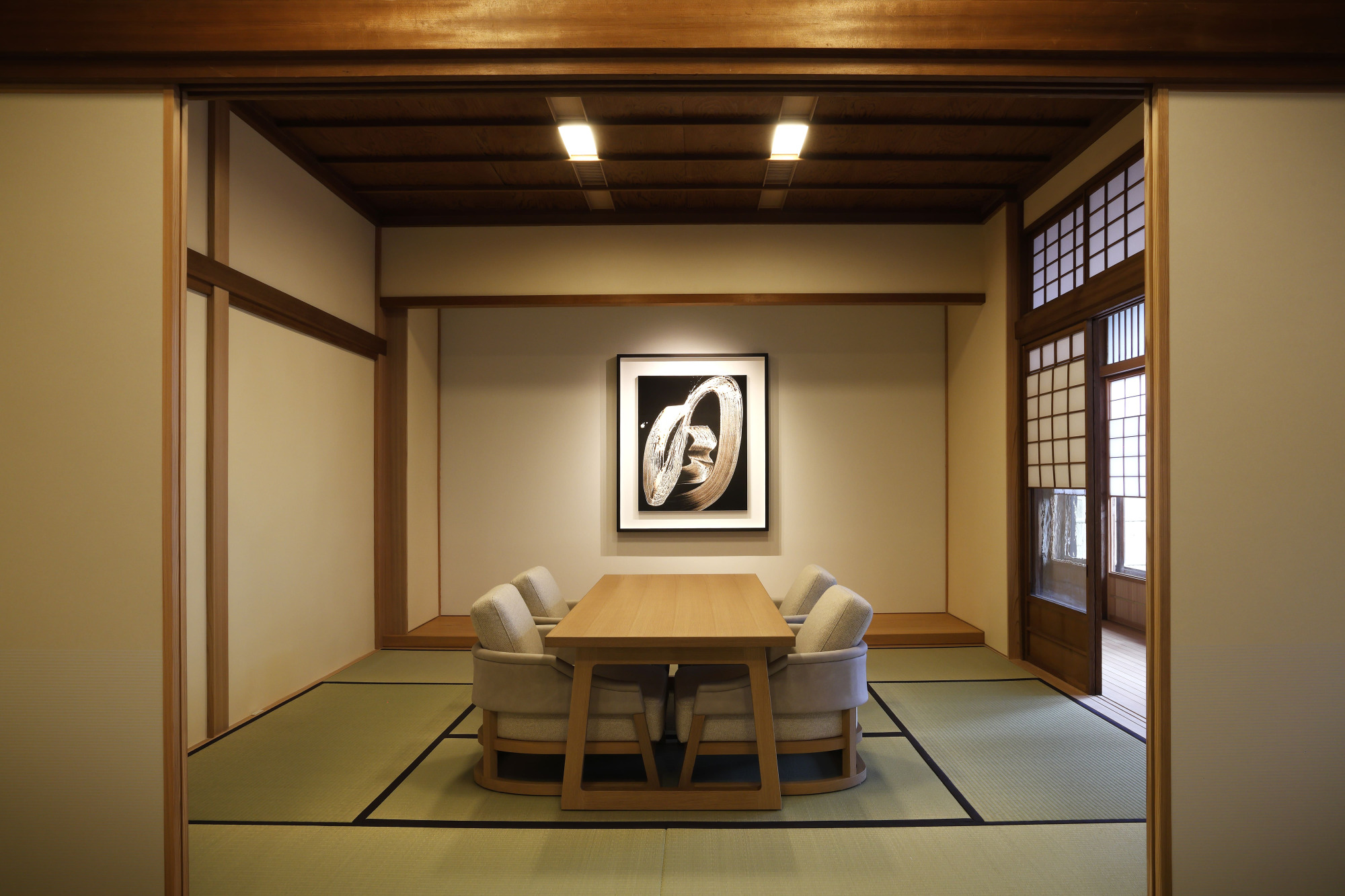 The living room at Mameya, surrounded by the textures of tatami and wood.
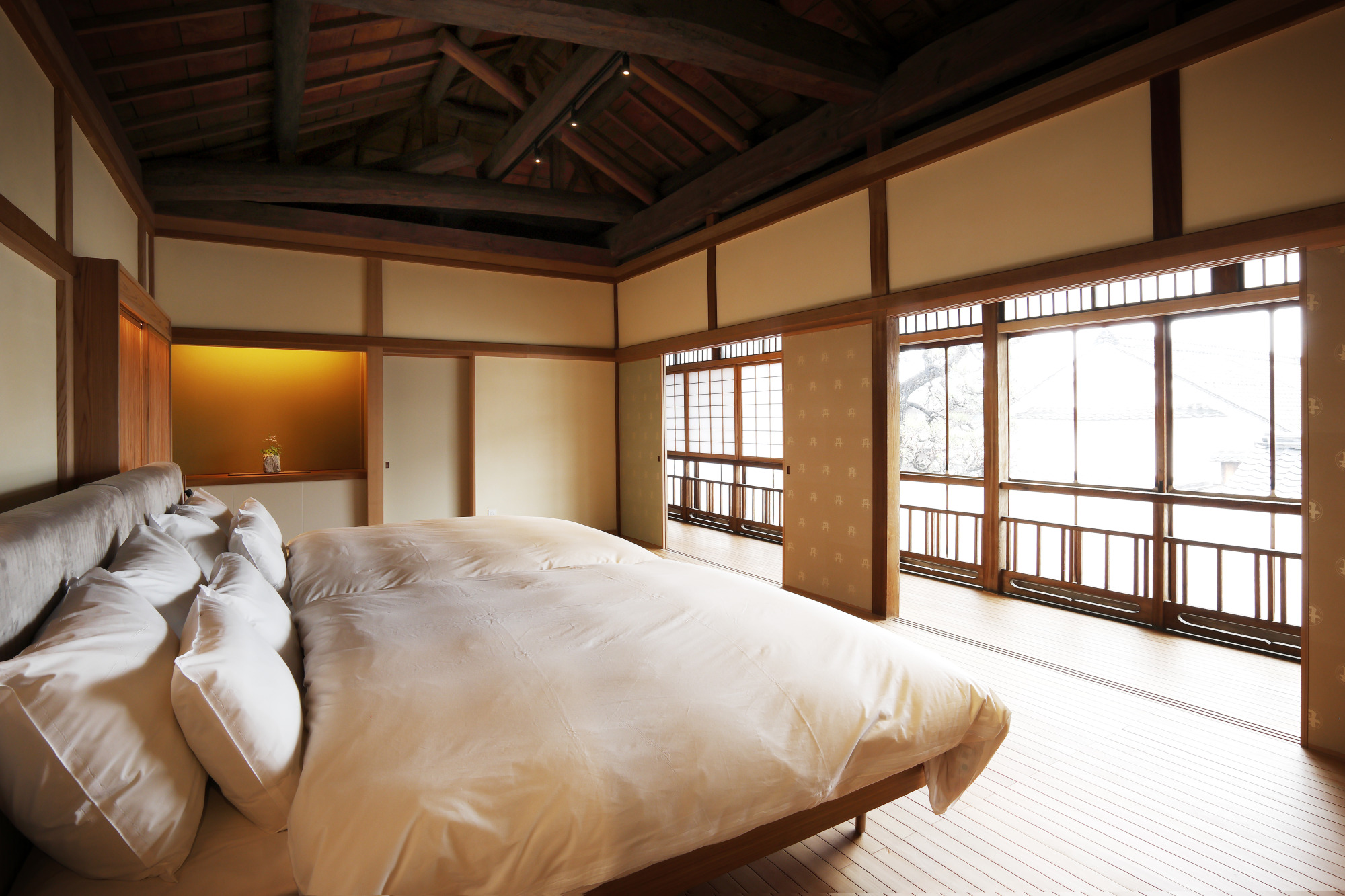 A large bed sits beneath the bedroom’s high ceiling, where the original wooden beams have been preserved.
Within the grounds of Odagaki Shoten is Mameya, an entire historic residence available to one group at a time. The building blends Japanese and Western architectural elements, creating a space where guests can slow down and take in the changing light of morning and evening and the quiet rhythms of the town. It offers the chance to spend a night in Tamba-Sasayama while experiencing the history and culture of this long-established merchant house.
Odagaki Shoten Main Store / Odagaki Mamedo
Address: 19 Tatsumachi, Tamba-Sasayama, Hyogo
Tel.: 079-552-0011
URL: https://www.odagaki.co.jp/
Mameya
Address: 15 Tatsumachi, Tamba-Sasayama, Hyogo
Tel.: 079-556-8048
URL: https://mameya.odagaki.co.jp/en/
Savor the Bounty of the Satoyama at Yamazato Ryori Maekawa
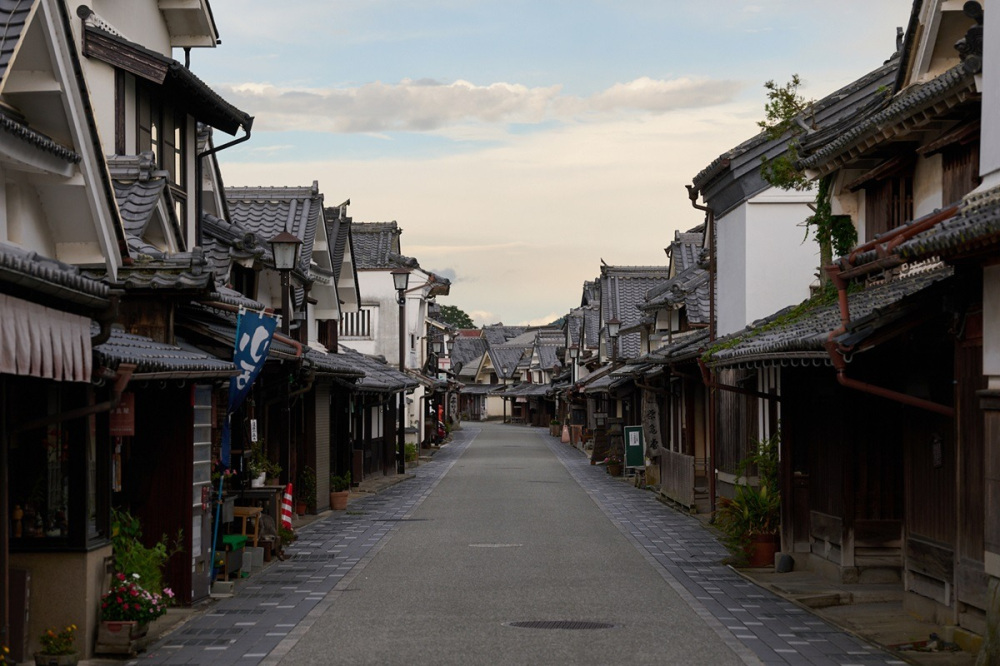
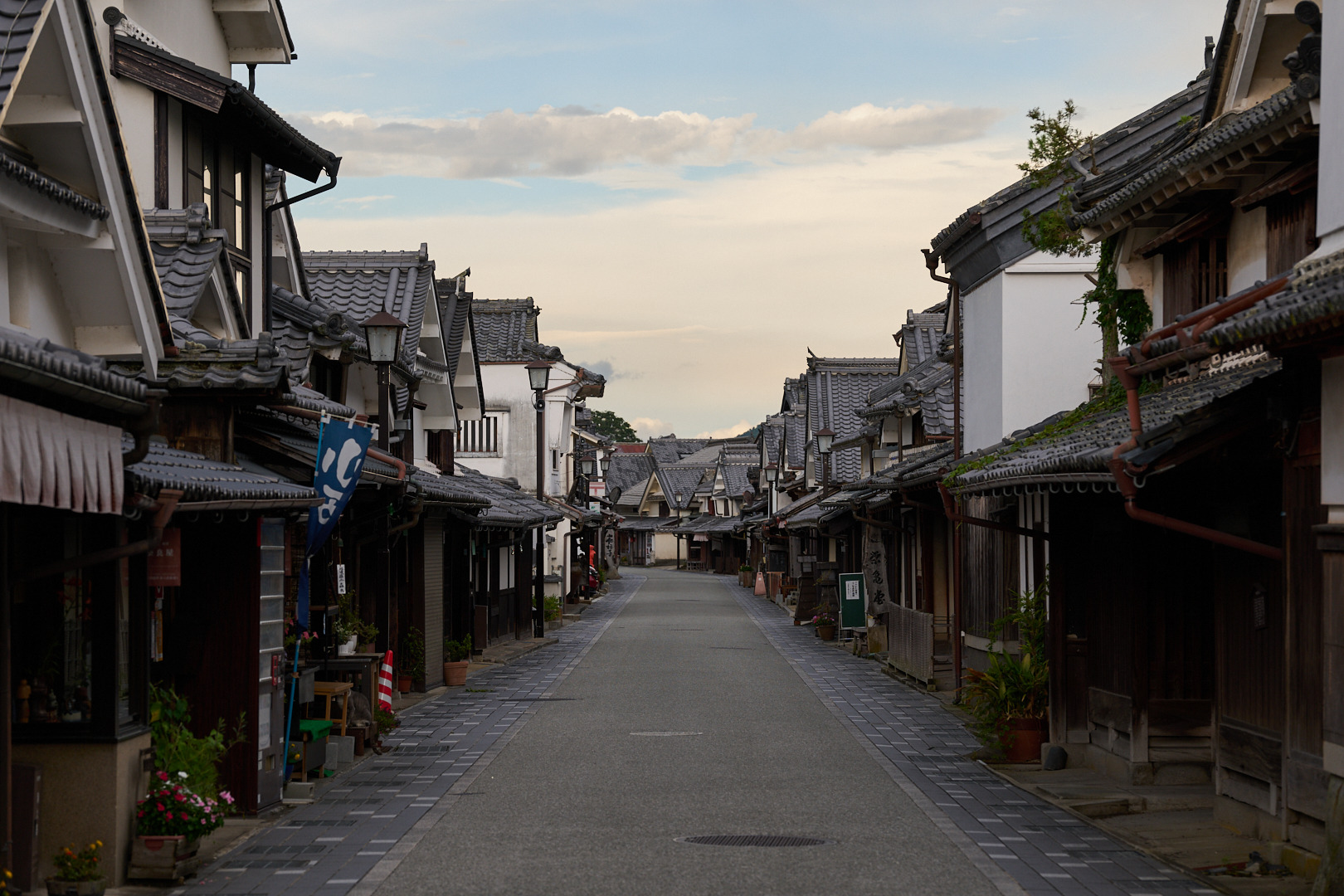 The streets of Sasayama Castle Town retain traces of their Edo-period past.
After exploring Tamba-Sasayama’s black soybean culture, it’s time to taste more of what the land has to offer. About a four-minute walk from Odagaki Shoten, tucked into a corner of the castle town, Yamazatoryouri Maekawa serves dishes that reflect the natural environment of Tamba-Sasayama.
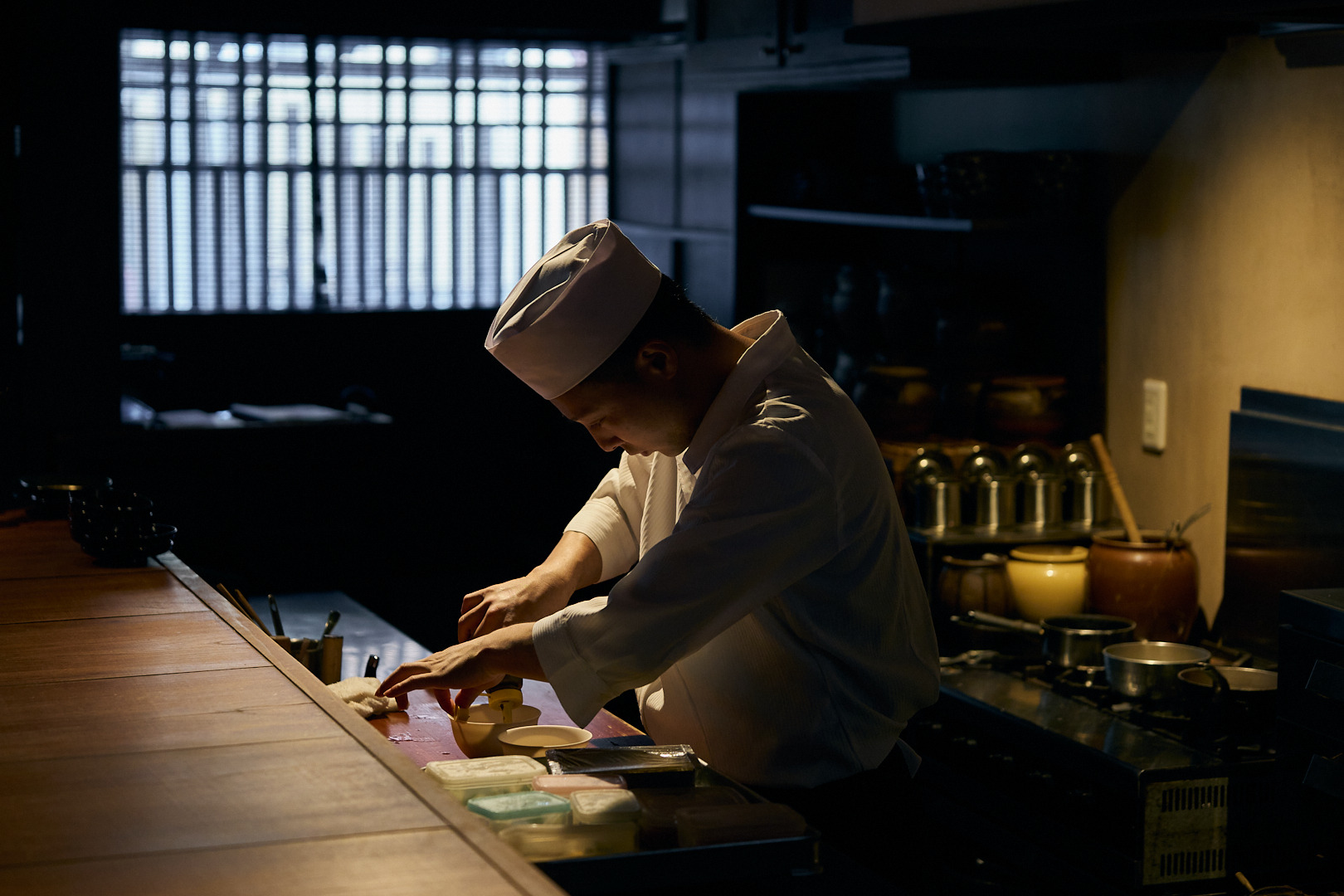 Owner Tomoaki Maekawa returned to his hometown of Tamba-Sasayama after training in kaiseki cuisine in Kyoto for around 12 years.
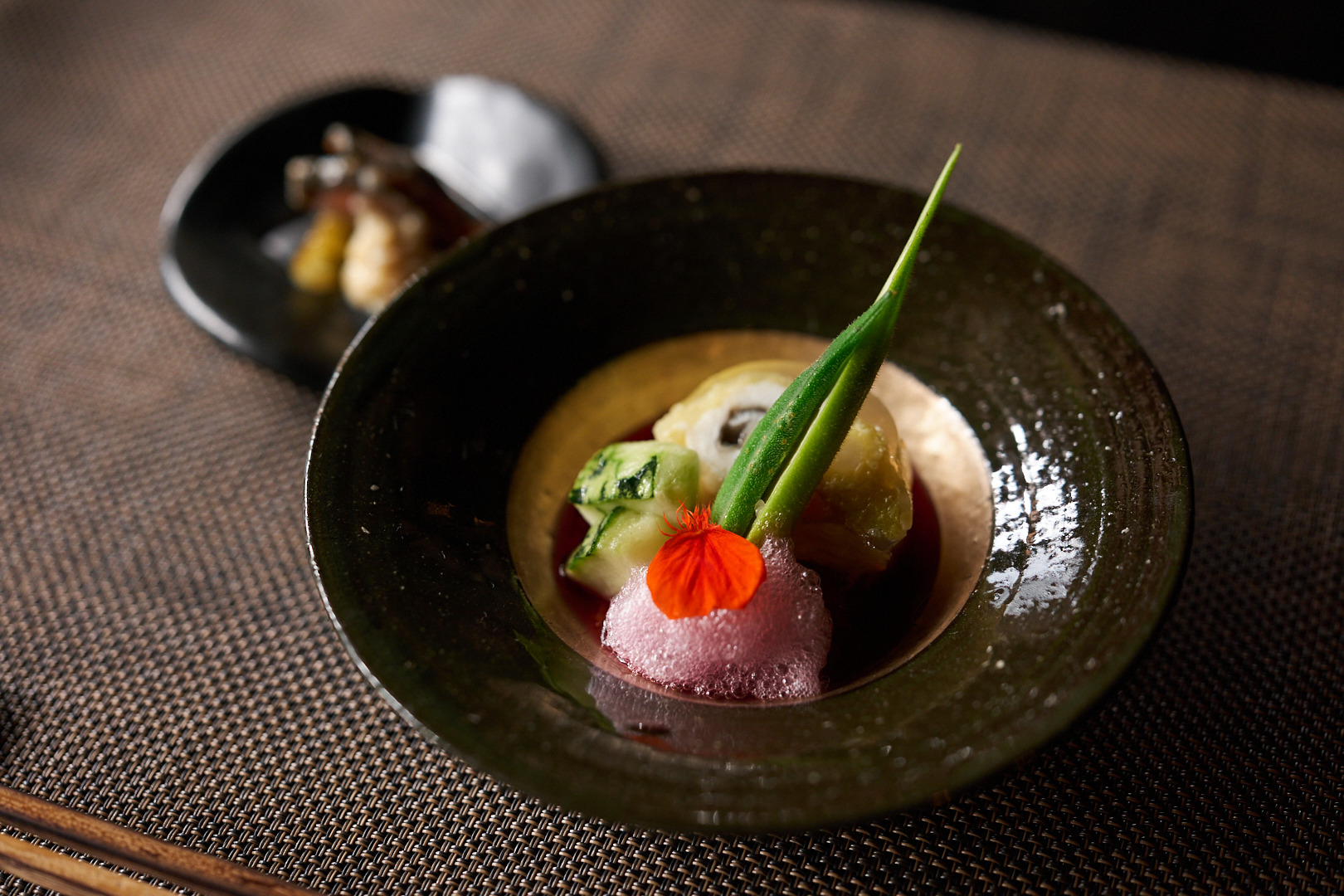 Okra, Doitsu-uri (a local pickling melon), red shiso foam, zucchini, carrot, and pike conger in aspic.
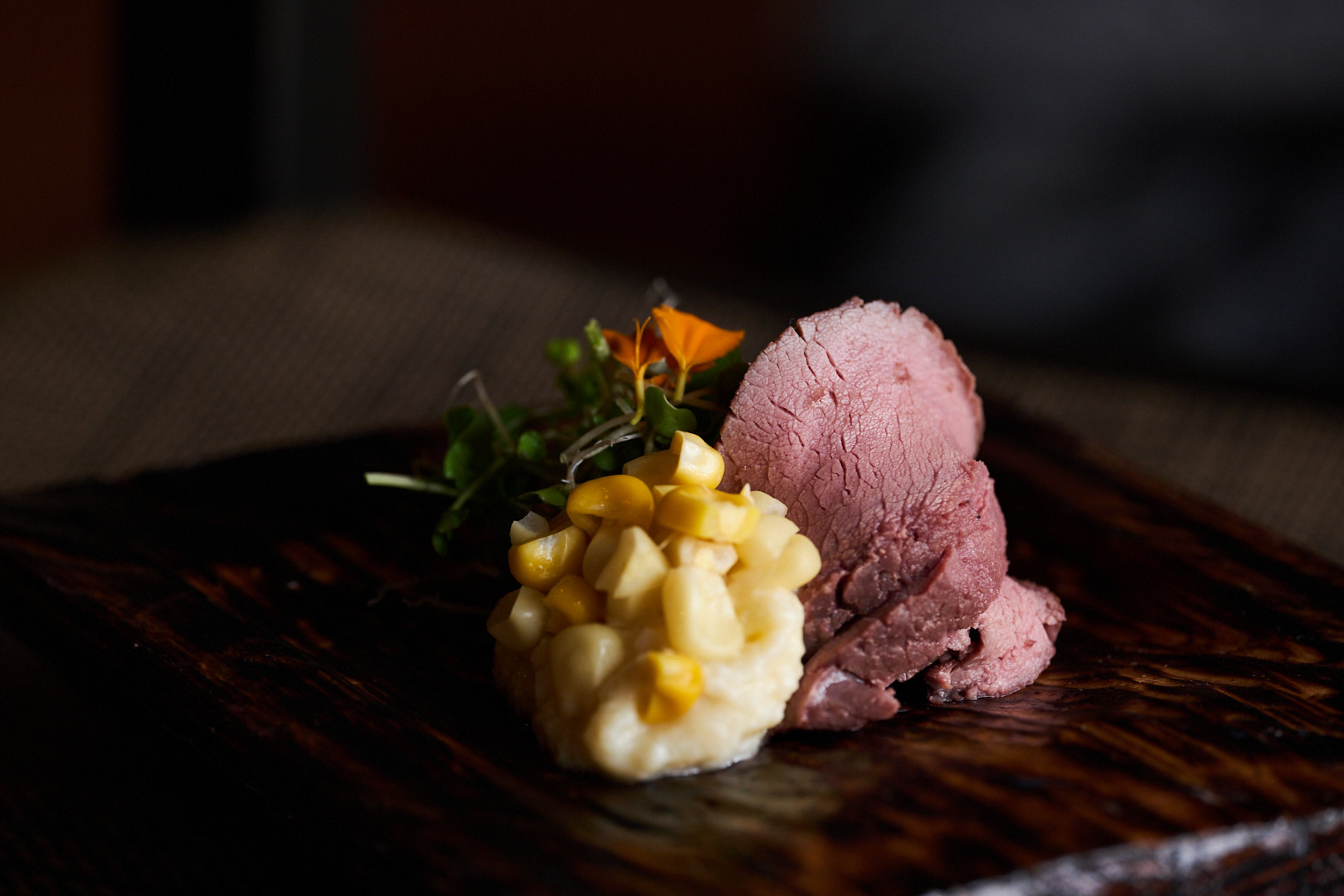 Potato dressed with white miso and house-made venison ham, garnished with herbs from the garden.
At Maekawa, an omakase course showcases ingredients that change with the seasons. Wild game such as boar and venison is also embraced as part of Tamba-Sasayama’s local bounty, with each ingredient prepared to bring out its natural character. As the dishes change with the seasons, they reveal the richness of the food culture nurtured by this land.
The dishes are served on Tamba ware made by local ceramic artists, allowing diners to encounter the culture passed down here through the tableware as well as the food. Together, the ingredients, vessels, and setting offer a taste of Tamba-Sasayama in all its dimensions.
Yamazatoryouri Maekawa
Address: 93 Tatsumachi, Tamba-Sasayama, Hyogo
Tel.: 090-2065-4595
Hours: 11:30–15:00 (LO 13:30); 17:00–22:00 (LO 19:00)
Closed: Mondays (or the following day when Monday is a national holiday); occasional temporary closures
【DAY 3】Tamba-Sasayama – Walking through the History of a Castle Town
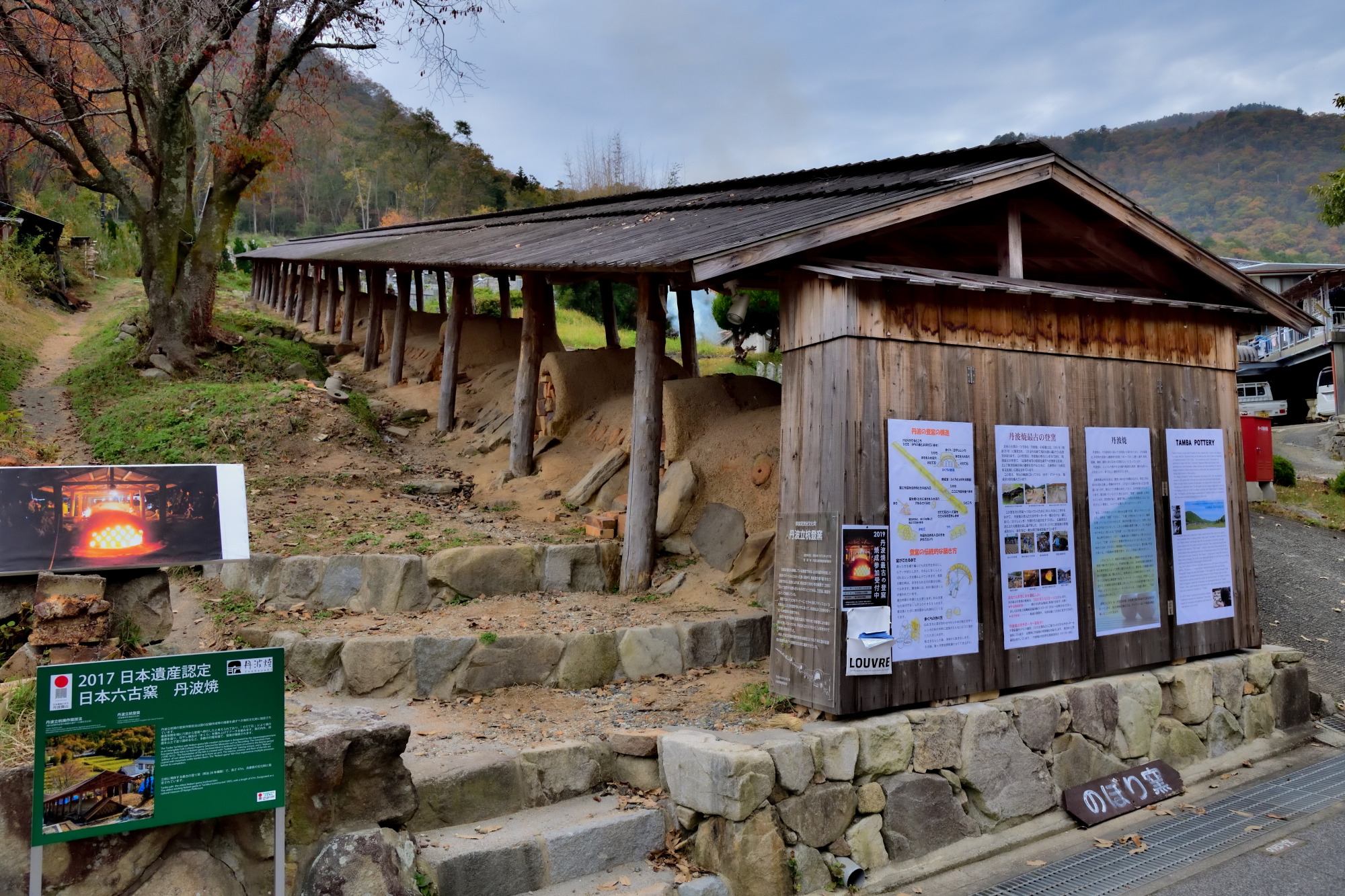 A climbing kiln in the home of Tamba ware. Nine firing chambers extend up a roughly 15-meter slope, and the kiln continues to be used by local potters today.
After experiencing the food culture of Tamba-Sasayama, day three takes us into the mountains to visit local workshops and discover the world of pottery passed down through generations. About a 20-minute drive from the castle town lies the Konda district and the home of Tamba ware, one of Japan’s Six Ancient Kilns—the country’s most historic pottery-producing regions. Its pottery tradition stretches back some 850 years and continues to be carried on by numerous artisans today.
Discover the World of Tamba Ware at Tanbungama
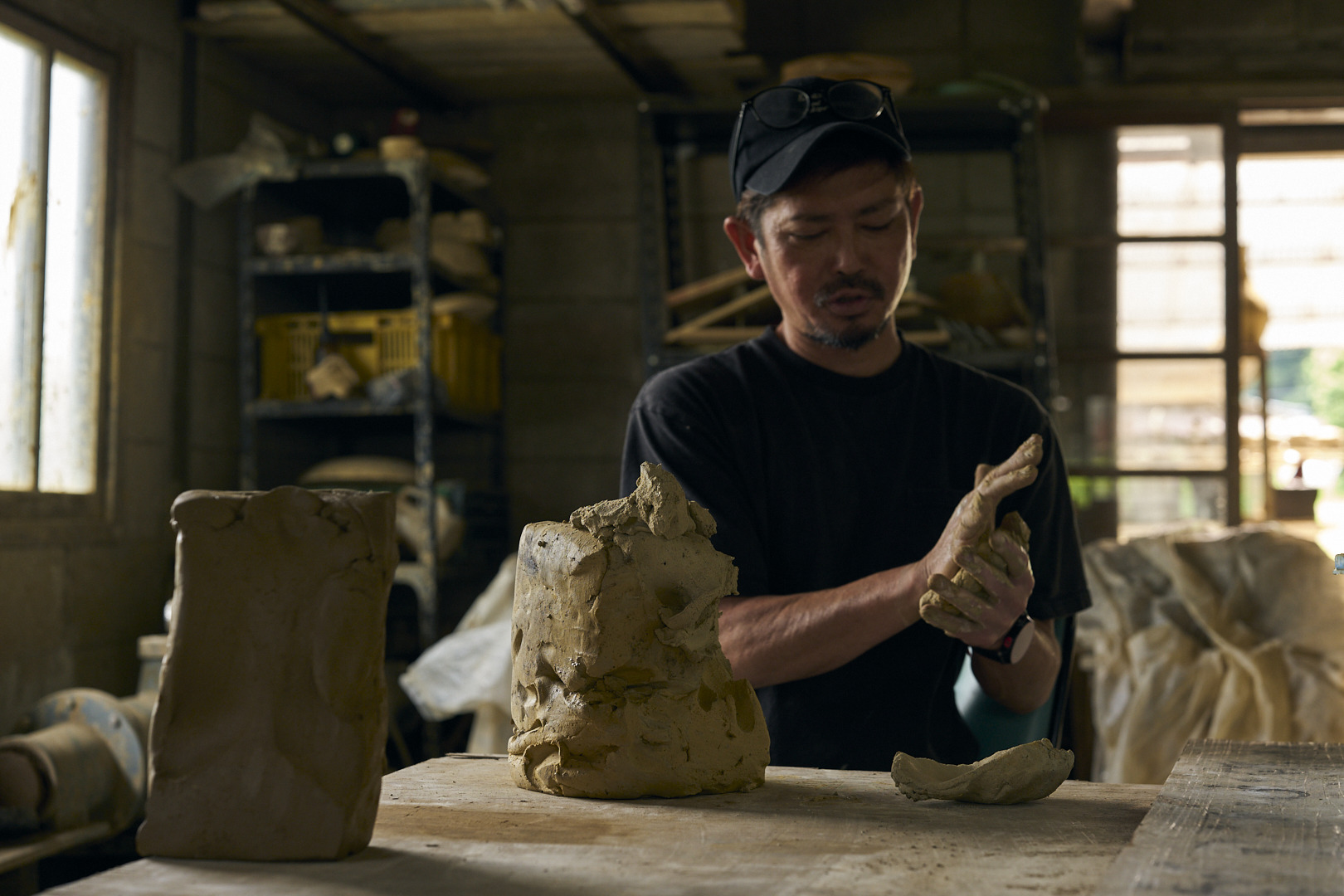 Masafumi Onishi, the fourth-generation potter of Tanbungama. Wedging the clay to remove trapped air is a process that requires considerable experience.
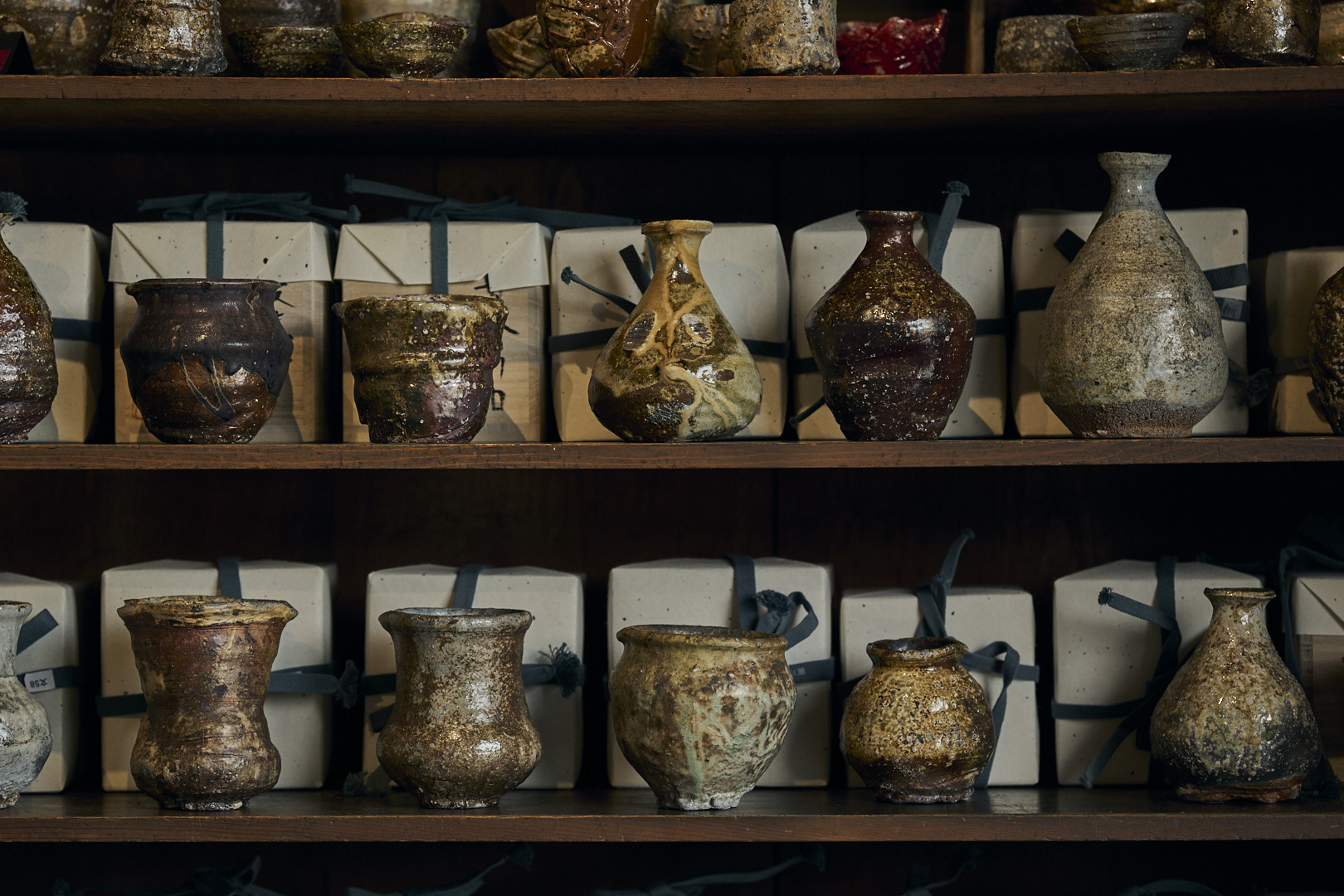 TANBUNGAMA109, a gallery at the foot of the workshop, exclusively sells Onishi’s works fired in the climbing kiln.
At Tanbungama, a pottery workshop in the Konda district, fourth-generation potter Masafumi Onishi carefully oversees every stage of the process, from selecting the clay to firing the finished pieces. At TANBUNGAMA109, the gallery at the foot of his workshop, visitors can browse works fired in the climbing kiln, each with its own distinctive clay texture and coloration.
Climbing kilns built into mountain slopes have been used in this region since the early 17th century, and Tanbungama continues to fire its pottery in a traditional climbing kiln today. Onishi collects clay himself from the mountains and rice fields of Tamba, blending it with soil from around the remains of a nearby kiln dating back some 1,000 years. The result is pottery with a character rooted unmistakably in this land.
Want to Know More? Try Working with the Clay
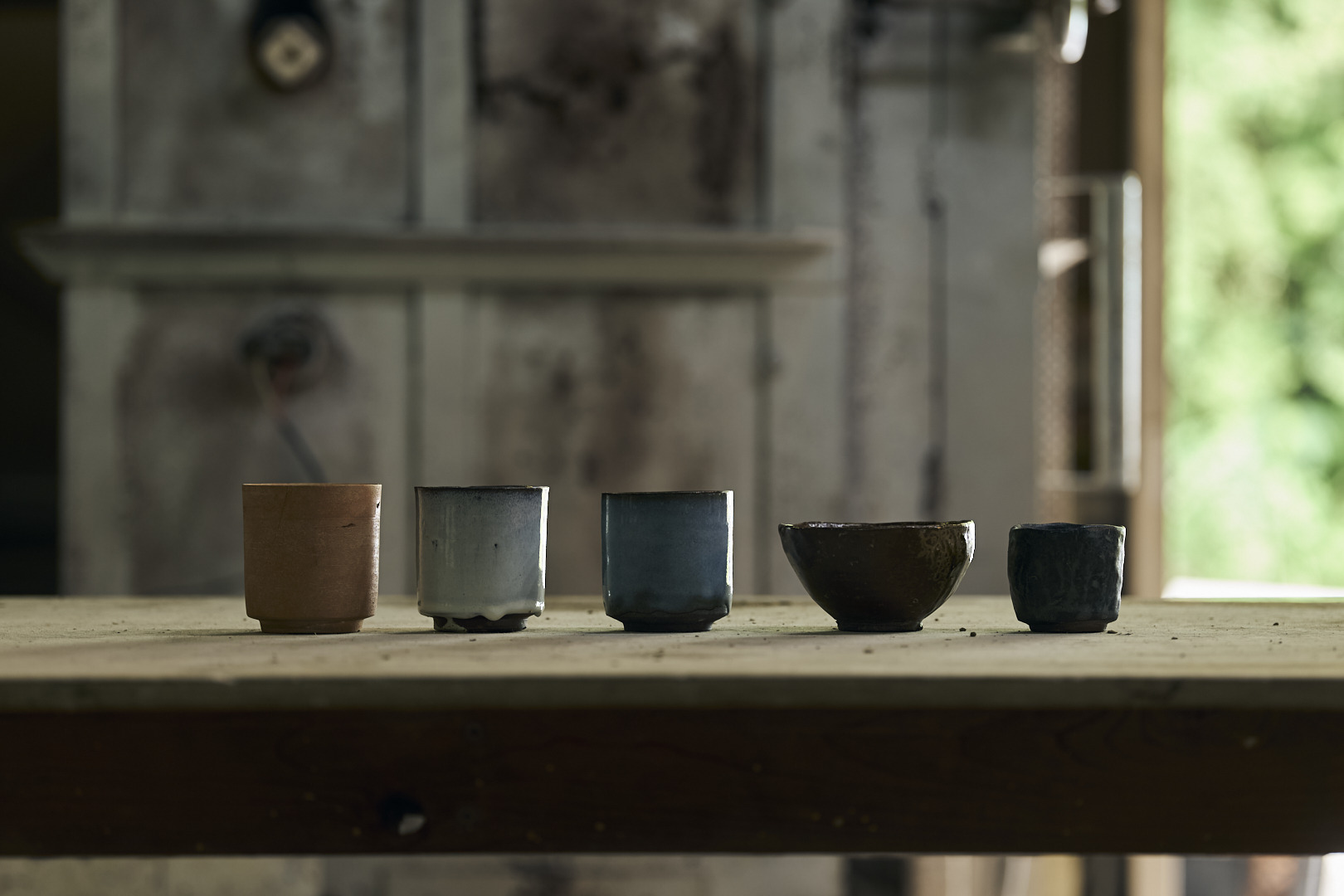 During the pottery experience at Tanbungama, participants can choose from four glaze colors: white, light blue, black, and brown.
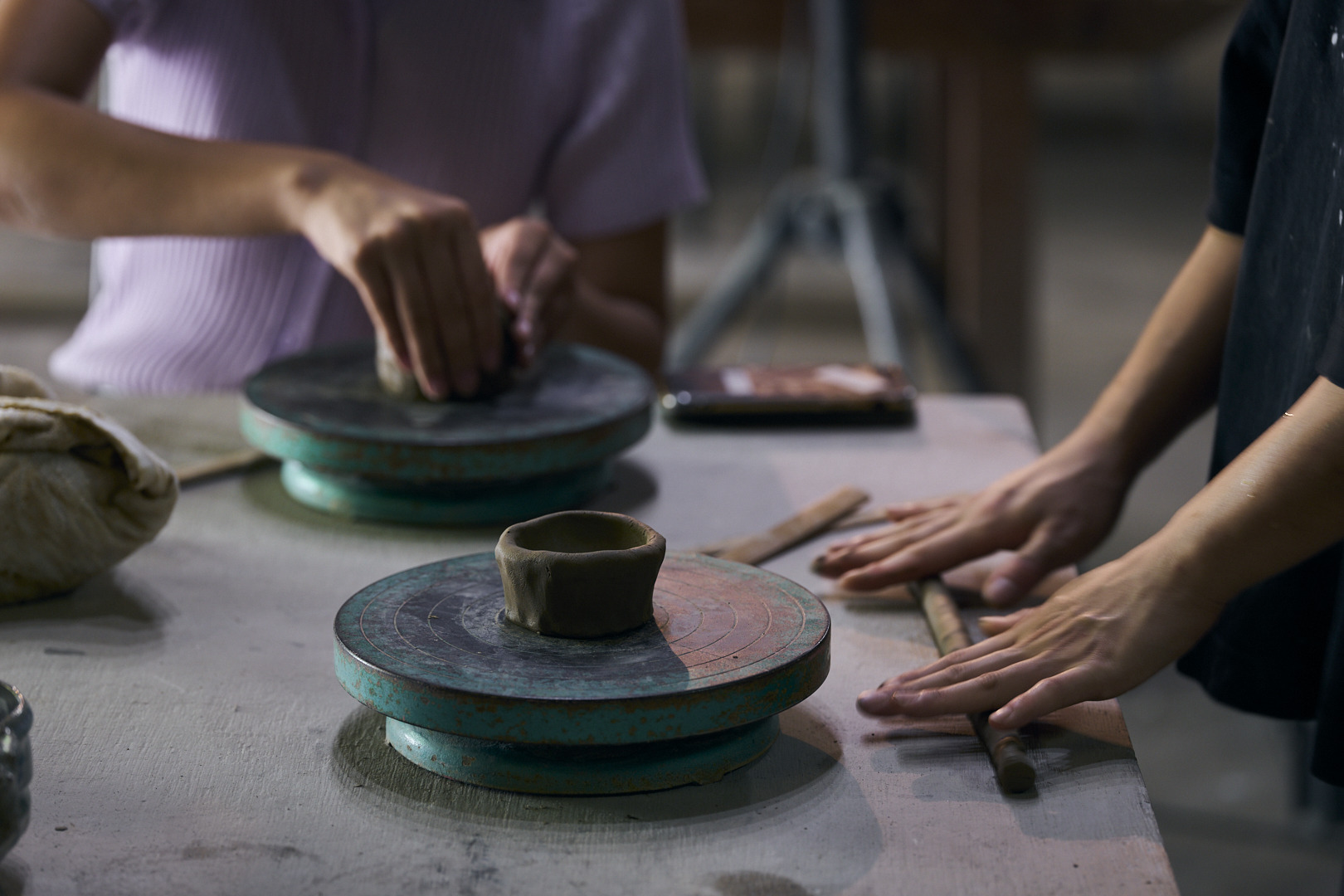 Shape the clay by hand to create a piece entirely your own.
There is no single prescribed form for Tamba ware. The pottery experience at Tanbungama offers a chance to discover that freedom firsthand. Knead and shape the clay by hand, then choose your preferred glaze to complete the piece. Even the same form can take on an entirely different character depending on the color you select. Take your time and enjoy creating a one-of-a-kind piece with your own hands.
Tanbungama Workshop
Address: 67 Shimotachikui, Konda-cho, Tamba-Sasayama, Hyogo Prefecture
Tel: 079-597-2089
URL: https://tanbungama.com/
Tanbungama Shop (Store / Pottery Experience)
Address: 578-25 Nishiaino, Sanda, Hyogo Prefecture
Tel: 079-568-1031
Hours: 9:00 a.m.–5:00 p.m.
Closed: Open daily
NIPPONIA Sasayama Castle Town Hotel: Stay as Though You Live in the Castle Town
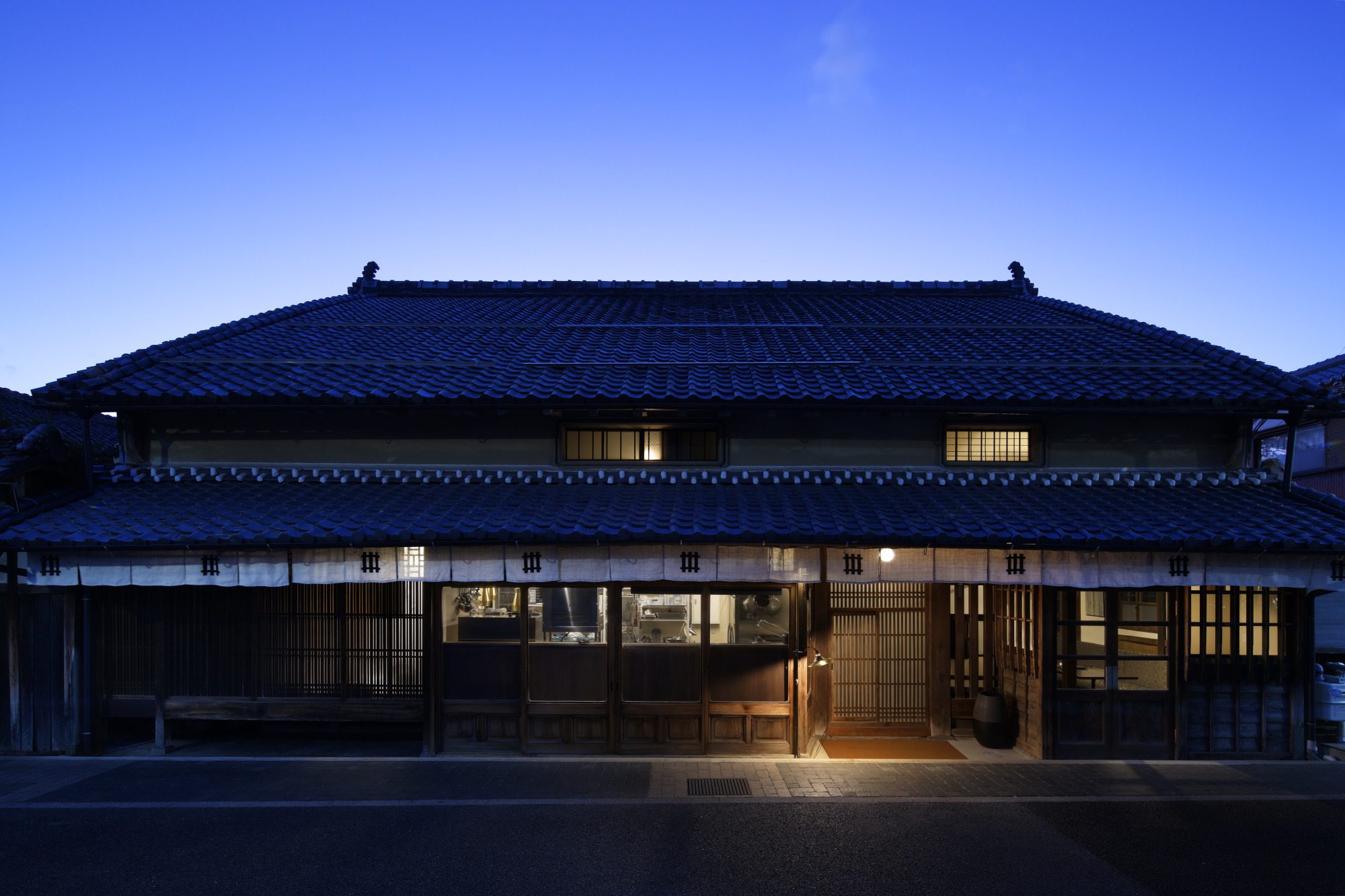 ONAE, one of the guestroom buildings of NIPPONIA Sasayama Castle Town Hotel. The building was constructed during the Meiji period as the residence of a bank president and has since been renovated for use as accommodations.
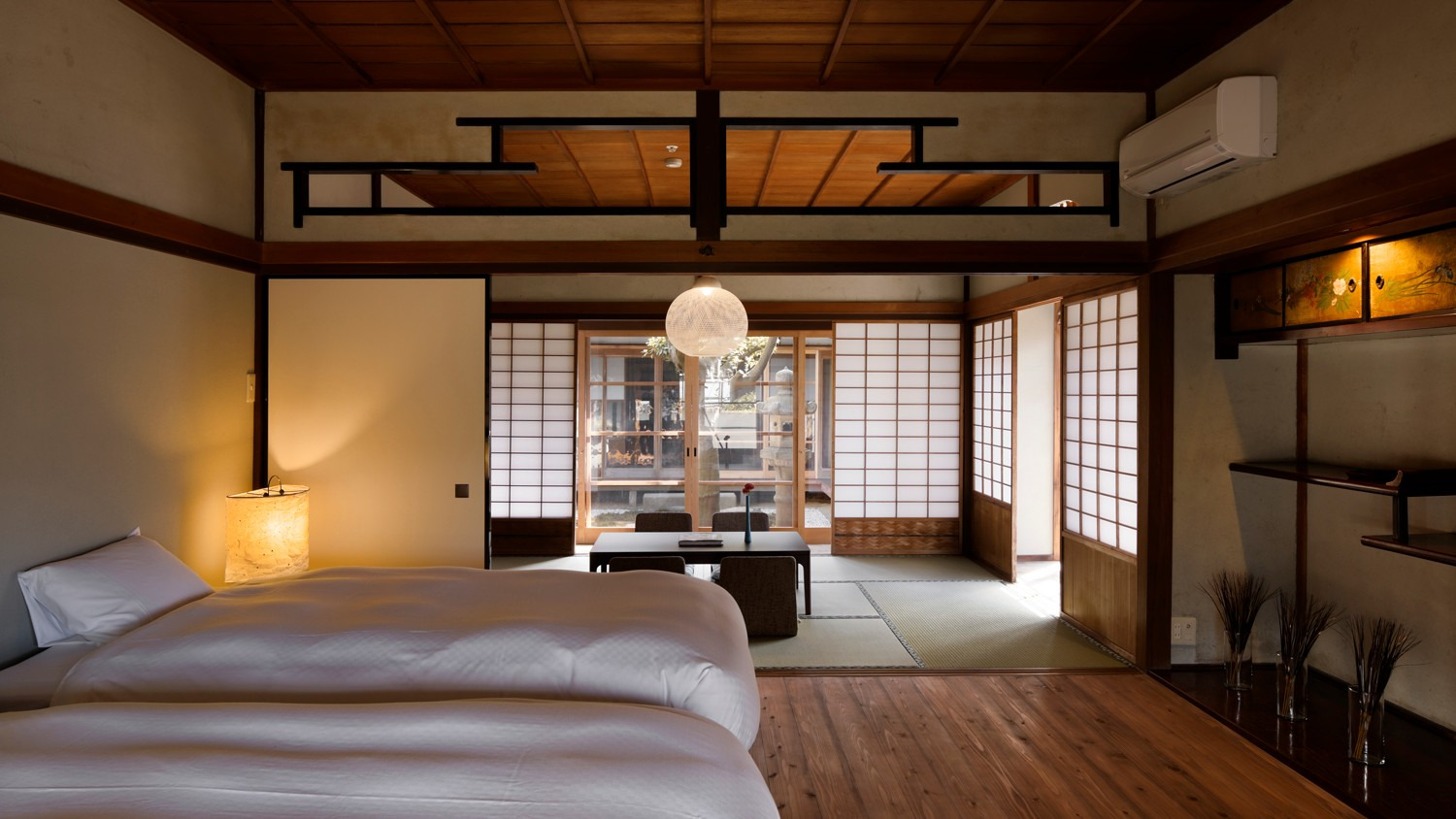 A guestroom in ONAE. This elegant room was once used as a tearoom for entertaining guests and retains its traditional Japanese architectural details.
Tamba-Sasayama developed as a castle town where merchants and samurai lived around the castle. Even today, its streets retain traces of the traditional merchant houses and samurai residences that once defined the town.
NIPPONIA Sasayama Castle Town Hotel makes use of these historic buildings to offer a stay in which the entire castle town itself becomes the hotel. Even the time spent walking through town on the way to the reception or restaurant becomes part of the experience. Guests can slip into the rhythms of everyday life here, almost as though they were residents themselves.
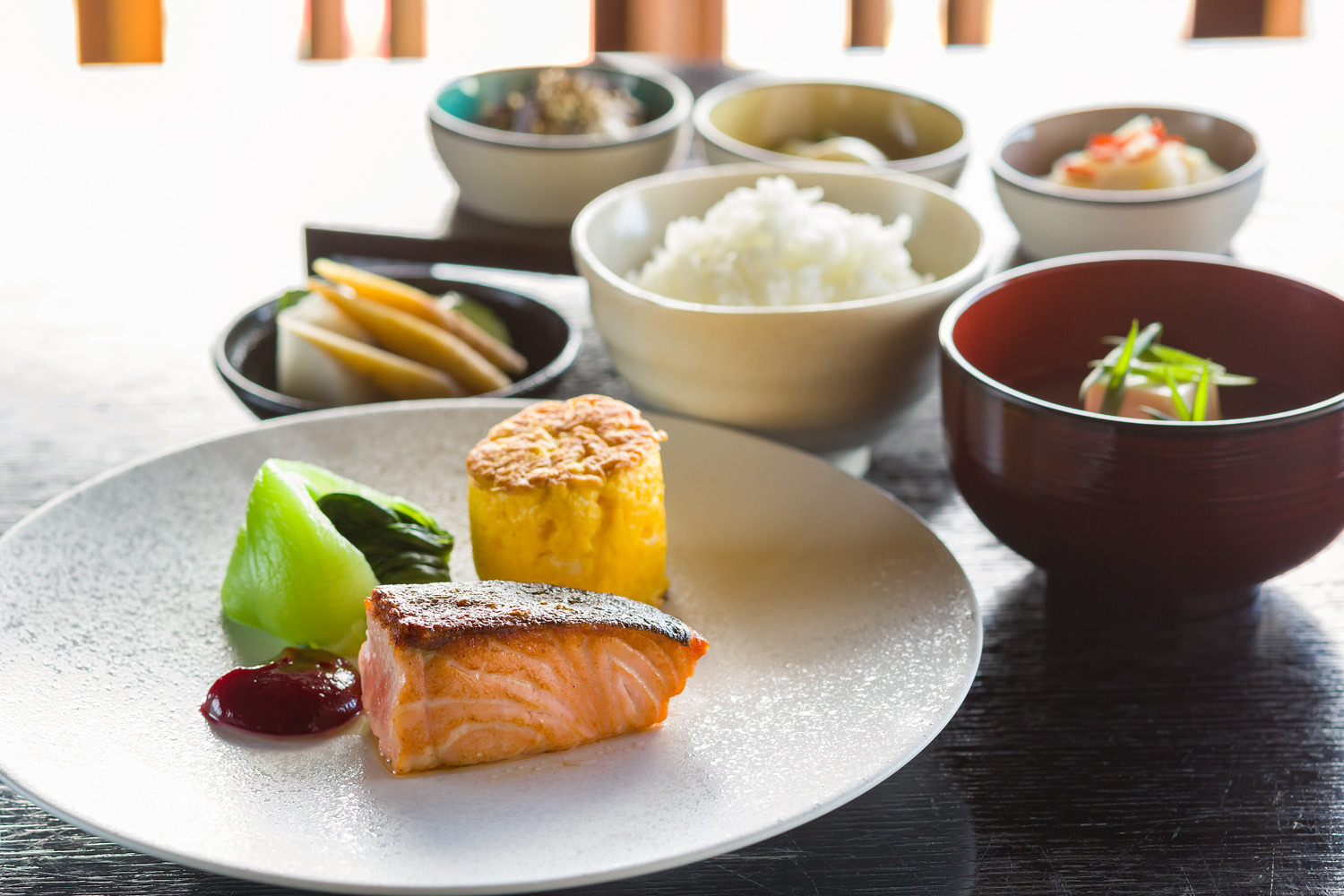 The Japanese-style breakfast features seasonal ingredients, including local rice cooked in a Tamba Tachikui ware earthenware pot and miso soup made with Tamba Kuro soybean miso.
After a slow, peaceful night, the journey draws to a close the following morning with a breakfast showcasing the bounty of Tamba-Sasayama. From Fukusaki, with its rich folklore of yokai, to Tamba-Sasayama, where cultures surrounding black soybeans and pottery remain very much alive, this three-day journey has revealed stories of everyday life deeply rooted in the land.
The places visited here represent only a small part of the NIPPONIA network that now extends across Japan. Just as we discovered in Hyogo, every region has its own history and culture, along with stories woven into the lives of the people who call it home. For travelers seeking encounters that can only happen once, why not continue from one NIPPONIA to the next, discovering the distinctive character of Japan’s local communities along the way?
NIPPONIA Sasayama Castle Town Hotel
Address: 25 Nishimachi, Tamba-Sasayama, Hyogo Prefecture 669-2342 (ONAE building)
Tel.: 0120-210-289 (11:00–20:00)
URL: https://www.kazenoheritage.jp/hotels/sasayama/



![The best of Kobe’s sightseeing spots, Kobe Port Tower, has been renovated [*Complete report]](/lsc/upfile/article/0000/0028/28_1_m.jpg)