Fall is the season for the cloud sea! Peace of mind, even for first-time visitors: how to reach the ruins of Takeda Castle, the castle in the sky – Hyogo terroir travel -
◇“Hyogo Terroir lab.”: Report from a terroir researcher
Have fun as you experience cuisine and culture, explore the roots and context in which they were formed, and encounter ideas and techniques that have been passed down. This report shares information about “Hyogo terroir travel,” which helps you make the most of the bounty of the land, from the perspective of a terroir researcher with real experience of the local area.
- Date posted
- 2022.09.20
- Date last updated
- 2026.02.19
I went to Osaka when I graduated high school, and that made me more aware of the wonders of my local area, very different to the city. I wanted to work in the local area that I loved, and returned to Asago City. Asago City really does have lots of charms, including famous historical and natural destinations and delicious food, so you should definitely come for a fun visit!
- Nationality
- Asago City, Hyogo Prefecture
- Hobbies
- Visiting different cafes
![[ Undefined: article-review-plain ]](/lsc/upfile/article/0000/0024/24_2_m.jpg)
INDEX
Show More
- How to enjoy the Takeda Castle Ruins: an introduction by a local reporter
- Recommended route for first-time visitors
- Access route by car
- The best place for photos: the “keep”
- You're more likely to encounter the cloud sea from dawn to around 8 am from late September to late November
- Takeda Castle and castle town VR
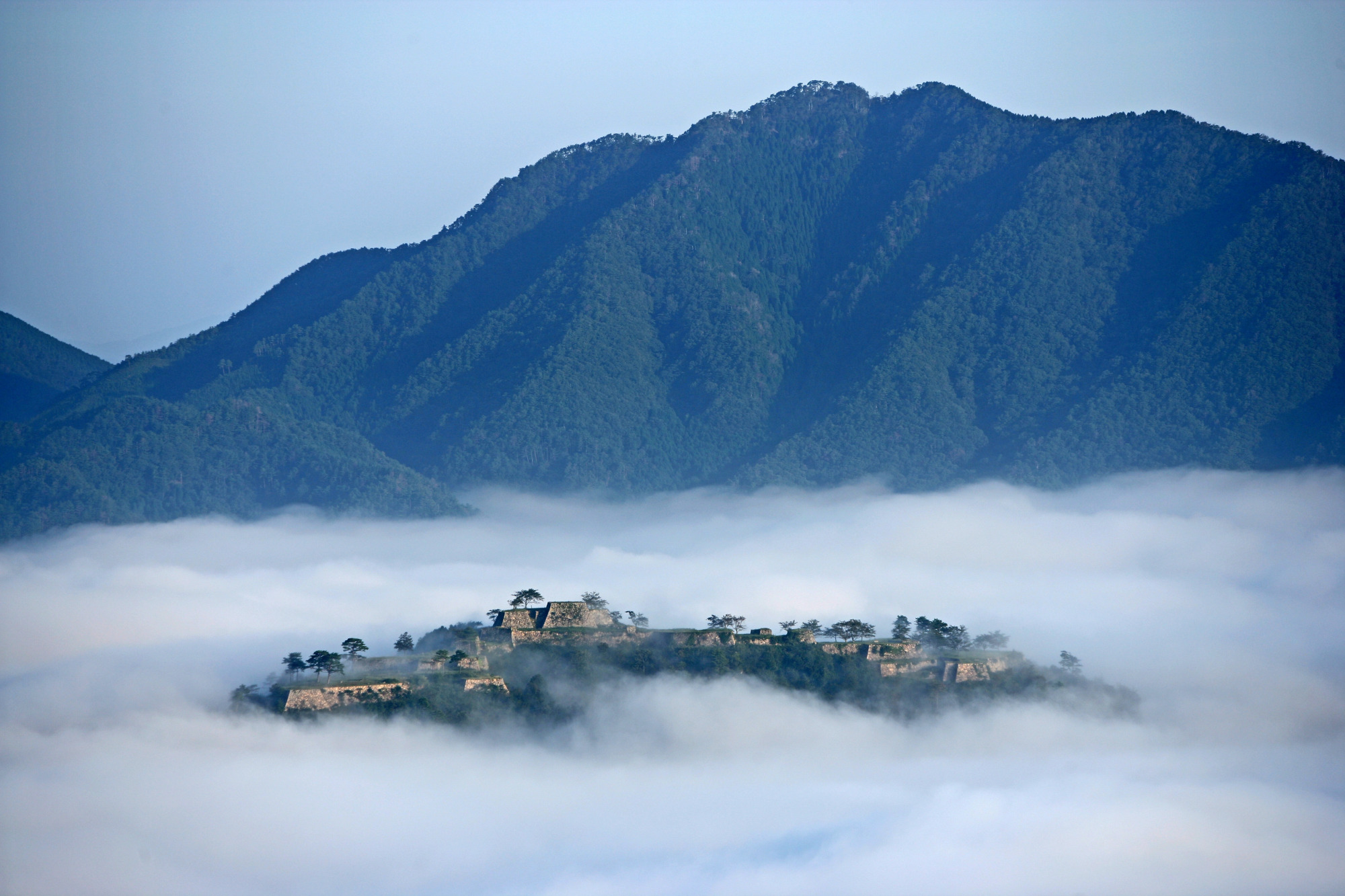
How to enjoy the Takeda Castle Ruins: an introduction by a local reporter
The Takeda Castle Ruins are the remains of a mountain castle, which are rarely preserved in Japan.
Its fantastical form, surrounded by a sea of clouds, has led it to be called the “castle in the sky,” and it is a tourist destination with nationwide popularity.
There are several routes you can take to reach it—in this article, I’ll introduce the course recommended for first-time visitors to the Takeda Castle Ruins.
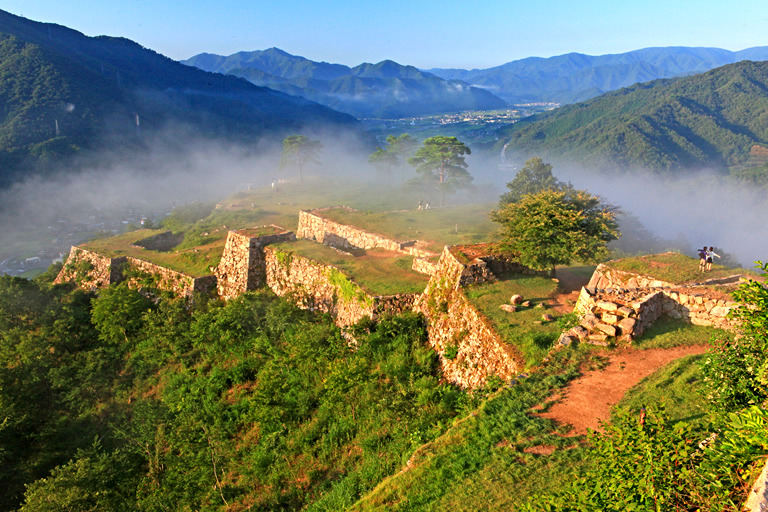
Takeda Castle was a mountain castle, built on the peak of the 353.7-meter-high Mount Kojo. It is also known as “Torafusujo” (literally “lying tiger castle”), because of its resemblance to a reclining tiger.
Construction began on the orders of Yamana Sozen, a military governor of Tajima during the Muromachi period (1336–1573), but the castle was abandoned in 1600. As the ruins of a mountain castle that has retained much of its original form, it is one of the best in Japan.
Recommended route for first-time visitors
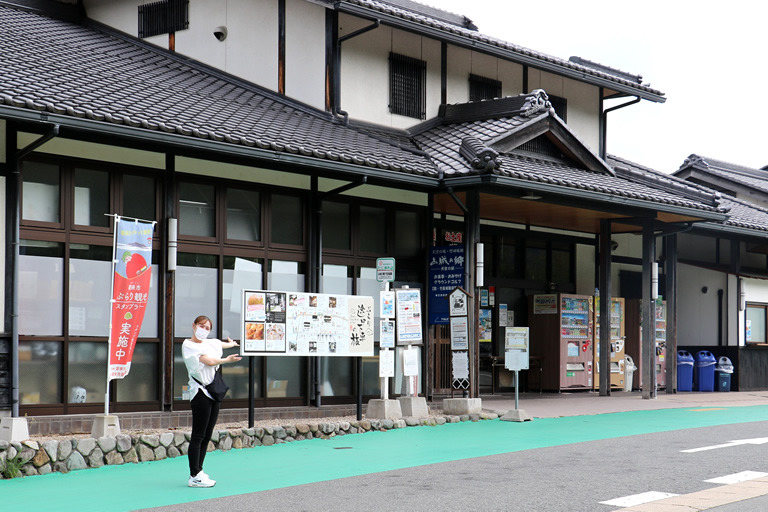
Yamajiro no Sato serves as the gateway for seeing the Takeda Castle Ruins. This is a tourist facility that acts as an entranceway to seeing the castle, and houses a spacious restaurant, shop, and more.
You can't go any further than Yamajiro no Sato in a regular vehicle, so park your car here and head to the Takeda Castle Ruins via Tenku Bus, taxi, or on foot.
If you’re visiting by train, there are three hiking routes from JR Takeda, the nearest station—it will take you around 40–60 minutes' walk to reach the castle via these paths. However, these are mountain trails meant for fairly experienced hikers, so I recommend you access this site by car.
Access route by car
Approx. 10 mins by car from Wadayama IC to Yamajiro no Sato
▼
Board a Tenku bus and alight at Chufuku bus stop, and start climbing the mountain on foot
▼ (Allow around 30 mins)
Arrive at the entrance to the Takeda Castle Ruins
What kind of route is this? Let’s find out!
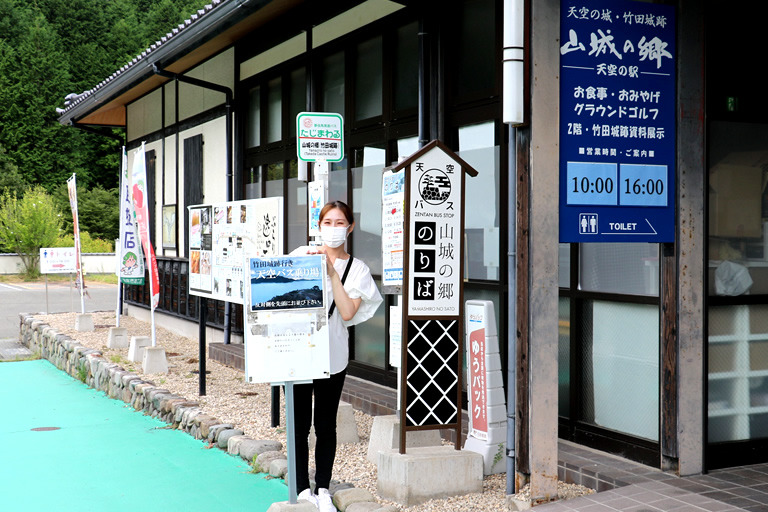
Get on a Tenku bus at the front entrance of Yamajiro no Sato.
The buses run once an hour, so make sure you check the timetable in advance.
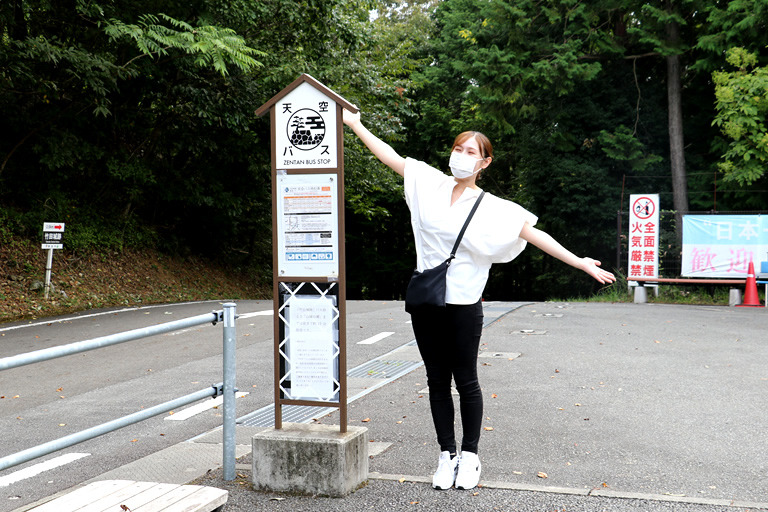
After the bus sets off, you’ll reach Chufuku bus stop in front of the entrance to the Takeda Castle Ruins in around 10 minutes.
You can also head to the ruins on foot, without taking a bus. In that case, it'll take you around 40–50 minutes to reach the entrance from Yamajiro no Sato. It’s approximately 1.5 kilometers, but the route travels up a continuous gentle slope, so you’ll need a bit of stamina to get there.
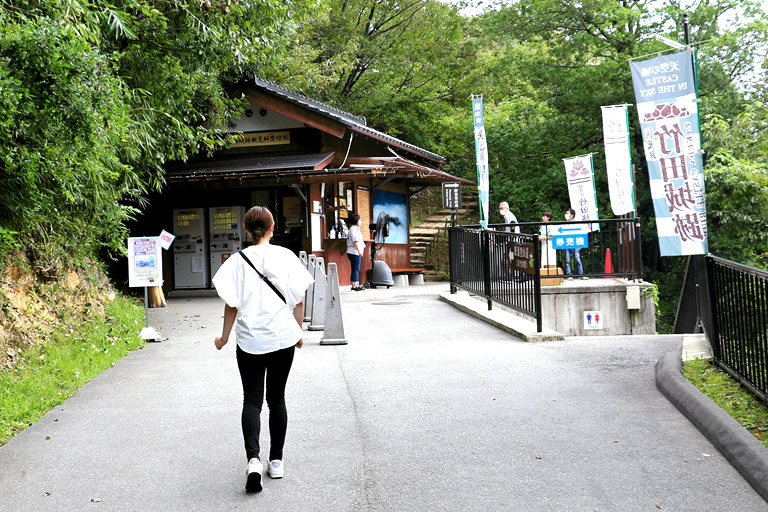
Pay the admission fee at the entrance, and start climbing the mountain.
There are no toilets inside the Takeda Castle Ruins, so make sure you use the ones here if you need to.
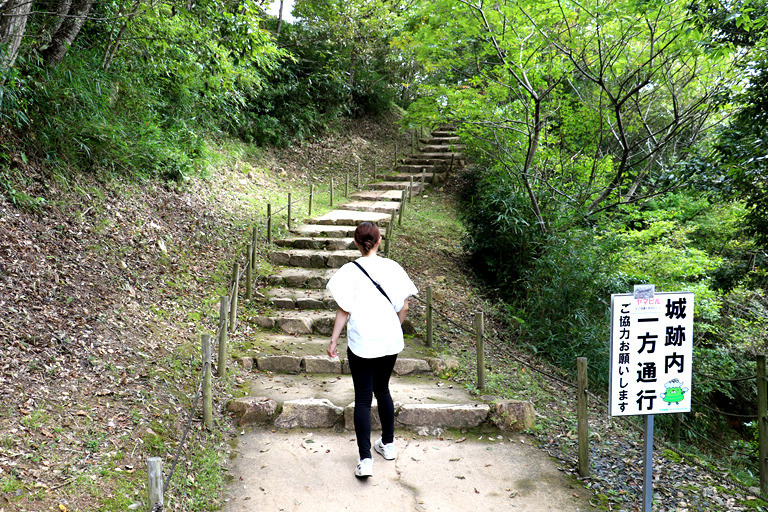
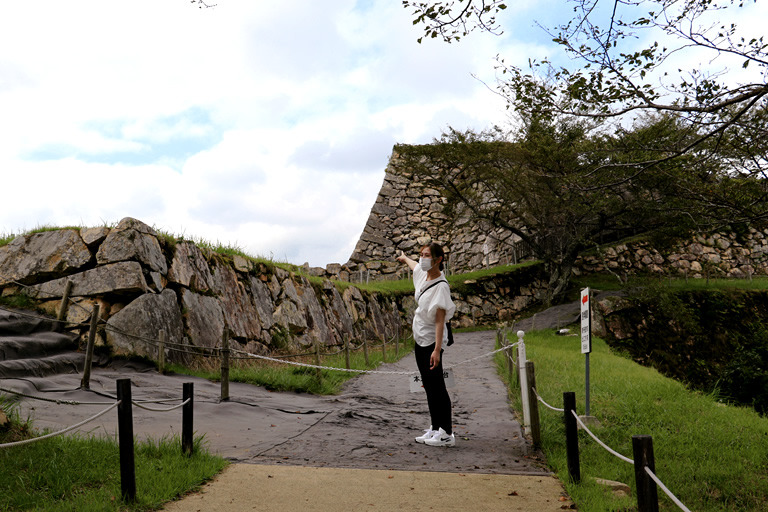
The stone walls come into view after you’ve climbed a little way.
These stone walls were constructed by the last lord of the castle, Akamatsu Hirohide (1562–1600).
They were built using a technique of piling up a variety of natural stones, large and small, with very little tooling. They have survived for over 400 years without crumbling, almost completely unchanged, until today.
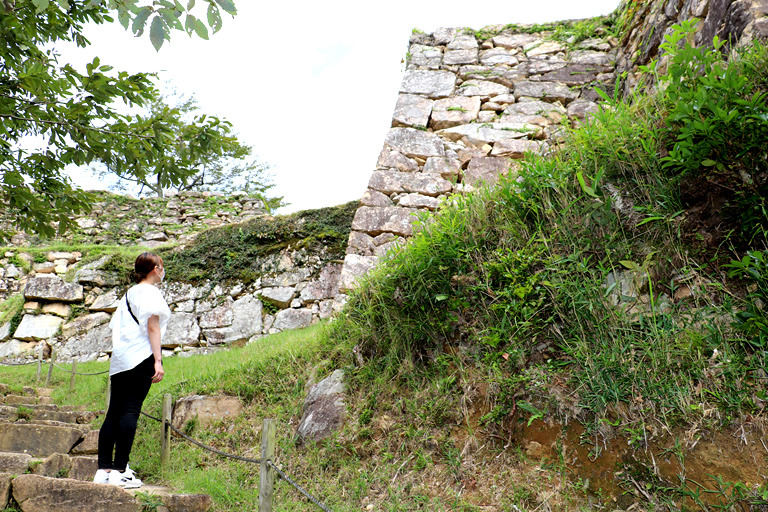
The Takeda Castle Ruins are centered around a keep, known as the Honmaru, and stretch around 100 meters east-west and around 400 meters north-south. The remains of the stone walls, completely preserved, are some of the best and largest in Japan.
From the main gate at the front of the castle, walk up the steps and you’ll see the town of Asago, spread across the foothills.
Pass through the San-no-maru and Ni-no-maru, the third and second defensive compounds, to reach the Honmaru (the keep).
The best place for photos: the “keep”
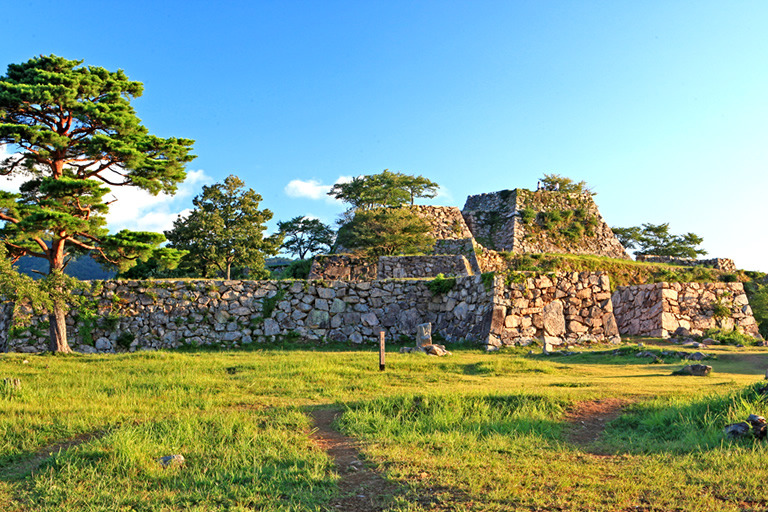
To find the best spot for photographs, climb to the “keep,” the highest part of the castle, and look down over the Minami Senjo, the part of the castle that extends to the south. The castle ruins, surrounded by colorful fall leaves, are really pretty.
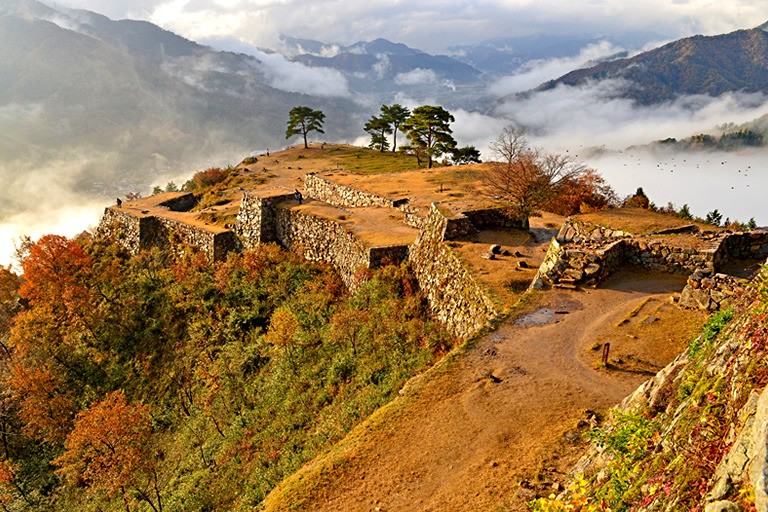
It’s not just the “keep”—in the fall, you can see the Minami Senjo from the Ni-no-maru and the San-no-maru, with a tapestry of fall leaves coloring the mountain spread before your eyes.
The view changes at different times of day—with the morning sun and at dusk, for example—so take a leisurely walk around and enjoy photographing the castle from many different angles.
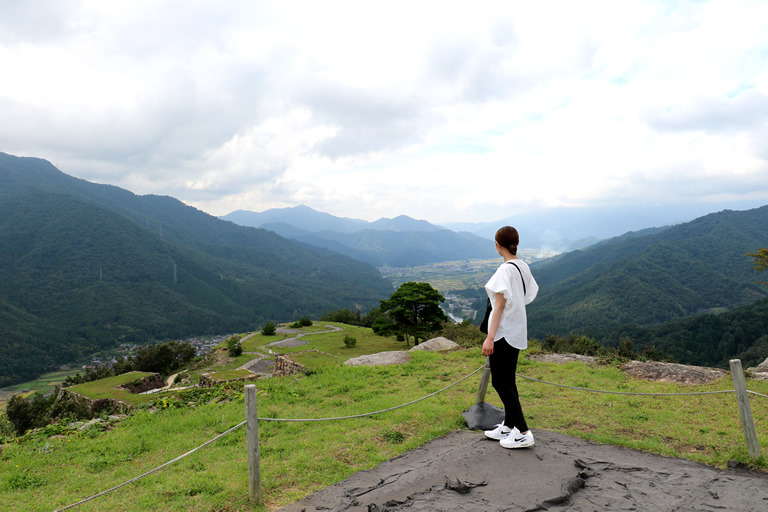
Head to Kita Senjo, the northern part of the castle, to eat your lunch or snacks. You can take a relaxing break while you enjoy the fantastic scenery.
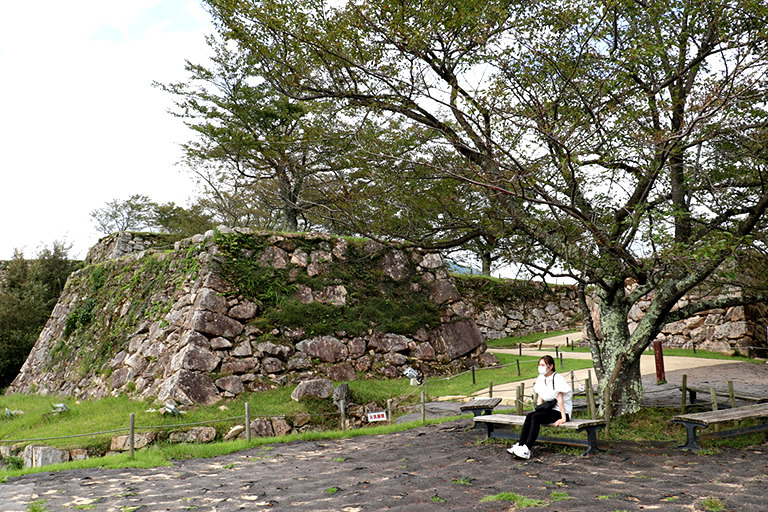
It's easier to walk down the mountain than up, so I recommend going on foot. It takes around 20 minutes from the exit to get to Yamajiro no Sato.
You're more likely to encounter the cloud sea from dawn to around 8 am from late September to late November
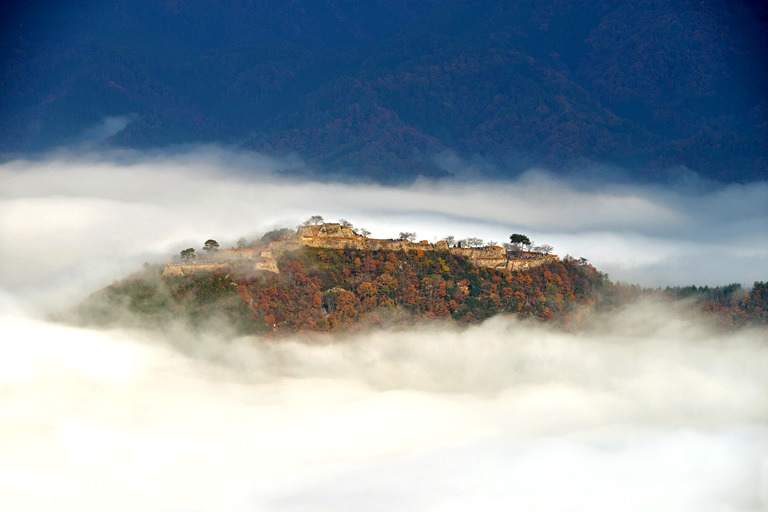
The season for the cloud sea is late September to late November, and it tends to manifest from dawn to around 8 am.
The Takeda Castle Ruins are inaccessible from early January to the end of February because the mountain is closed to hikers, so your best bet is to climb to the castle by sunrise from late September to the end of November. Since you can’t use the trains or buses, you’ll need to take a car and walk.
If you want to see the ruins floating in the cloud sea like the photographs, Ritsuunkyo is a fantastic viewpoint on the other side of the Maruyama River from Takeda Castle.
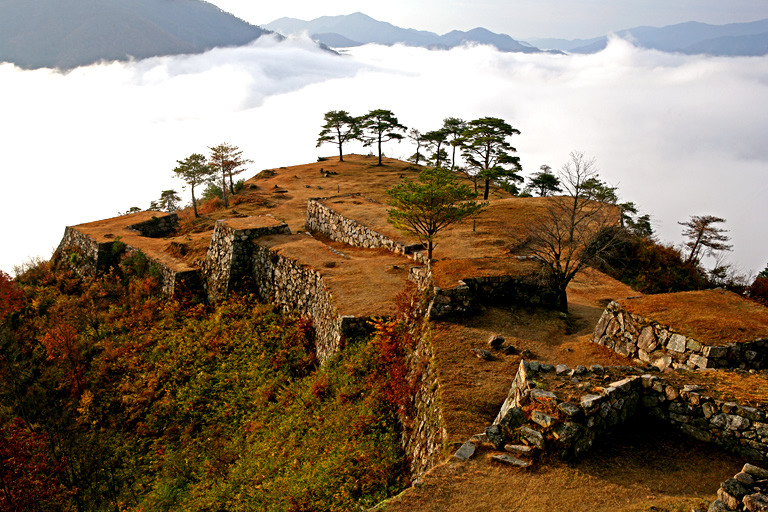
You can see the cloud sea when lots of different factors come together—not only the season and the time of day, but also the sky being clear and the wind blowing gently. Those are difficult to predict yourself, so it’s a good idea to check using the website below.

You can also buy souvenirs in Yamajiro no Sato.
Their bestseller is their Takeda Castle Ruins Awaseyaki pancakes (Takedajoseki Awaseyaki.)
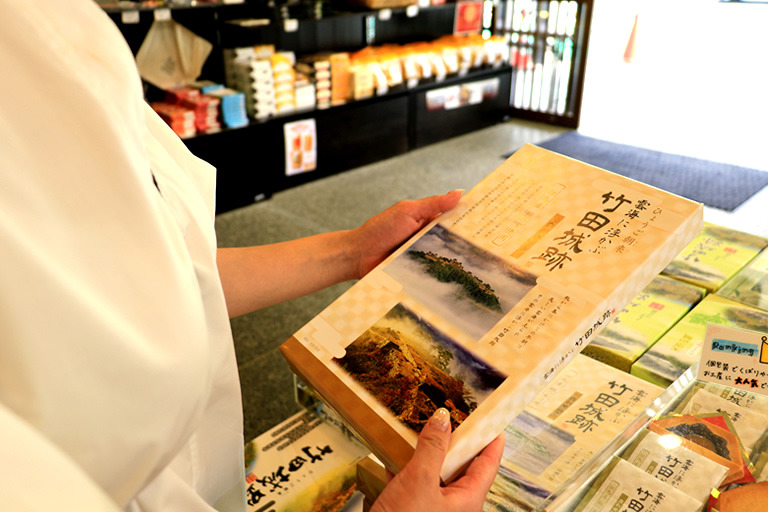
You can enjoy plenty of unique menu options in the take-out area of Yamajiro no Sato.
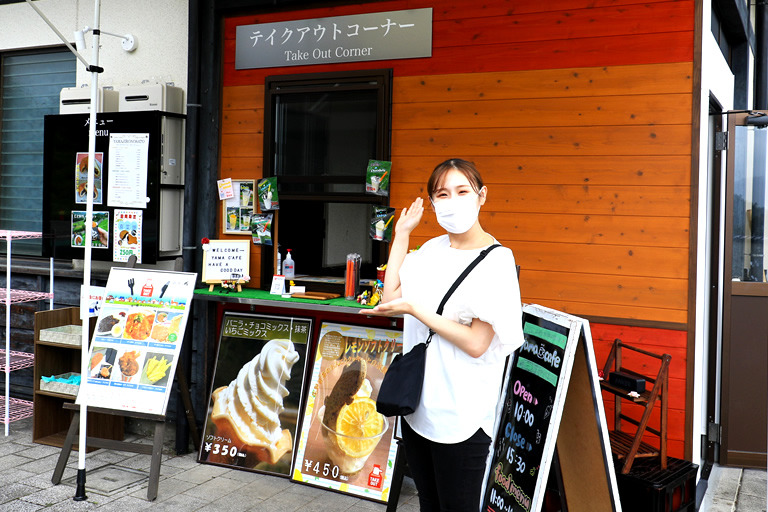
Their original milkshakes are particularly popular. On this visit, we ordered a “special banana & choco shake” and a “special matcha and Asago green tea shake.” This is made using tea leaves produced in Asago, with a great fragrance and rich taste—delicious.

I also recommend the lemon soft serve ice-cream topped with cookies in the shape of Japanese giant salamanders, made with Ikuno tea. They look cute, and the refreshing lemon taste is wonderful.

If you’re hungry after climbing to the Takeda Castle Ruins, they also offer a menu of light meals.
I recommend the Yamajiro no Sato Tajima Cattle hotdog. The meat is juicy and flavorful.
Takeda Castle and castle town VR
You can also access content such as a 360-degree VR video and 360-degree virtual tour. The narration offers explanations so you can learn about the whole story of Takeda Castle—make sure you check it out to prepare before your trip!
![The best of Kobe’s sightseeing spots, Kobe Port Tower, has been renovated [*Complete report]](/lsc/upfile/article/0000/0028/28_1_m.jpg)