A Ceramics Expert’s Stroll through the Home of Tamba Ware: 850 Years of Tradition and the Search for a Favorite Piece
- Date posted
- 2026.10.09
- Date last updated
- 2026.11.11
For 18 and a half years, I ran “bonton.”, a tableware shop in Ashiya, where I introduced works by artisans from across Japan through special exhibitions and other events. Since closing the shop in March 2025, I have been promoting a lifestyle enriched by tableware while working as a life design coach for women in their 50s and older.
- Nationality
- Osaka City
- Hobbies
- Tableware, Food
INDEX
Show More
- What awaits at the new TAMBA GATEWAY CENTER?
- Fifty kilns in one place: Find your favorite piece at Kamamoto Yokocho
- A living link to 850 years of history: Tamba’s oldest surviving climbing kiln
- Experience Tamba ware at the table: Koharubiyori’s wooden-box lunch
- Tradition in motion: Visiting Tsuyoshi Shimizu of Toshihiko-gama Kiln
Join Reiko Yokoi, who ran a tableware gallery for 18 years, on a journey to the birthplace of Tamba ware—one of Japan’s Six Ancient Kilns, with a history spanning some 850 years. From exploring the recently renovated TAMBA GATEWAY CENTER to meeting local potters and enjoying a farm-to-table lunch served on Tamba ware, this journey is filled with memorable ways to experience the craft. As autumn colors spread across the countryside, set out through the satoyama landscape in search of a piece that feels made for you.
Tamba ware, also known as Tamba Tachikui ware, is recognized as one of Japan’s Six Ancient Kilns alongside Seto, Tokoname, Shigaraki, Bizen, and Echizen. Its origins date to the late Heian period in the second half of the 12th century, and pottery has been produced here continuously for around 850 years.
About 20 kilometers southwest of central Tamba Sasayama, the Tachikui district remains home to some 60 working kilns and is widely known as the village of Tamba ware. Tamba Traditional Craft Park, Tachikui Sue-no-Sato, is an ideal place to discover the history, techniques, and enduring appeal of this celebrated ceramic tradition.
*The Tamba ware village is home to around 60 kilns in total; 50 are members of the Tamba Tachikui Pottery Cooperative Association.
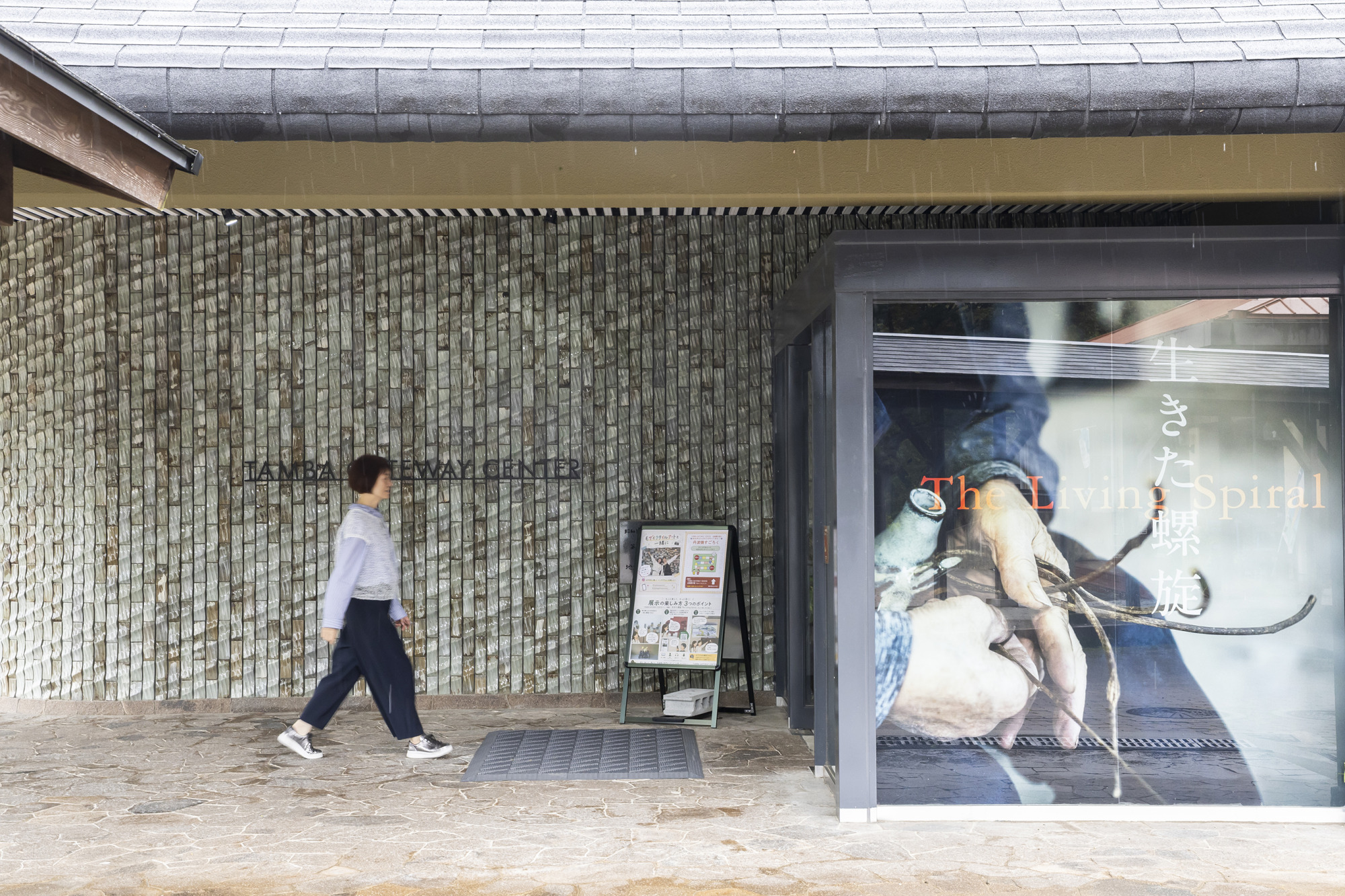 The entrance to the newly renovated TAMBA GATEWAY CENTER
Tachikui Sue-no-Sato is about a 10-minute drive from Sanda-Nishi Interchange on the Maizuru-Wakasa Expressway. By public transport, it is around 10 minutes by bus from Aino Station on the JR Fukuchiyama Line. Its spacious 20,000-square-meter grounds include a pottery lane showcasing work from around 50 kilns, a restaurant, pottery workshops, and a variety of other facilities.
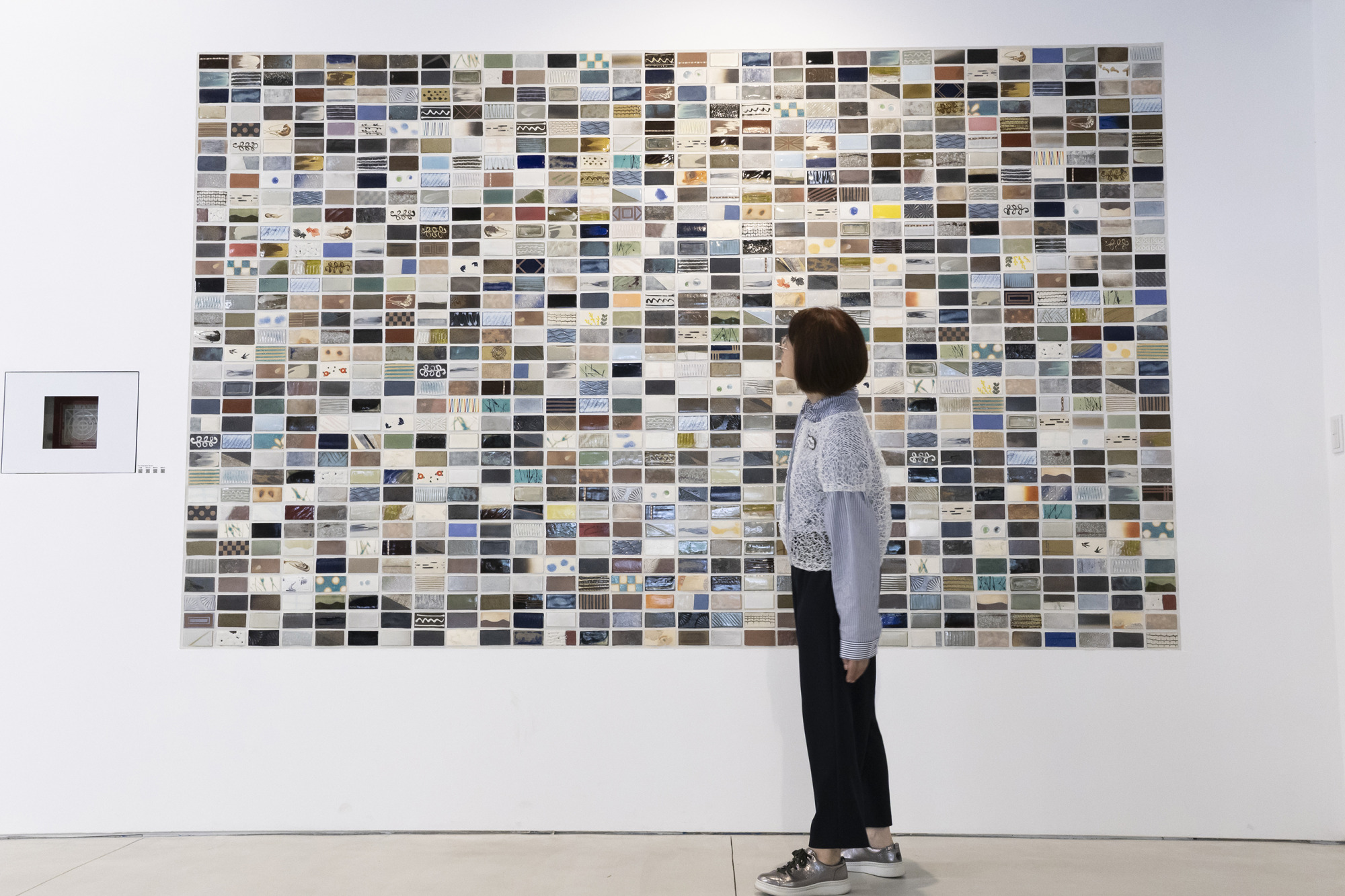 A wall-sized Tamba ware mosaic brings together the techniques and motifs of 50 local kilns
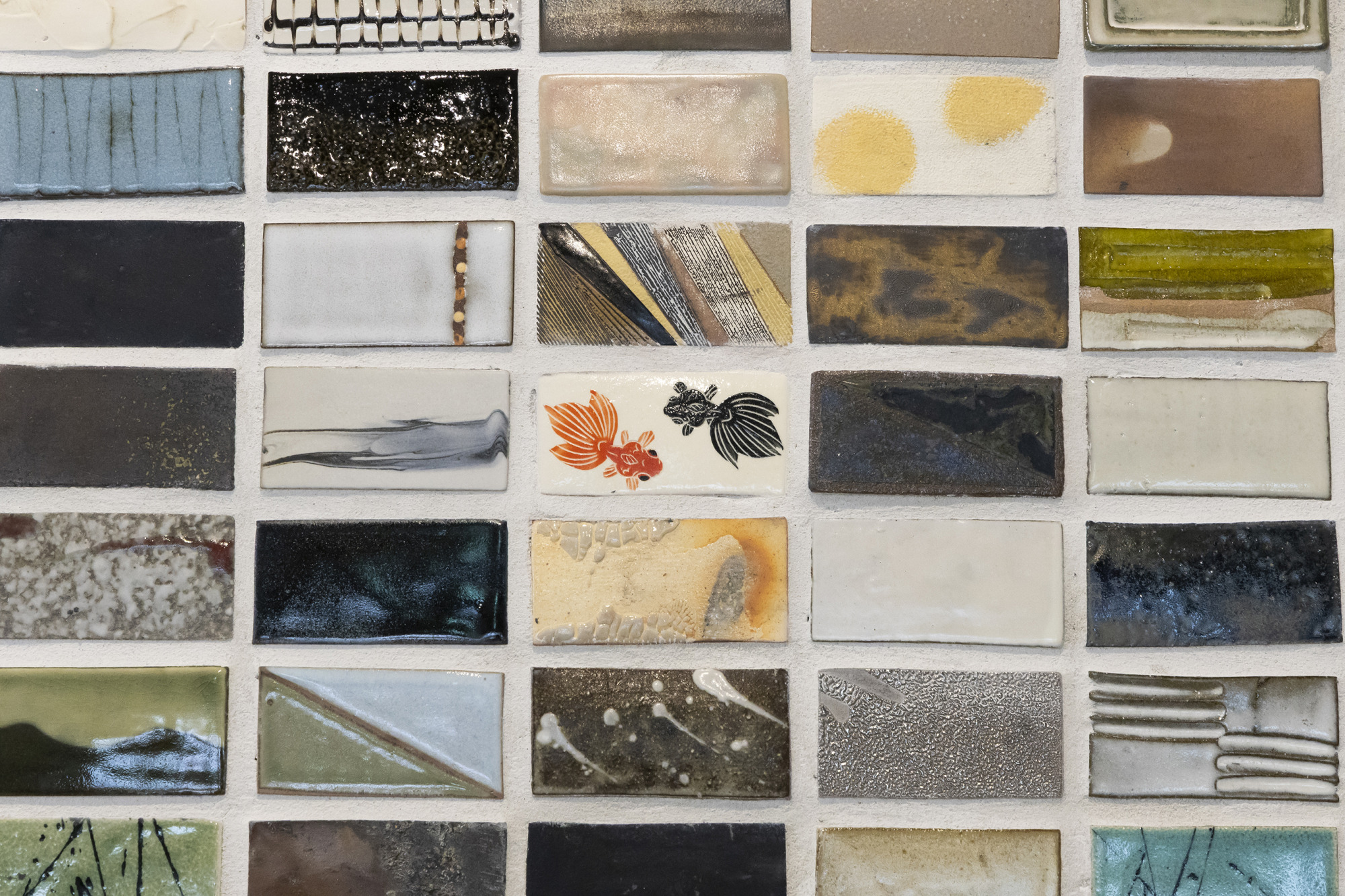 A wall-sized Tamba ware mosaic brings together the techniques and motifs of 50 local kilns
What awaits at the new TAMBA GATEWAY CENTER?
Begin your visit at the TAMBA GATEWAY CENTER, renovated in April 2026. Directly opposite the entrance is a spectacular wall-sized mosaic made from Tamba ware tiles. More than 60 potters from 50 kilns contributed tiles featuring the techniques and motifs found in their everyday work. From goldfish and shrimp designs to glossy finishes and matte textures, the installation reveals just how diverse Tamba ware can be.
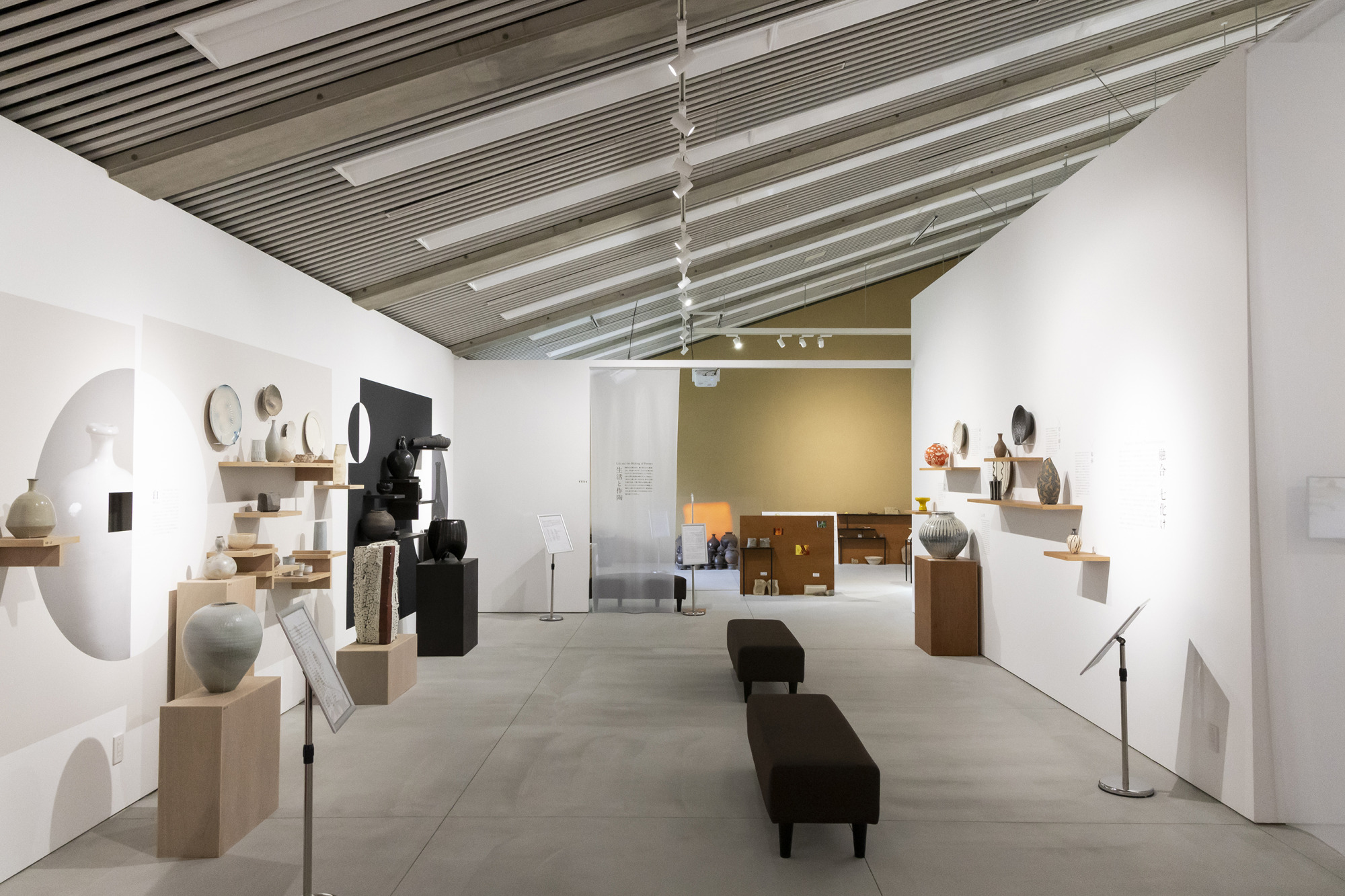 The contemporary exhibition room hosting “The Living Spiral”
To the left is a dedicated exhibition space covering approximately 160 square meters. Admission to Sue-no-Sato has been free since April 2026, but a separate ticket is required for this exhibition space: JPY 500 for adults and JPY 120 for elementary and junior high school students. During our visit, it hosted “The Living Spiral,” a special exhibition exploring the history and techniques of Tamba ware.
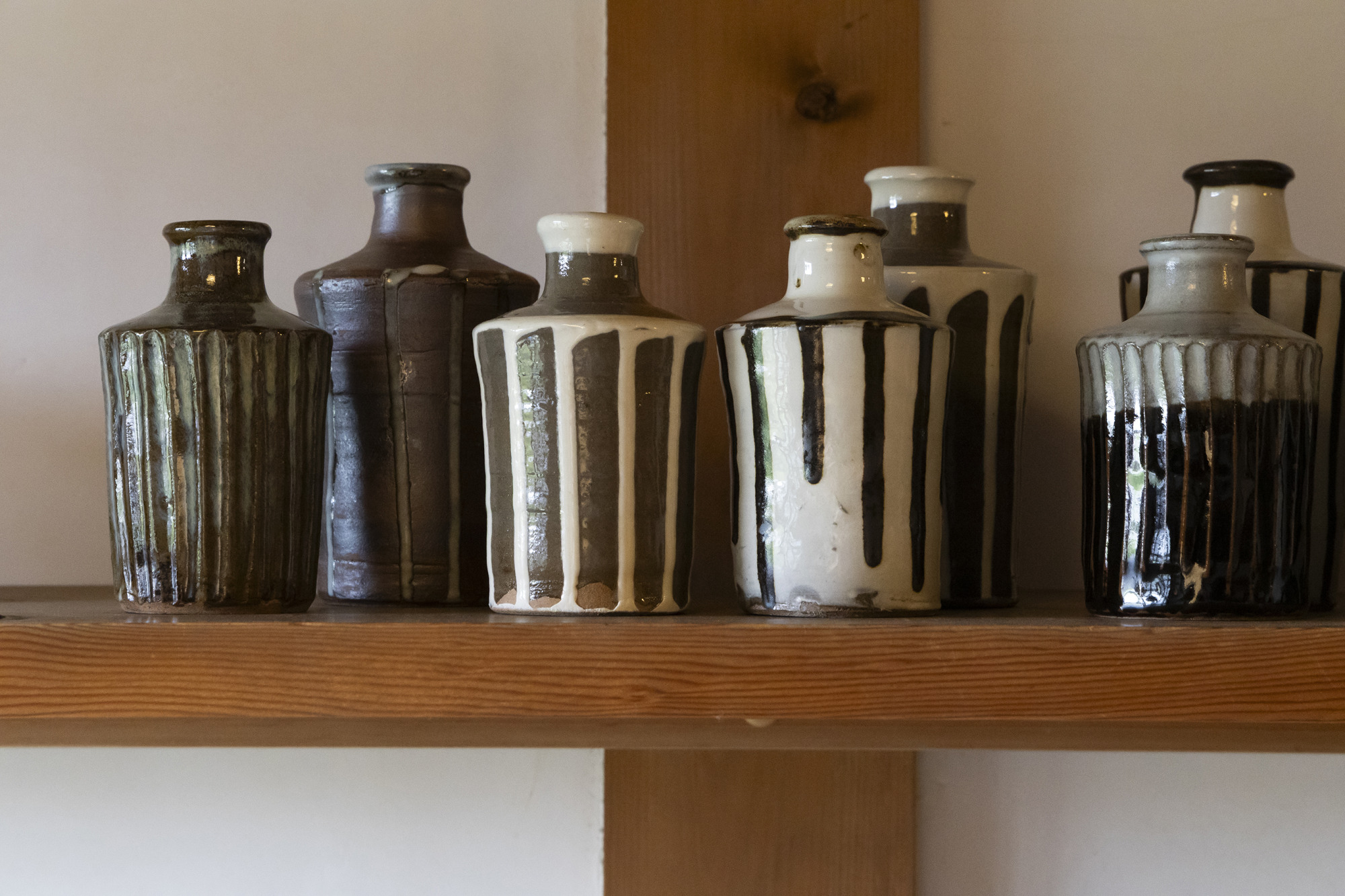
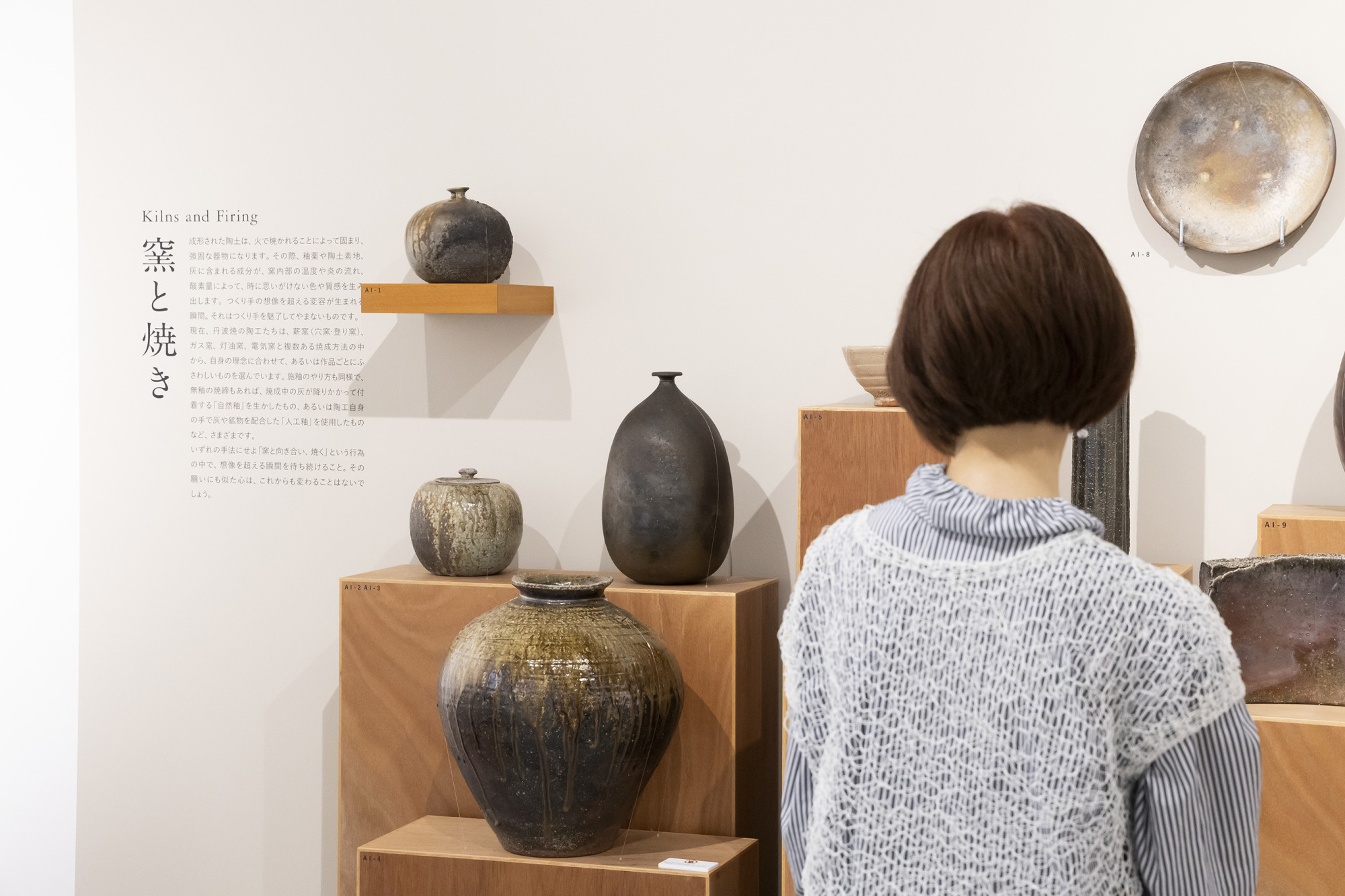 Tamba ware jars made by contemporary potters using traditional methods
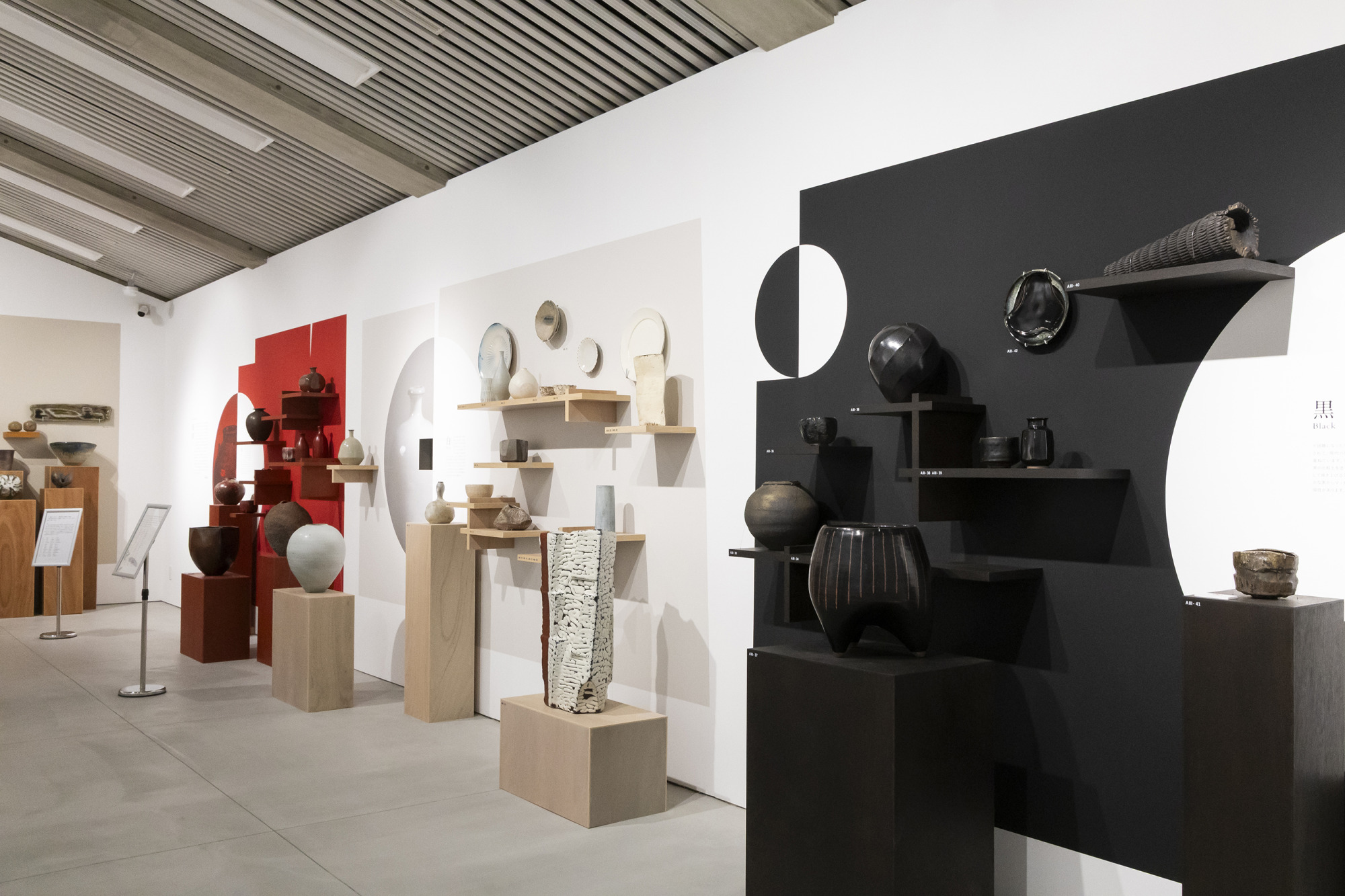 Akadobe, White Tamba, and Black Tamba ware
The displays highlight three distinctive expressions of Tamba ware. Akadobe features a clay slip originally applied to prevent leakage, which turns a vivid red during firing. White Tamba has an elegant finish created by coating the clay with white slip, while Black Tamba achieves its glossy appearance through mineral-based glazes such as Ishiguro glaze, which contains manganese. Together, these pieces show how potters preserve tradition while continuing to explore new colors and forms. A red Akadobe vessel can instantly brighten a dining table and works beautifully as an accent piece.
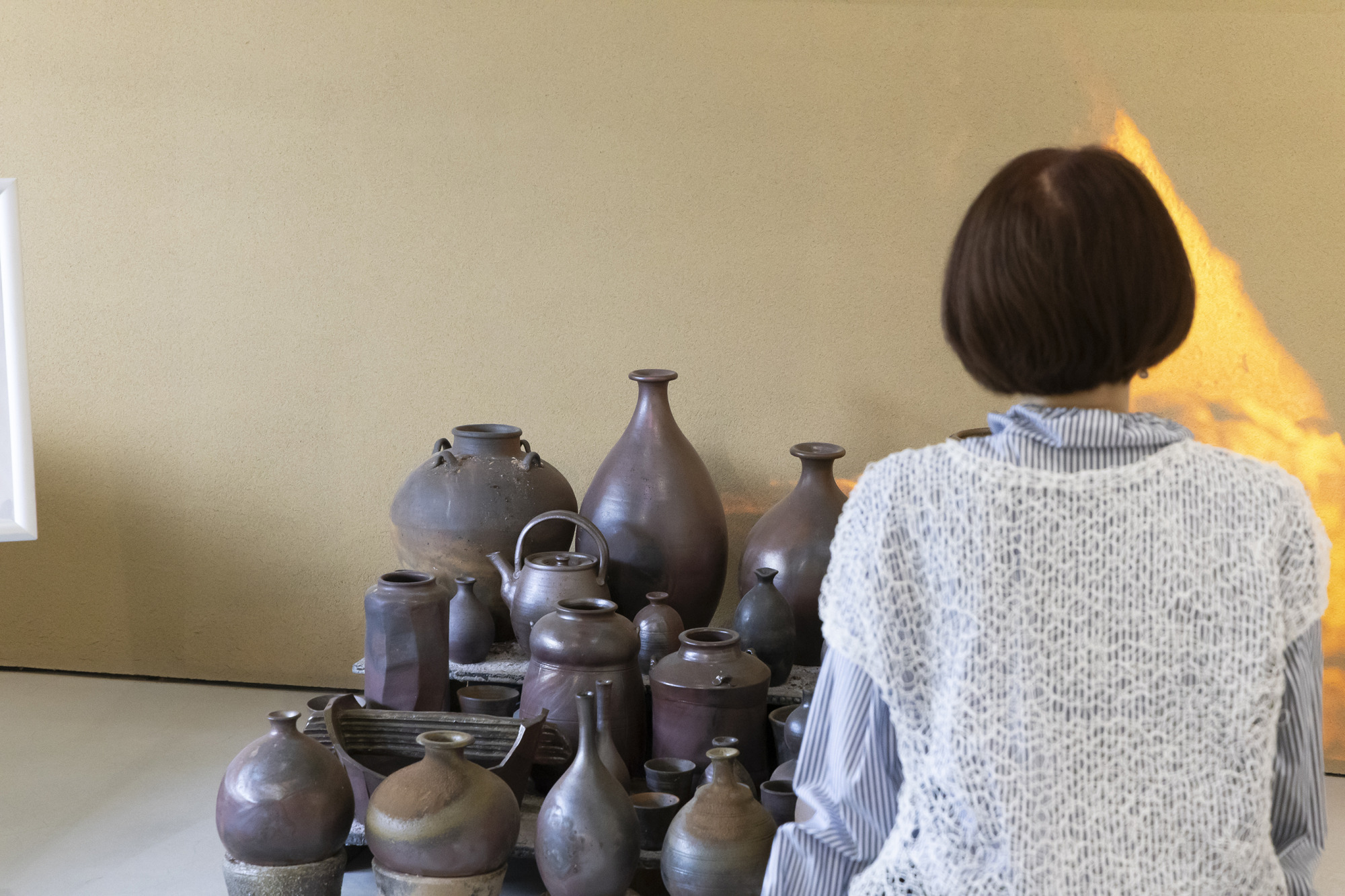 An interactive display recreating the experience of firing a climbing kiln
An immersive display combines real ceramic vessels with footage of wood burning inside a climbing kiln, giving visitors a sense of the intensity of the firing process. You can also see the distinctive Tamba-style potter’s wheel, traditionally turned counterclockwise by foot. Together, these exhibits bring the craft to life through the senses.Tamba ware is sometimes described as “Tamba shichibake,” or the seven transformations of Tamba, reflecting how its techniques and designs have continually evolved with changing times and needs. Even without any prior knowledge of ceramics, you can discover a new potter through a piece that catches your eye—or seek out work by a maker you already know. Benches in the exhibition room invite you to slow down, take a closer look, and find a favorite of your own.
Fifty kilns in one place: Find your favorite piece at Kamamoto Yokocho
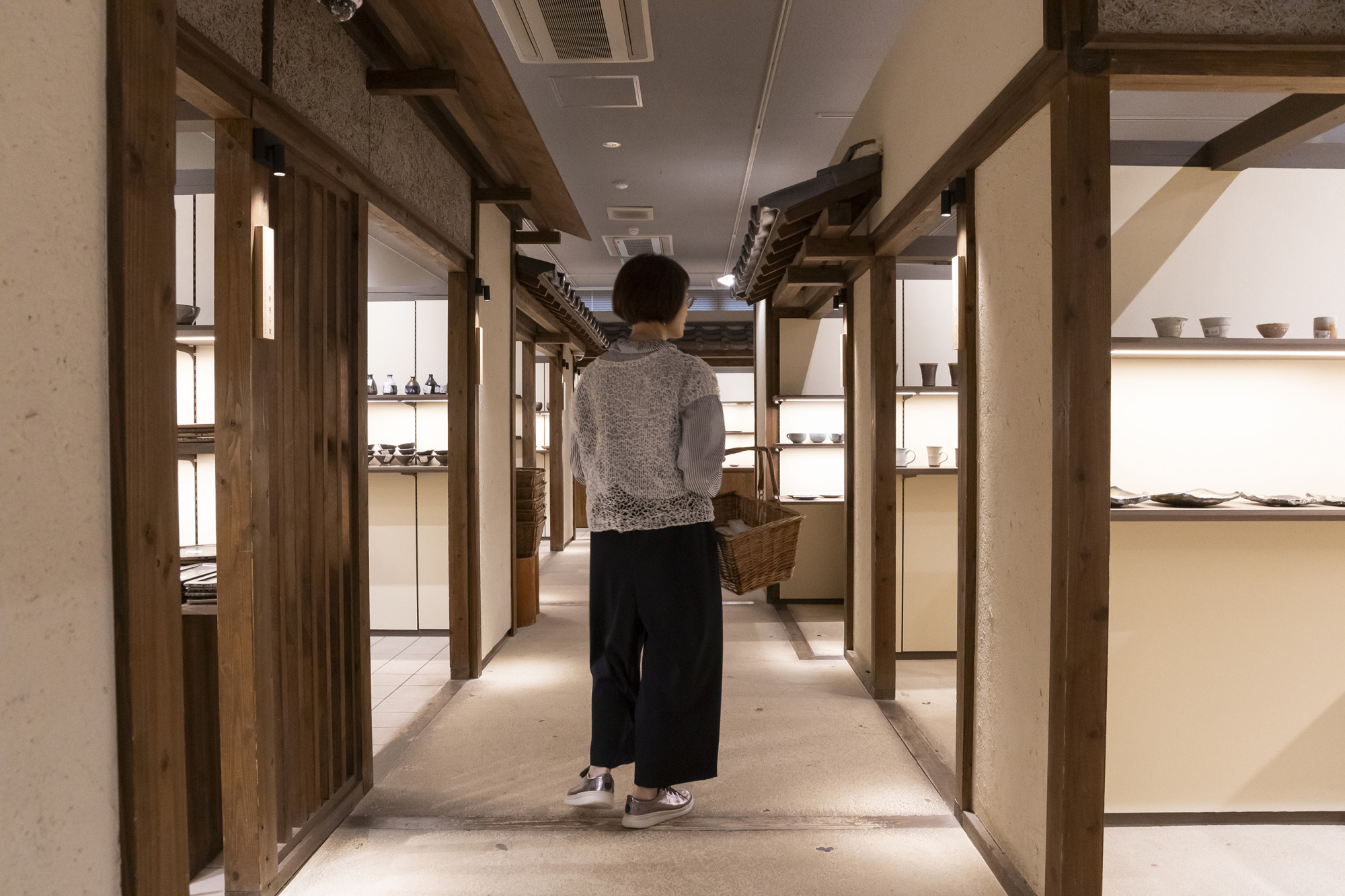 The nostalgic lane of townhouse-style shops at Kamamoto Yokocho
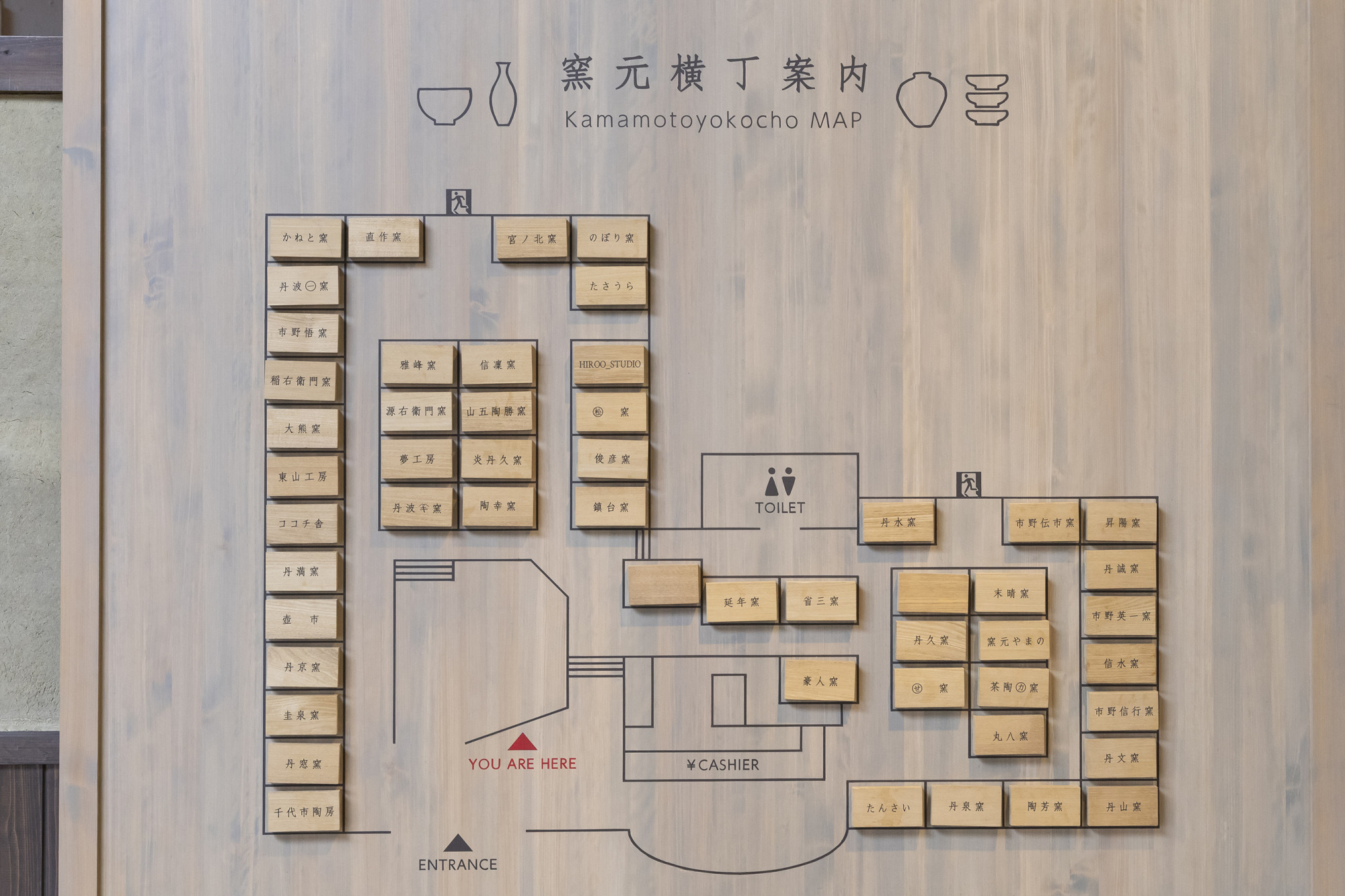
The wooden guide map at Kamamoto YokochoNext, head to Kamamoto Yokocho, where work from 50 local kilns is gathered under one roof. Its nostalgic row of small shops feels like a scene from a period drama, with a maze-like layout that invites leisurely browsing. Each space reflects the character of a different kiln, and visitors are welcome to pick up the pieces to compare their weight, texture, and how they feel in the hand.
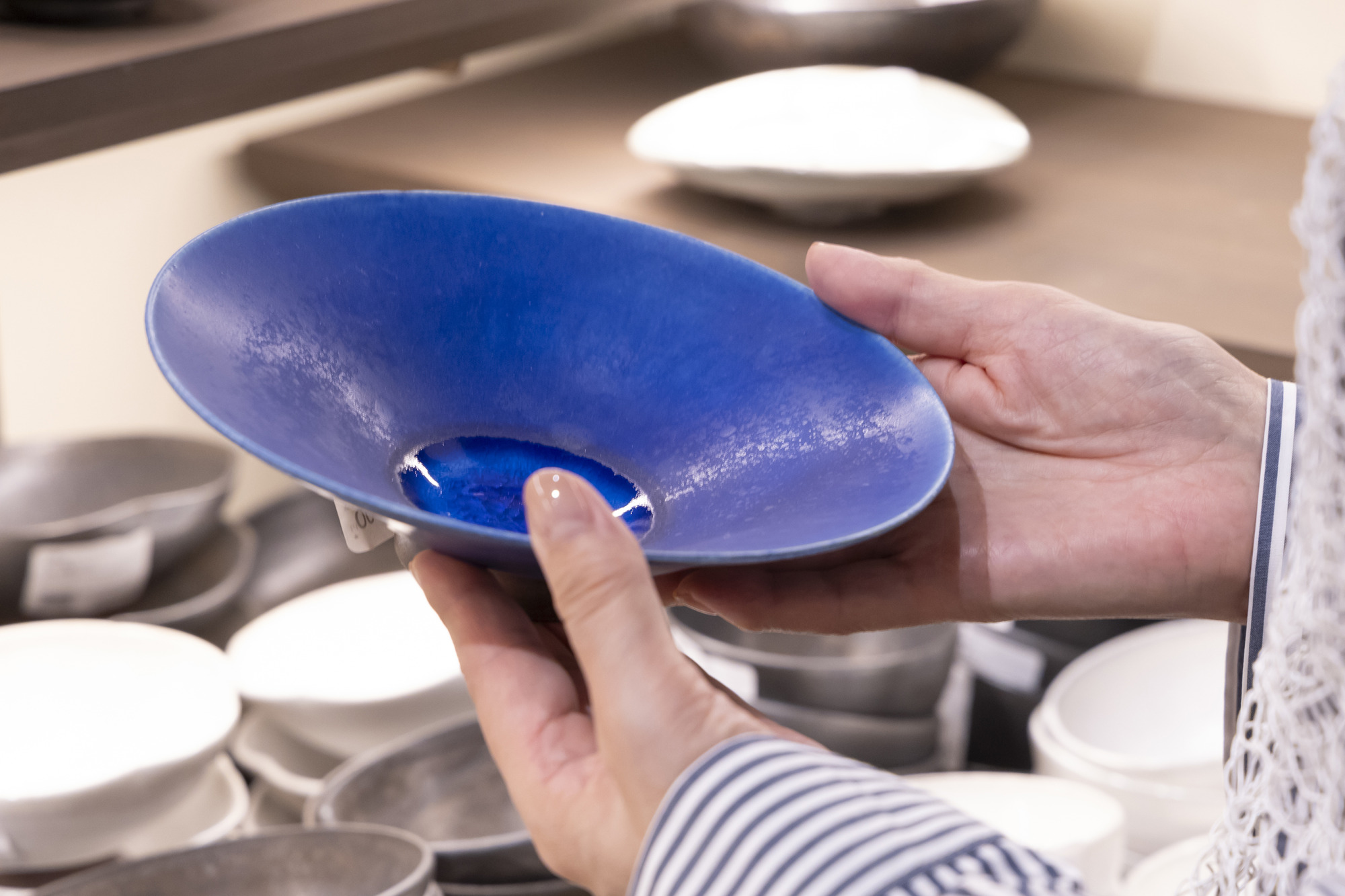
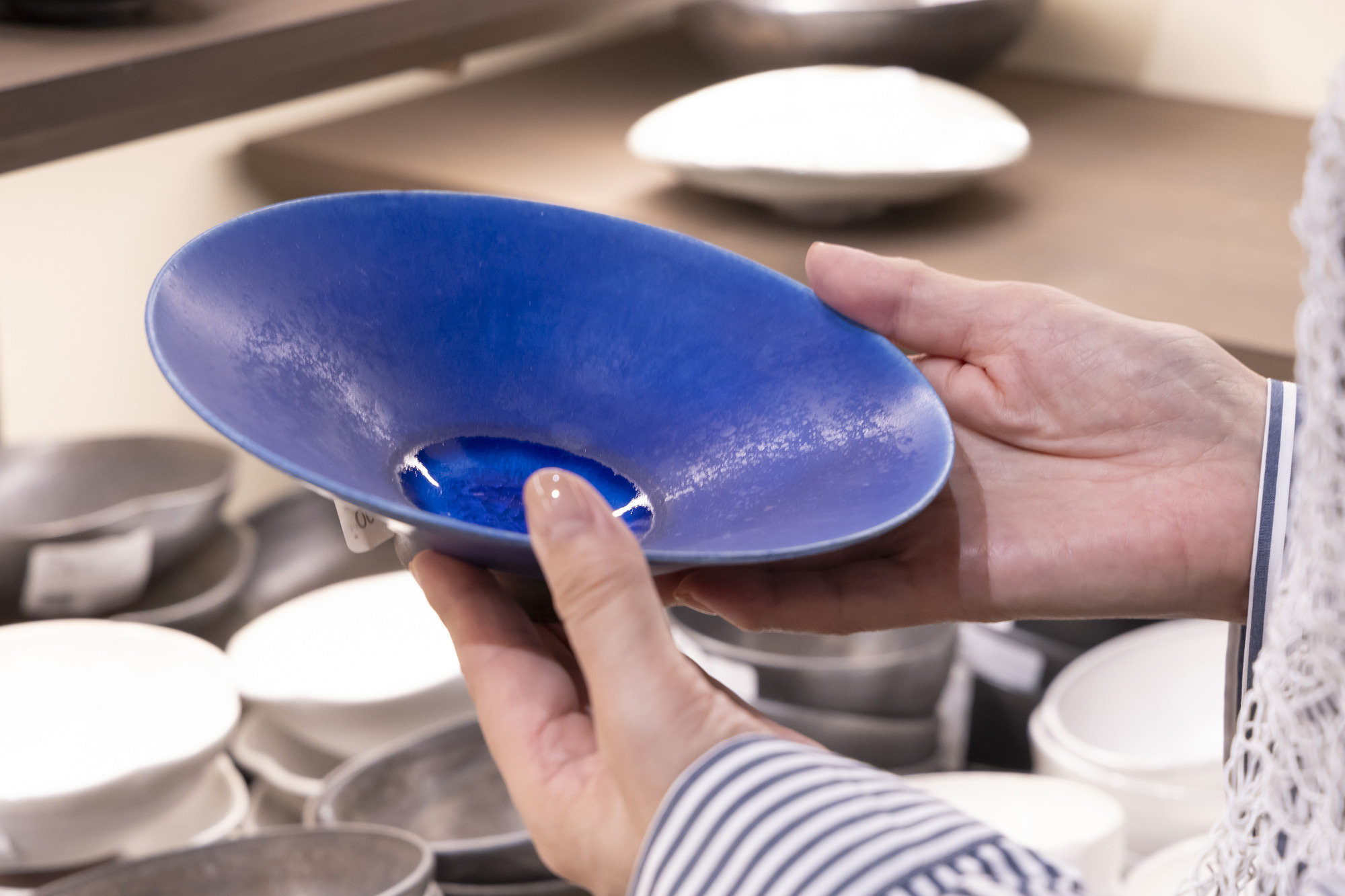 A shallow Tamba ware bowl in a vivid blue glaze
What should you choose for your first piece of Tamba ware?
Reiko Yokoi, who ran a tableware gallery for 18 years, recommends starting with a flat plate about 21 centimeters in diameter. It’s wonderfully versatile—large enough for a slice of toast at breakfast or a main dish at dinner. A shallow bowl is another practical choice, ideal for simmered dishes, noodles, and many other meals. If the work of a particular kiln catches your eye at Kamamoto Yokocho, you may also be able to visit its workshop nearby.
A living link to 850 years of history: Tamba’s oldest surviving climbing kiln
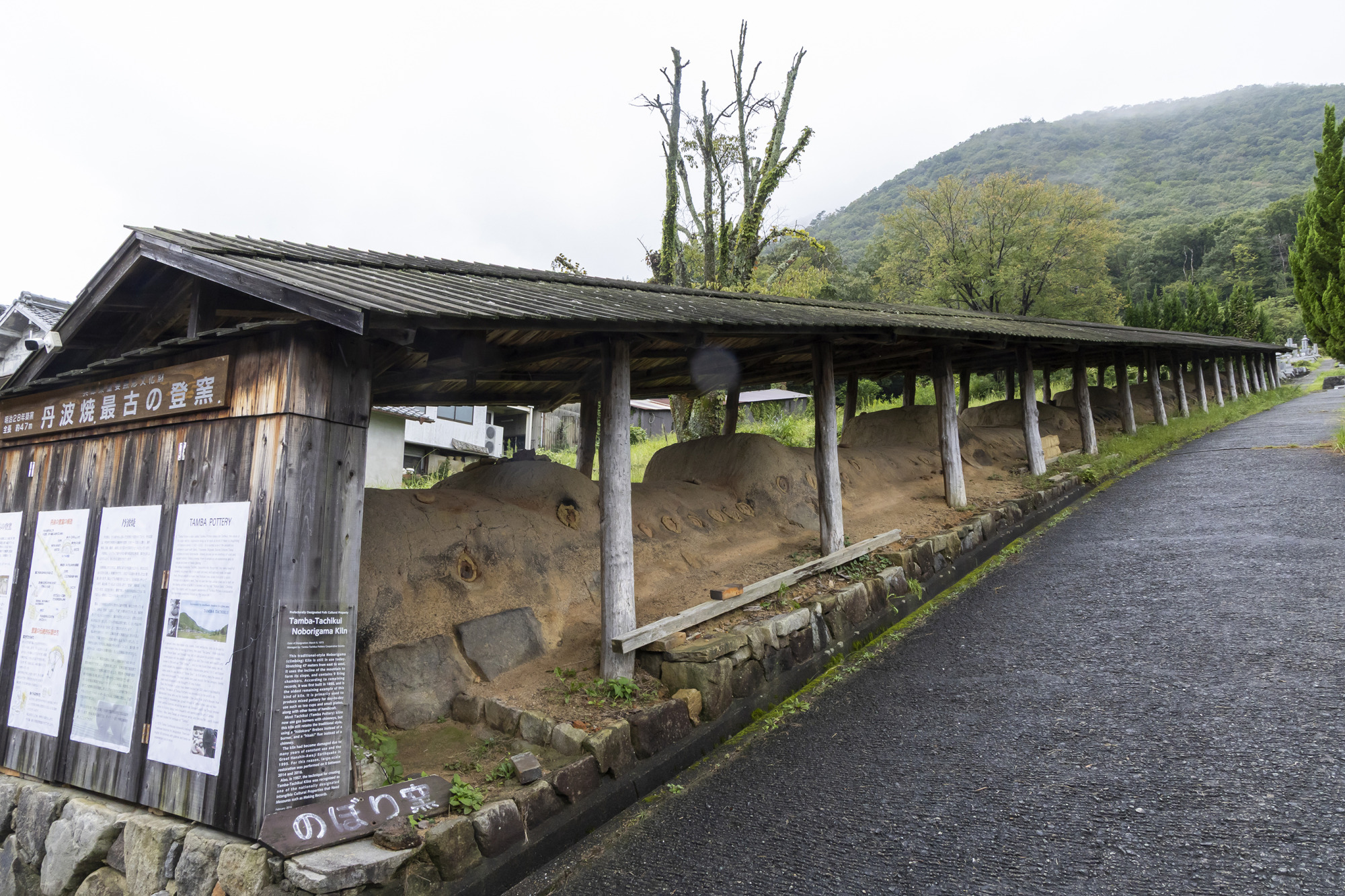 Tamba ware’s oldest surviving climbing kiln, designated a Tangible Folk Cultural Property by Hyogo Prefecture
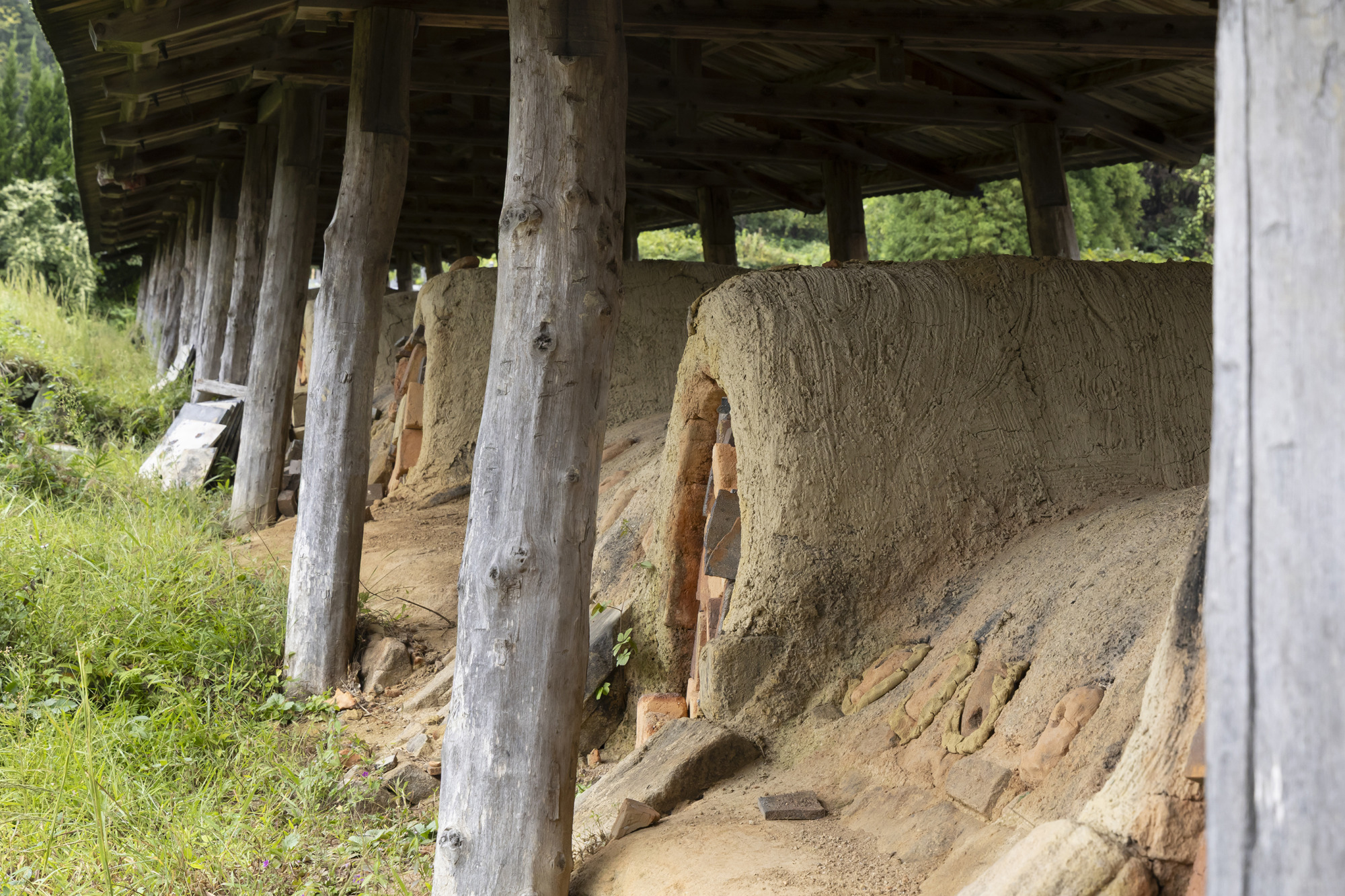 Tamba ware’s oldest surviving climbing kiln, designated a Tangible Folk Cultural Property by Hyogo Prefecture
A short walk from Sue-no-Sato through the village’s narrow lanes brings you to an enormous earthen structure stretching along a gentle hillside. Built in 1895, this climbing kiln measures about 47 meters in length and contains nine firing chambers. Its shape, resembling a snake crawling uphill, has also earned it the name jagama, or “snake kiln.” Designated a Tangible Folk Cultural Property by Hyogo Prefecture, it is the oldest surviving climbing kiln of its kind. Remarkably, it remains in use more than 130 years later. During a firing, teams of potters work in shifts around the clock for three days and nights, continuously feeding the kiln with large quantities of firewood as temperatures climb as high as 1,300°C.
Experience Tamba ware at the table: Koharubiyori’s wooden-box lunch
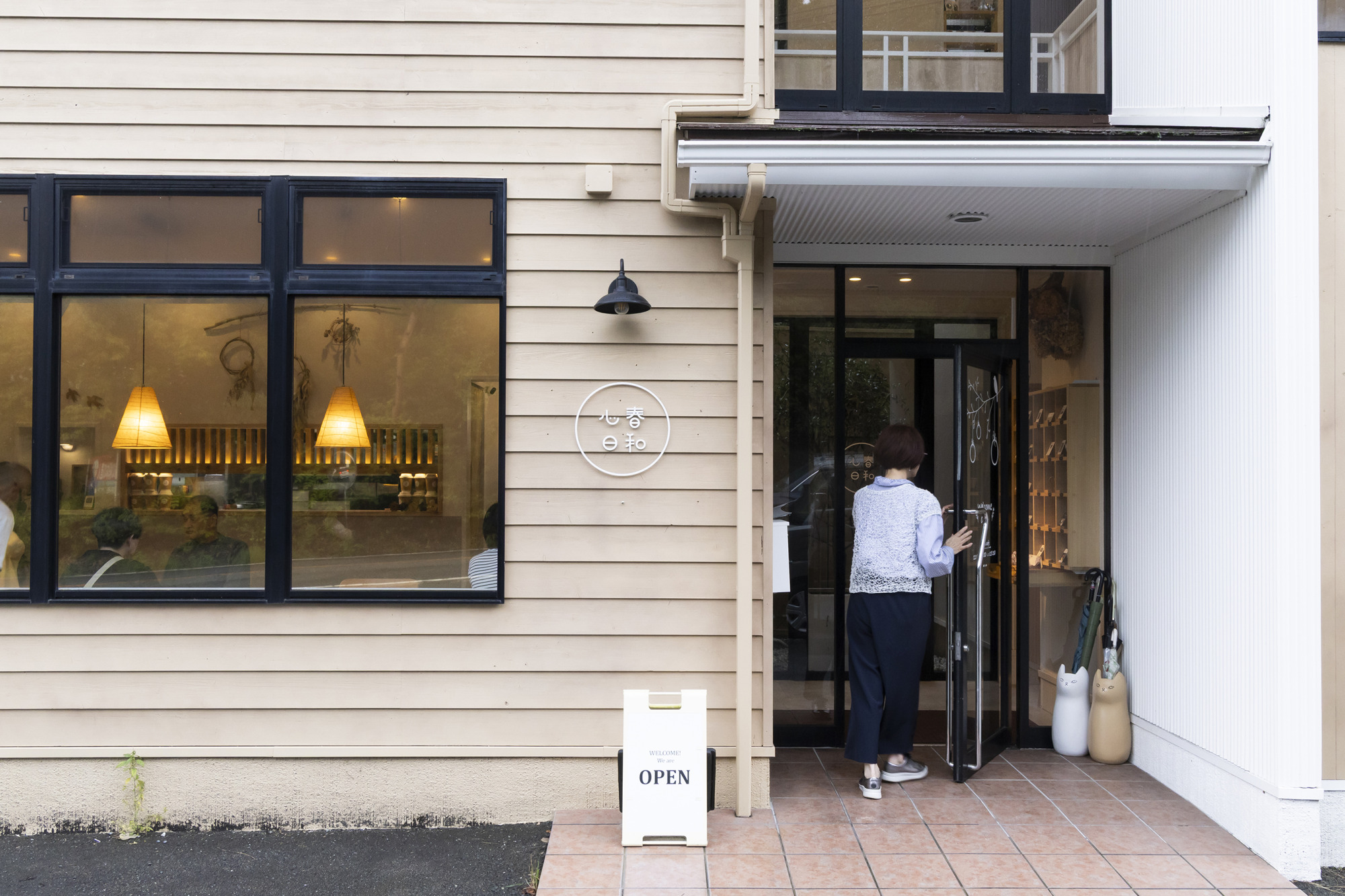 The exterior of Koharubiyori
After exploring the history of Tamba ware, enjoy a lunch that brings local food and ceramics together. Just a five-minute drive from Sue-no-Sato is Koharubiyori, a Japanese cafe known for its wooden-box lunches. Opened in September 2023 by a husband-and-wife team who share a love of pottery, the farm-to-table restaurant is so popular that reservations can be difficult to secure even on weekdays. The first floor offers table seating, while the spacious tatami room upstairs has four low tables, each seating four guests. A play mat in the center makes the space welcoming for families with young children.
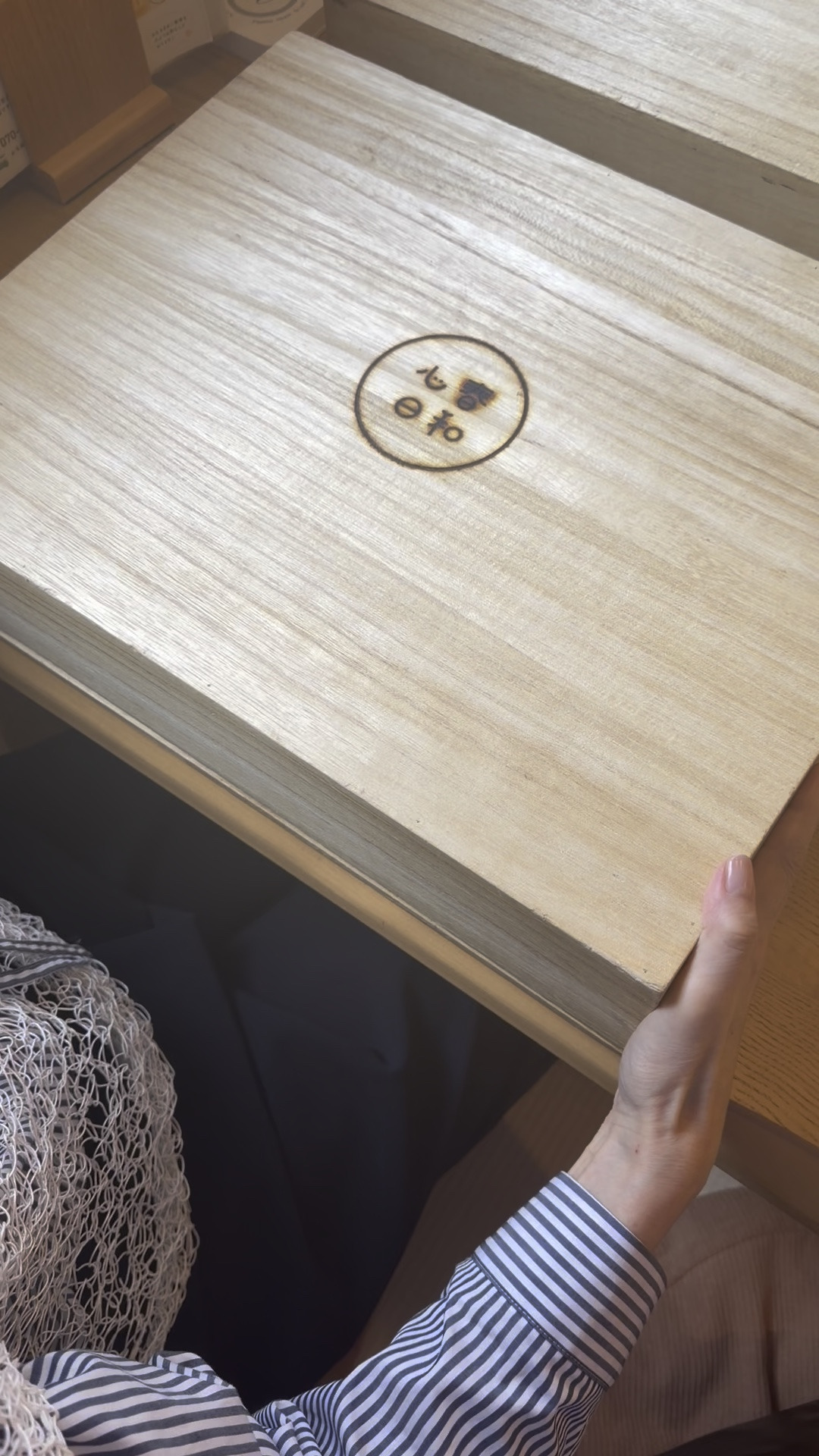 When I open the wooden box...
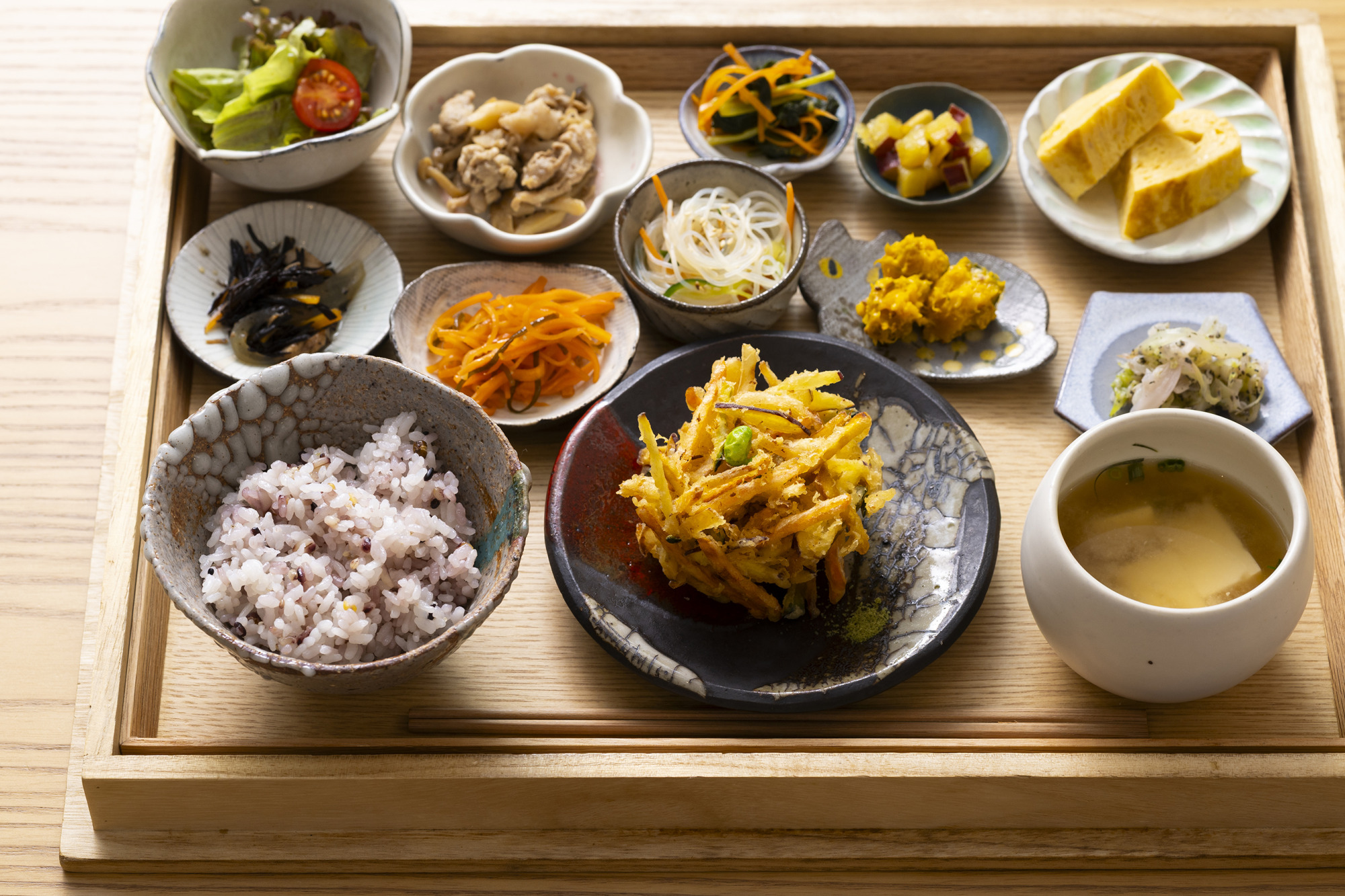 The Wooden-Box Lunch, JPY 2,200 including tax
The signature order is the Wooden-Box Lunch. Lift the lid of the generous 35-by-46-centimeter box to reveal multigrain rice, miso soup, and ten colorful side dishes. On our visit, the main course was a special vegetable kakiage fritter created to celebrate the restaurant’s third anniversary, freshly fried to a light, crisp finish. The selection of small side dishes also changes completely every two months, offering a new seasonal experience with each visit.
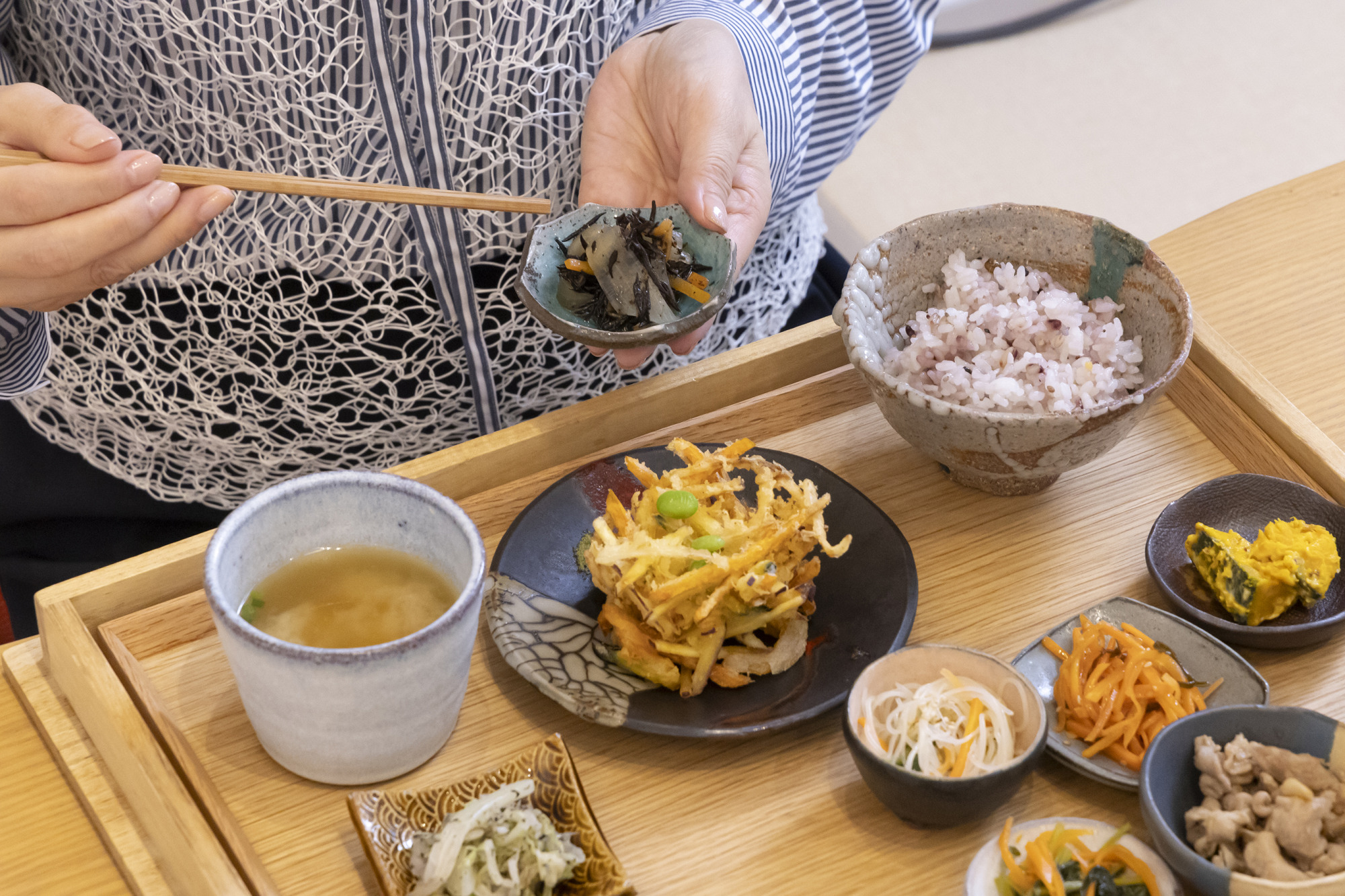
Every dish is served on Tamba ware that the owners have personally collected from more than 50 local kilns. The tiny mamezara plates and thoughtful presentation offer plenty of inspiration for setting your own table at home. If a particular piece catches your eye, the owner will happily tell you about the kiln where it was made.
Tradition in motion: Visiting Tsuyoshi Shimizu of Toshihiko-gama Kiln
To delve deeper into Tamba ware, we visited potter Tsuyoshi Shimizu at the Toshihiko-gama kiln. This respected pottery workshop brings together the work of Toshihiko Shimizu—who studied under Kazutaka Ikuta, a disciple of the great Mingei folk-craft artist Kanjiro Kawai—his son Tsuyoshi, and Tsuyoshi’s wife, Masako. Their home, gallery, and workshop stand side by side, and visitors can purchase pieces in the gallery.
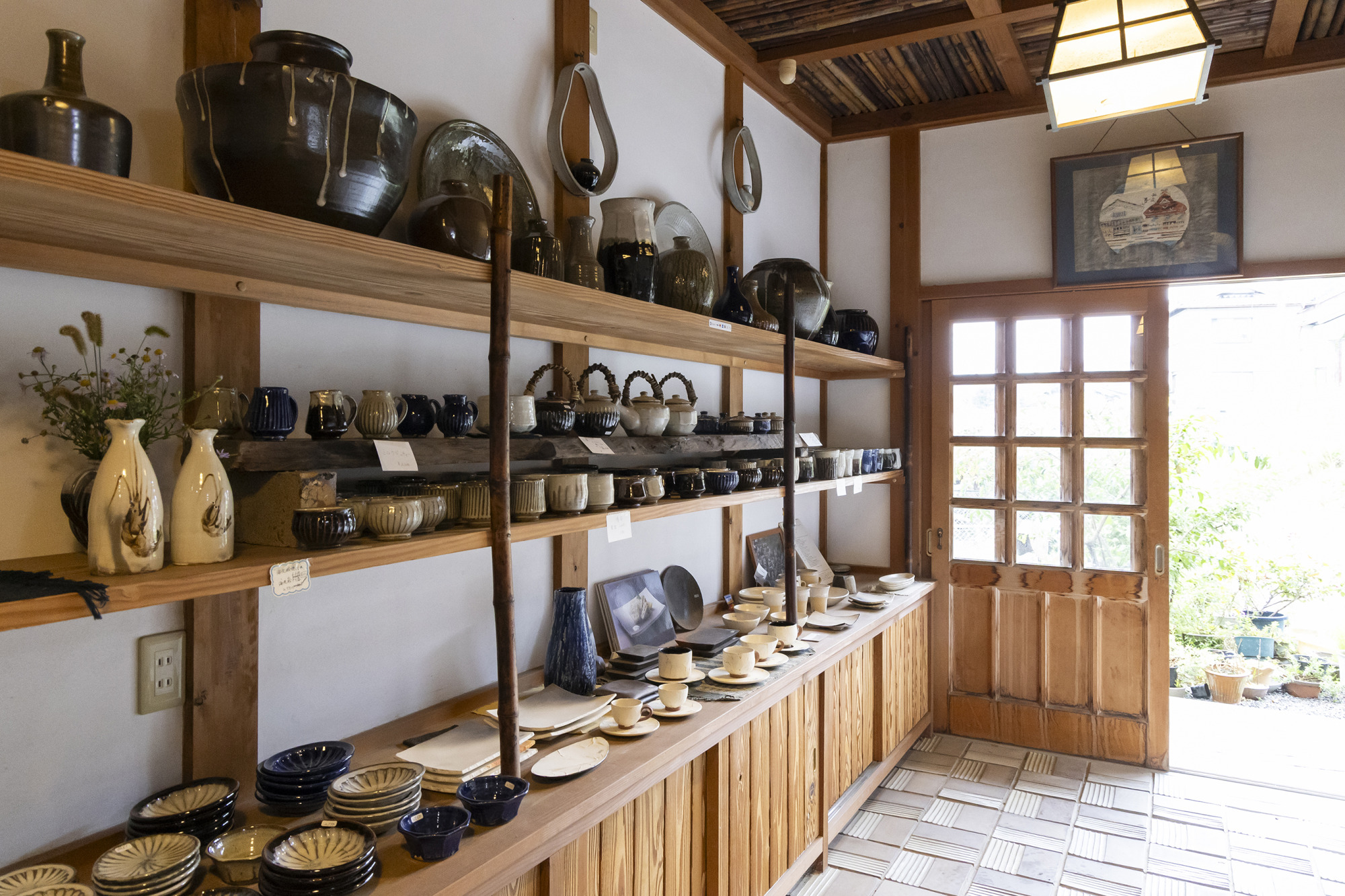 The gallery at Toshihiko-gama
Tamba ware is unusual among Japanese pottery traditions because it developed without relying on wholesalers as intermediaries. While wholesalers typically handle distribution in many pottery-producing regions, Tamba potters themselves oversee the entire process—from preparing clay and shaping vessels to firing and selling the finished pieces.
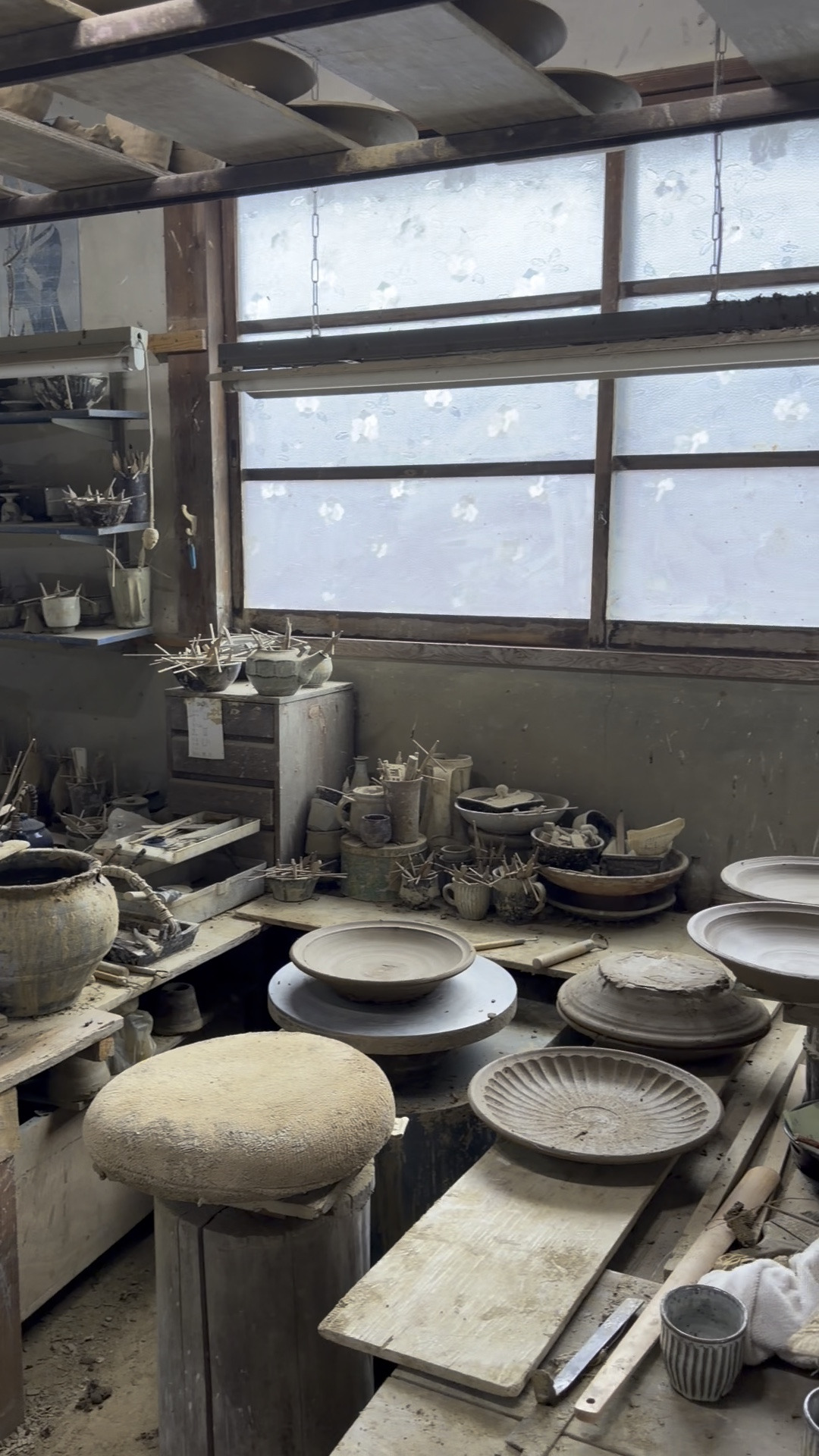 Vessels taking shape inside the workshop
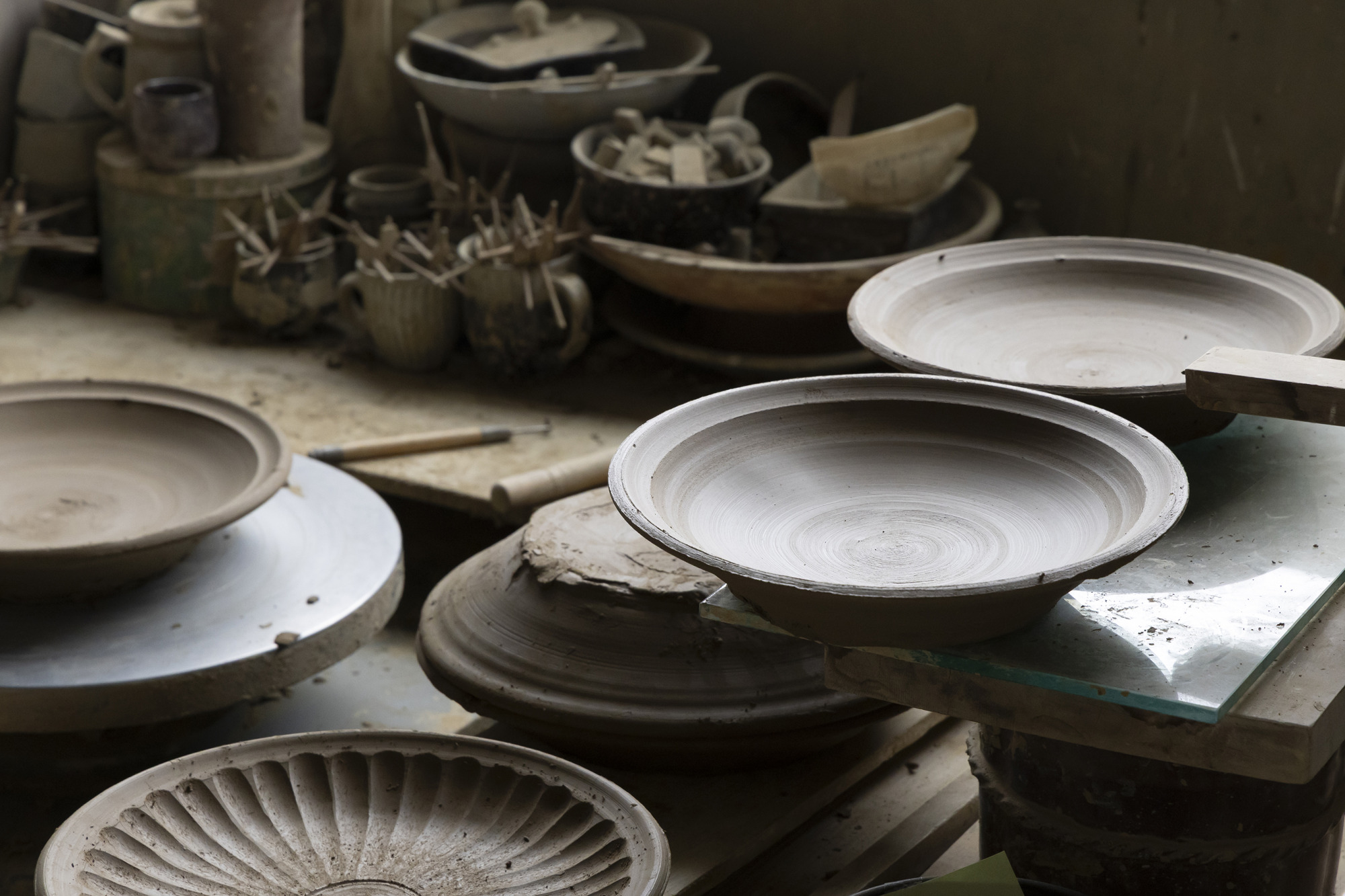 Vessels taking shape inside the workshop
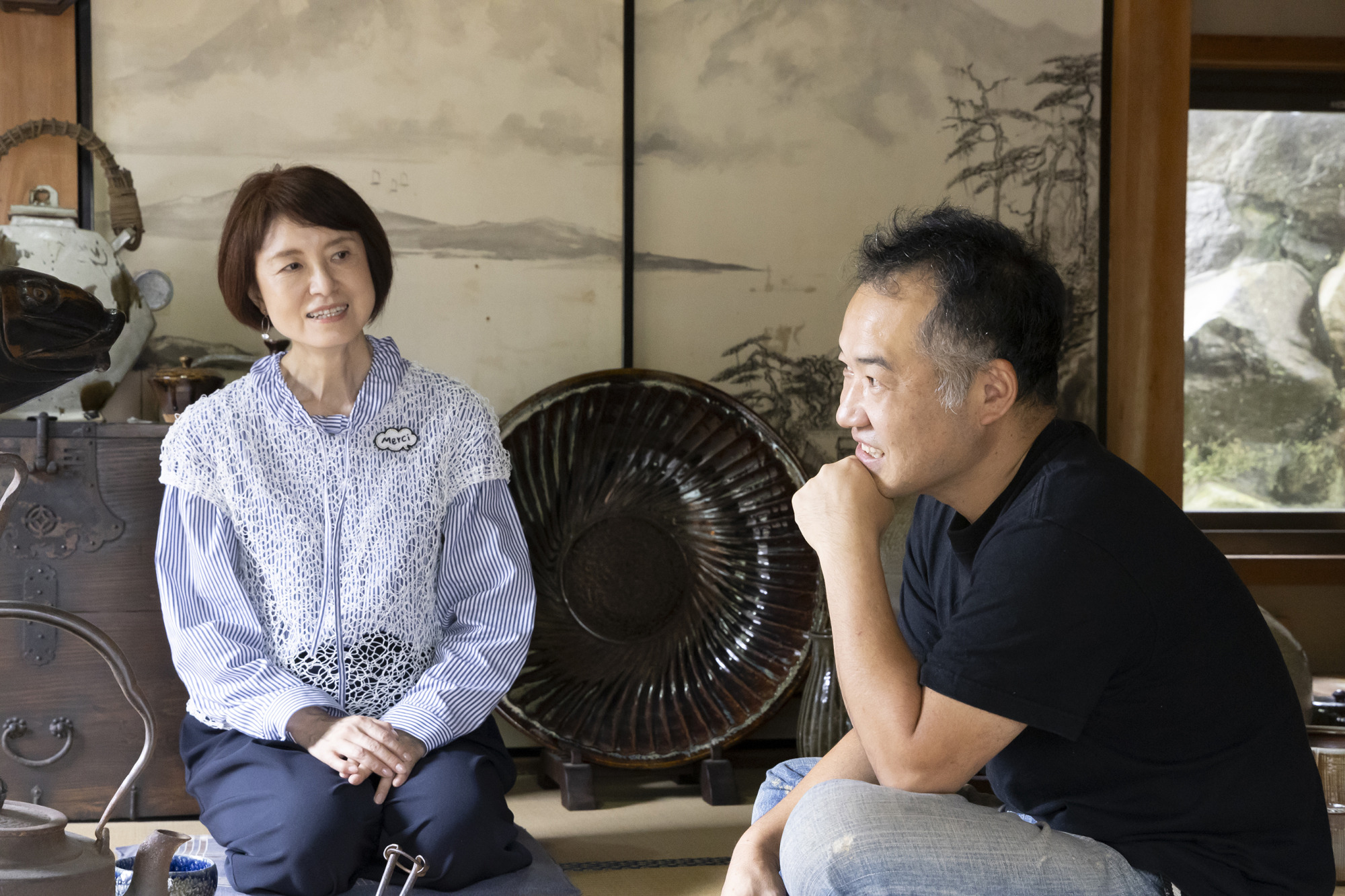 A conversation with Tsuyoshi Shimizu of Toshihiko-gama about vessels and the history of Tamba ware
Shimizu explains why Tamba ware developed such remarkable variety and so many different techniques:
“Looking back at its history, Tamba ware developed under less-than-favorable geographic conditions. Tamba lies deep in the mountains, without access to the sea routes that coastal pottery regions used to transport their wares. This created major logistical limitations. To survive in these circumstances, potters had to adapt to the many requests they received from merchants in Kyoto and Osaka—questions such as, ‘Could you make a vessel like this?’ That constant pressure to adapt gave rise to the diversity of Tamba ware and drove the evolution of its techniques.”
Over 850 years, Tamba potters turned geographic hardship into diversity and adaptability. That evolution continues today, giving the tradition an openness and versatility that allow it to fit naturally into contemporary life.
Across this tranquil satoyama landscape, kiln chimneys rise among workshops where potters continue to create vessels for everyday life. Explore the Tamba Sasayama countryside, meet the makers, and find a piece to treasure for years to come.
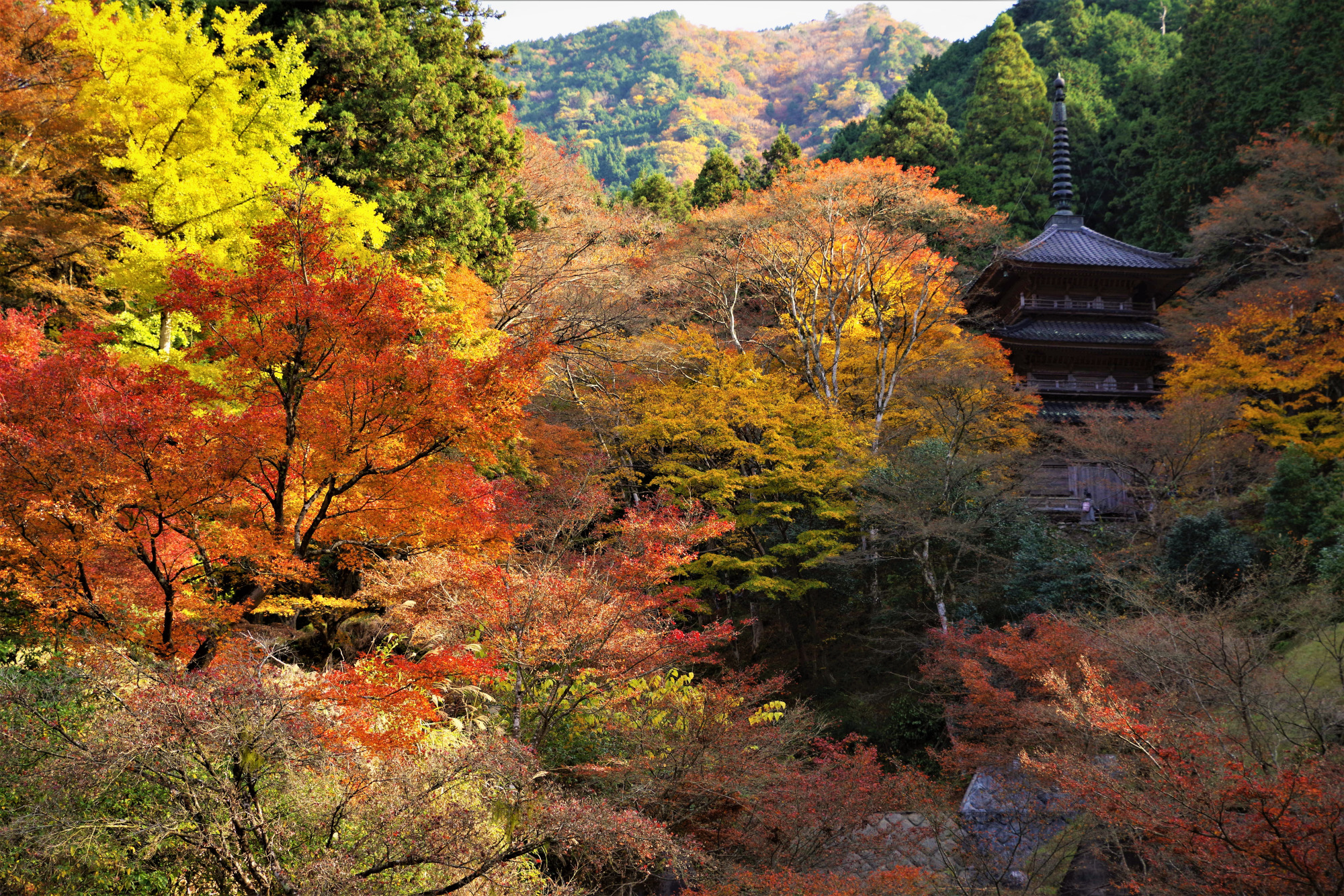 Autumn leaves at Kogenji Temple
If time allows, make a short detour to Kogenji Temple, renowned as one of the Three Great Autumn Foliage Temples of Tamba. The grounds are home to around 200 maples, including the tenmoku maple, which is said to have been brought from Mount Tianmu near Hangzhou, China, by the temple’s founding Zen priest, Enkei So'yu, after completing his training there. The leaves are usually at their best in early November. A brilliant tunnel of autumn colors stretches along the approach from the outer gate to the main gate, while vibrant foliage frames moss-covered stone steps and the tahoto pagoda.
[Frequently Asked Questions]
(Q) Can visitors tour the Tamba ware kilns?
(A) Most kilns have an adjoining shop or gallery where you can browse and purchase pottery. Visitors may not always be able to observe the pottery-making process, depending on the season and time of day, so it’s best to contact the kiln in advance.
(Q) Can I reach the Tamba ware village by public transport?
(A) Yes. From Aino Station on the JR Fukuchiyama Line, take a Wing Shinki local bus for approximately 10 to 15 minutes.
(Q) Can I compare work from around 50 kilns at Sue-no-Sato?
(A) Yes. Kamamoto Yokocho brings together work from 50 kilns, allowing you to pick up the pieces and compare them at your own pace.
[Visitor Information]
◇Tamba Traditional Craft Park, Tachikui Sue-no-Sato
3 Kamitachikui, Konda-cho, Tamba Sasayama, Hyogo
Tel: 079-597-2034
Hours: 10:00 a.m.–5:00 p.m. (last admission to pottery workshops at 3:30 p.m.)
Closed: Tuesdays (open if Tuesday is a public holiday)
General admission: Free
TAMBA GATEWAY CENTER (formerly the training and exhibition facility)
Exhibition admission: JPY 500 for high school students and adults; JPY 120 for elementary and junior high school students
◇Koharubiyori Japanese Cafe and Wooden-Box Lunches
578-28 Nishiaono, Sanda, Hyogo
Tel: 070-1800-4288
Hours: 11:00 a.m.–3:30 p.m. (last order at 3:00 p.m.)
Closed: Sundays
https://www.instagram.com/koharubiyori_sanda/
◇Toshihiko-gama
396 Kamitachikui, Konda-cho, Tamba Sasayama, Hyogo
Tel: 079-597-2647
Hours: 9:00 a.m.–6:00 p.m. (may close earlier at sunset; please confirm in advance)
Open daily
◇Seitennmoku Zuigan-zan Kogenji Temple
514 Higashikura, Aogaki-cho, Tamba, Hyogo
Tel: 0795-87-5081
Visiting hours: 8:00 a.m.–4:30 p.m. (gates close at 5:00 p.m.)October–March: 8:30 a.m.–4:30 p.m. (gates close at 5:00 p.m.)
Admission: JPY 400 for adults; free for junior high school students and younger